


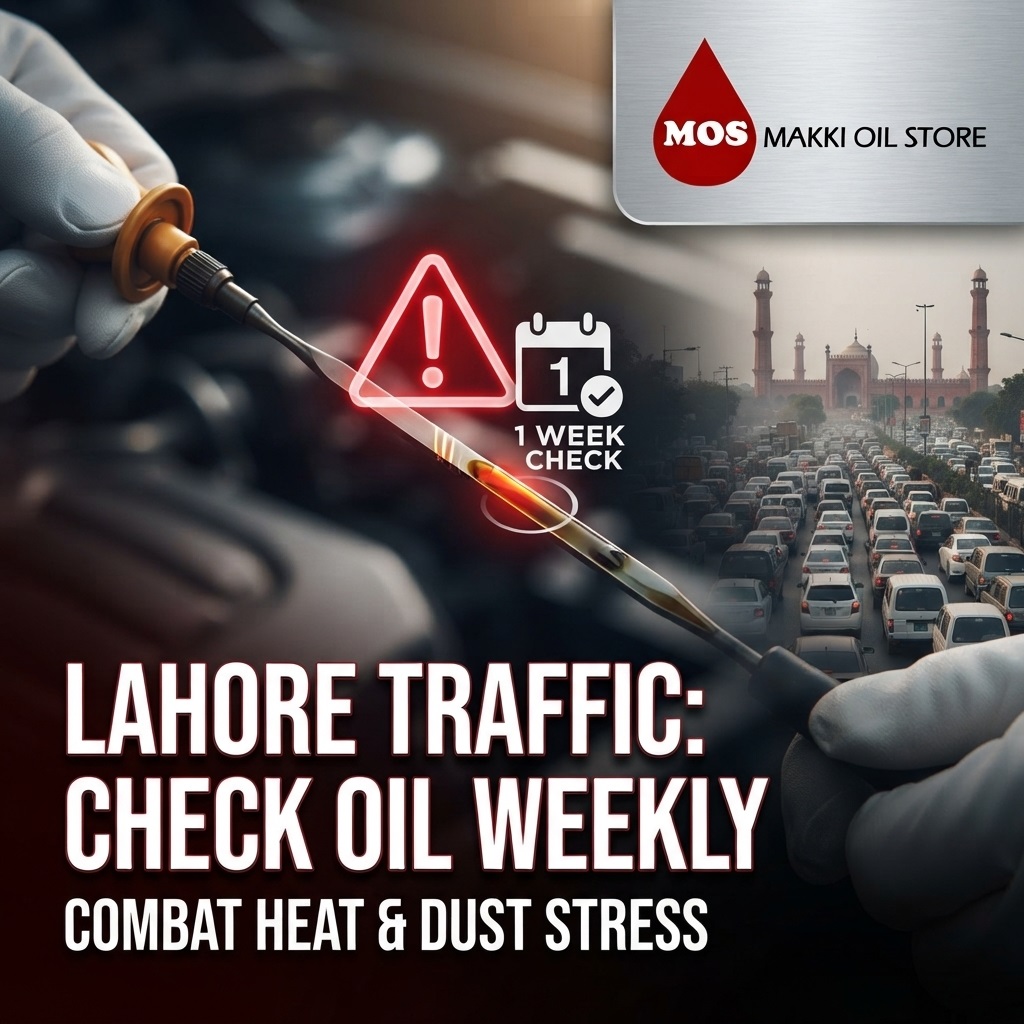
Navigating daily commutes through the bustling urban arteries of Lahore exposes vehicle engines to relentless thermal and physical stress. While vehicle manufacturers publish standard maintenance intervals based on predictable highway driving, crawling through bumper-to-bumper congestion alters how lubricants behave inside the engine block. To catch fluid loss or chemical breakdown before it triggers catastrophic mechanical failure, motorists must make a routine engine oil check an essential part of their weekly vehicle care checklist.
The Hidden Strain of Urban Congestion on Engine Lubricants
When cars and motorcycles inch forward along major metropolitan routes during peak hours, cooling systems receive minimal airflow while engine bay temperatures surge. This continuous low-speed idling and frequent acceleration forces the lubricating fluid to endure extreme thermal cycling. Over time, heat buildup accelerates fluid oxidation, causing the oil to thin out, darken, and lose its protective film strength.
Moreover, heavy urban idling accumulates engine operating hours rapidly while the vehicle’s odometer records very few kilometers, leading many drivers to misjudge their actual service requirements. To understand how prolonged gridlock accelerates internal friction and lubricant degradation across local commuter paths, vehicle owners can examine professional findings detailing how long traffic jams of lahore damage engine oil to evaluate the true mechanical cost of city driving.
Atmospheric Dust and Particulate Contamination
Lahore’s vibrant urban environment brings airborne dust, construction particulate matter, and exhaust soot that constantly challenge air intake and filtration barriers. Even microscopic abrasive particles that bypass air filters eventually find their way past piston rings and settle directly into the crankcase. Once suspended in the fluid, these particles act as an abrasive paste that accelerates wear on cylinder walls, bearings, and valve guides.
Combating this dual threat of thermal stress and particulate contamination requires monitoring fluid levels and condition more frequently than standard factory manuals suggest. For a comprehensive look at how metropolitan environmental factors alter service timelines, local drivers can review expert maintenance schedules on how often should you change engine oil in lahores dusty traffic to protect their engines from premature wear.
| Check Frequency | Inspection Focus | Action Required |
| Weekly | Fluid level and color on the dipstick | Top up if levels are low; note dark discoloration |
| Monthly | Viscosity consistency and smell | Check for fuel dilution or burnt odors |
| Bi-Annually | Particulate contamination and sludge | Professional oil and filter replacement |
How to Perform a Proper Fluid Inspection
Checking your vehicle’s fluid level takes only a few minutes, yet it provides immediate insight into the health of your engine. Performing this inspection correctly requires a few simple steps to ensure accurate readings.
- Park on Level Ground: Ensure your vehicle is parked on a flat, even surface with the engine turned off and fully cooled down.
- Locate and Clean the Dipstick: Pull out the dipstick, wipe the metal clean with a lint-free cloth or tissue, and reinsert it fully.
- Evaluate Level and Clarity: Pull the dipstick out a second time to inspect where the fluid line rests between the low and high marks, observing its color and texture.
At the Makki Oil Store, our expert technicians inspect fluid condition, evaluate contamination levels, and help vehicle owners maintain optimal engine health despite the rigorous demands of driving through local traffic.
Frequently Asked Questions
How often should I check my engine oil when driving in heavy city traffic?
When driving regularly in dense city traffic, you should check your engine oil level at least once a week or every time you fill up your fuel tank. City congestion accelerates oil consumption and thermal breakdown, making frequent checks vital.
What does it mean if my engine oil looks pitch black and smells burnt?
Pitch-black oil combined with a sharp, burnt odor indicates that the lubricant has suffered severe thermal degradation and oxidation from prolonged idling and high heat, meaning it has lost its protective properties and must be replaced immediately.
Can low engine oil cause my car to overheat in traffic jams?
Yes, low engine oil reduces the fluid’s ability to absorb and dissipate internal heat. Combined with the lack of airflow during a traffic jam, this lack of lubrication can cause engine temperatures to spike dangerously.
Is it normal for an engine to consume oil during stop-and-go driving?
Yes, high operating temperatures and frequent acceleration cycles in heavy traffic can cause minor oil consumption past the piston rings. Regular fluid level checks ensure you catch minor consumption before it drops below safe operating thresholds.
What should I do if my oil level is below the minimum mark on the dipstick?
If your oil level is below the minimum mark, you should top it up with the exact same viscosity and specification of oil immediately before driving further, and have a mechanic inspect the engine for potential leaks or excessive consumption.