

Purchasing engine oil is one of the most routine maintenance tasks for vehicle owners, yet it carries immense financial and mechanical consequences. Across local markets in Pakistan, unverified supply chains and counterfeit packaging operations have introduced a significant volume of substandard, recycled, or adulterated lubricants into circulation. Putting counterfeit lubricant into your engine is akin to pouring liquid sandpaper through your galleries; it destroys bearings, causes premature sludge accumulation, and can lead to a catastrophic engine seizure. Recognizing how to identify fake engine oil before it enters your crankcase is essential for protecting both your vehicle and your financial investment.
The Growing Counterfeit Market Challenge
The underground counterfeit oil trade has become alarmingly sophisticated. Unscrupulous operators collect discarded, genuine branded plastic containers from workshops, wash them thoroughly, and refill them with low-grade base oil or refined industrial waste. They then seal the caps with replica foil liners and counterfeit hologram stickers.
When motorists buy lubricants based solely on a steep discount at unverified roadside shops, they unknowingly risk their entire engine’s health. To understand how professional verification protects against these counterfeit hazards, vehicle owners can examine our comprehensive diagnostic guidance on how to check if your engine oil is original or fake and a practical guide for Lahore drivers to spot subtle packaging discrepancies.
Key Visual and Physical Indicators of Counterfeit Lubricants
Inspecting a lubricant container before pouring it into your engine can prevent severe mechanical damage. Counterfeiters often focus on mimicking the main label, but they frequently make mistakes on minor packaging details due to mass-producing containers with cheap equipment.
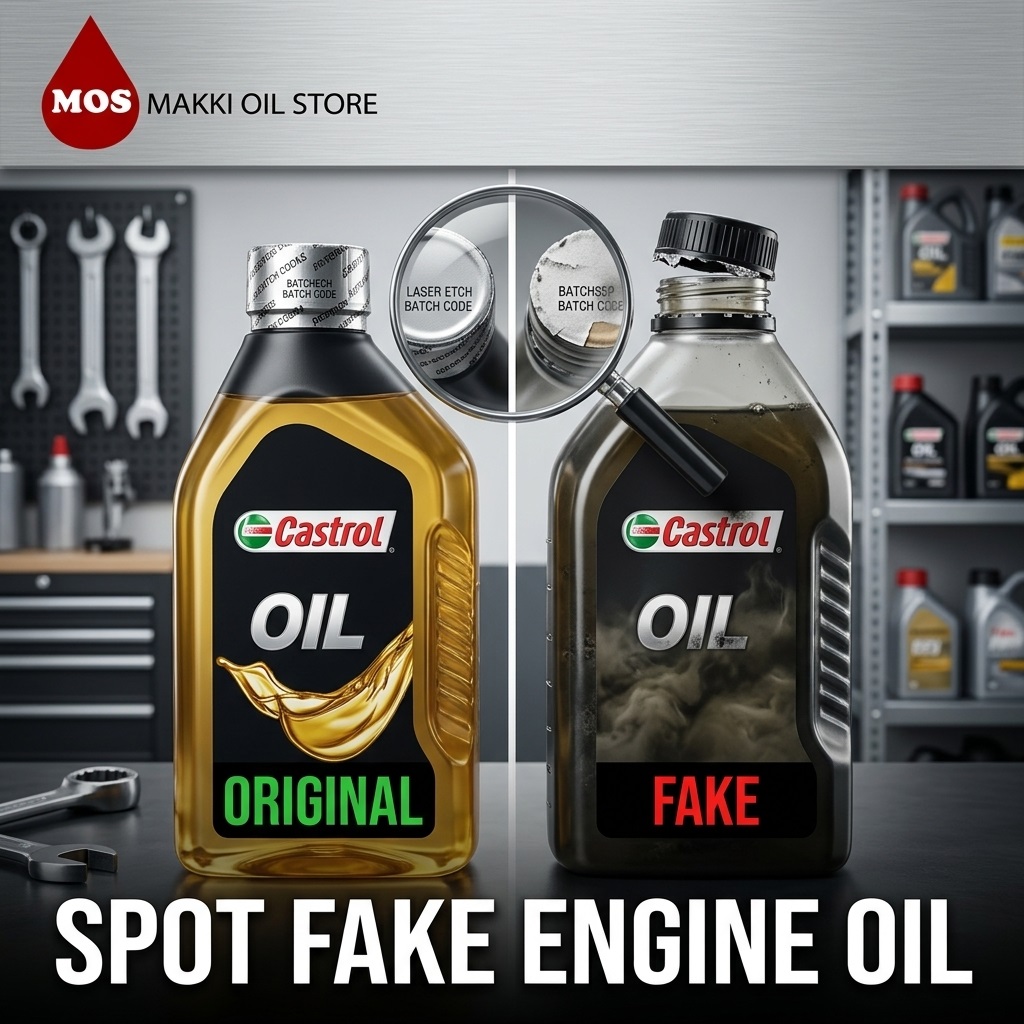
- Cap Sealing and Plastic Quality: Genuine containers feature high-grade, durable plastic with clean injection-molded seams. Counterfeit bottles often feel flimsy, show rough molding burrs, or feature dual-layer caps with broken tamper-evident rings straight off the shelf.
- Printing Clarity and Spelling Errors: Authentic international lubricant brands invest heavily in high-resolution printing on foil and paper labels. Fake containers often display pixelated text, blurred batch numbers, misaligned logos, or grammatical errors in product descriptions.
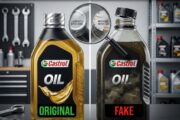
- Batch Code Consistency: On authentic packaging, the manufacturing date and batch code printed on the bottle shoulder match the laser-etched code stamped on the foil seal under the cap. Counterfeit cans frequently have mismatched or completely missing batch markings.
- Color, Odor, and Viscosity Testing: Genuine synthetic oil has a clear amber or golden hue with a mild petroleum scent. Adulterated or recycled oil often appears dark, murky, emits a burnt chemical odor, or feels watery when rubbed between your fingers.
Vehicle owners looking for certified fluid options and professional verification services can review our specialized care standards available through service engine oil to ensure complete chemical authenticity.
| Inspection Point | Genuine Oil Characteristics | Counterfeit Oil Red Flags |
| Container Quality | Sturdy plastic, smooth seams, clean finish | Flimsy plastic, rough burrs, uneven molding |
| Label & Printing | Sharp, high-resolution text and clear batch codes | Pixelated logos, smudged ink, mismatched dates |
| Foil Under-Cap Seal | Clean induction seal with laser-etched matching code | Loose seal, glued paper lining, no matching stamps |
| Fluid Appearance | Clean golden or amber hue, mild petroleum scent | Dark, cloudy appearance, foul or burnt chemical odor |
The Direct Mechanical Dangers of Substandard Lubricants
When inferior oil circulates inside an engine operating under heavy local traffic loads, its protective properties break down rapidly. Unlike certified lubricants formulated with advanced anti-wear and detergent additive packages, fake oil lacks shear stability.
Without proper film strength, moving metal parts rub directly against one another, generating intense frictional heat. This friction scores cylinder walls, ruins piston rings, and starves overhead camshafts of necessary hydraulic pressure. To explore a complete array of preventative maintenance services designed to safeguard your vehicle against substandard fluids, car owners can review professional offerings detailed under our services for expert care.
For motorists looking for verified, authorized retail locations where product authenticity is guaranteed, checking workshop bays via branches makes it simple to source genuine supplies.
At the Makki Oil Store, our commitment is to provide 100% original, factory-sealed lubricants sourced directly from authorized distributors, ensuring your engine remains fully protected against counterfeit risks.
Frequently Asked Questions
How can I verify if an engine oil bottle is original?
Check for clean cap sealing, sharp high-resolution label printing, matching batch codes between the bottle and the under-cap foil seal, and purchase exclusively from authorized retailers.
What happens to my car engine if I use fake oil?
Fake oil lacks proper viscosity and additive packages, leading to rapid thermal breakdown, heavy sludge accumulation, scored cylinder walls, and potential engine seizure.
Do counterfeiters reuse original engine oil containers?
Yes, local counterfeit rings frequently collect discarded genuine plastic bottles from workshops, clean them, refill them with low-grade oil, and reseal them with fake foil liners.
Is cheap engine oil always fake?
Not always, but prices significantly below standard market value often indicate recycled oil, watered-down stock, or counterfeit packaging designed to deceive buyers.
Why is buying from an authorized dealer important?
Authorized dealers maintain direct supply chains with lubricant manufacturers, eliminating the risk of receiving adulterated, expired, or counterfeit products.