

If you drive in Lahore regularly, you’ve probably been in this situation: the traffic is slow, the weather is hot, and suddenly the engine starts sounding heavier than usual. It feels slightly rough, the pick becomes weaker, and you immediately wonder, “Is my engine oil okay?”
It’s a real concern because fake engine oil has quietly become one of the biggest reasons behind engine trouble, overheating, and poor mileage in Pakistani cars. Most drivers buy oil with full trust, yet they are unable to tell the difference between genuine and counterfeit products.
This guide will walk you through the real, practical signs that help you identify original oil, based on the experience of the technicians and experts at Makki Oil, one of Lahore’s most trusted engine oil and car care service providers.
Why Fake Engine Oil Is a Serious Risk
Counterfeit oil usually looks convincing from the outside, but inside it lacks the essential additives, detergents, and heat-resistance properties found in genuine brands. This means:
- The engine runs hotter than normal
- The fuel economy drop
- Sludge builds up faster
- Long-term engine wear increases
In a city like Lahore, where the climate is harsh and traffic is slow-moving, fake oil becomes even more damaging. That’s why knowing what to check before pouring anything into your engine is extremely important.
How to Identify Original vs Fake Engine Oil (The Signs You Should Know)
1. Start with the Packaging Quality
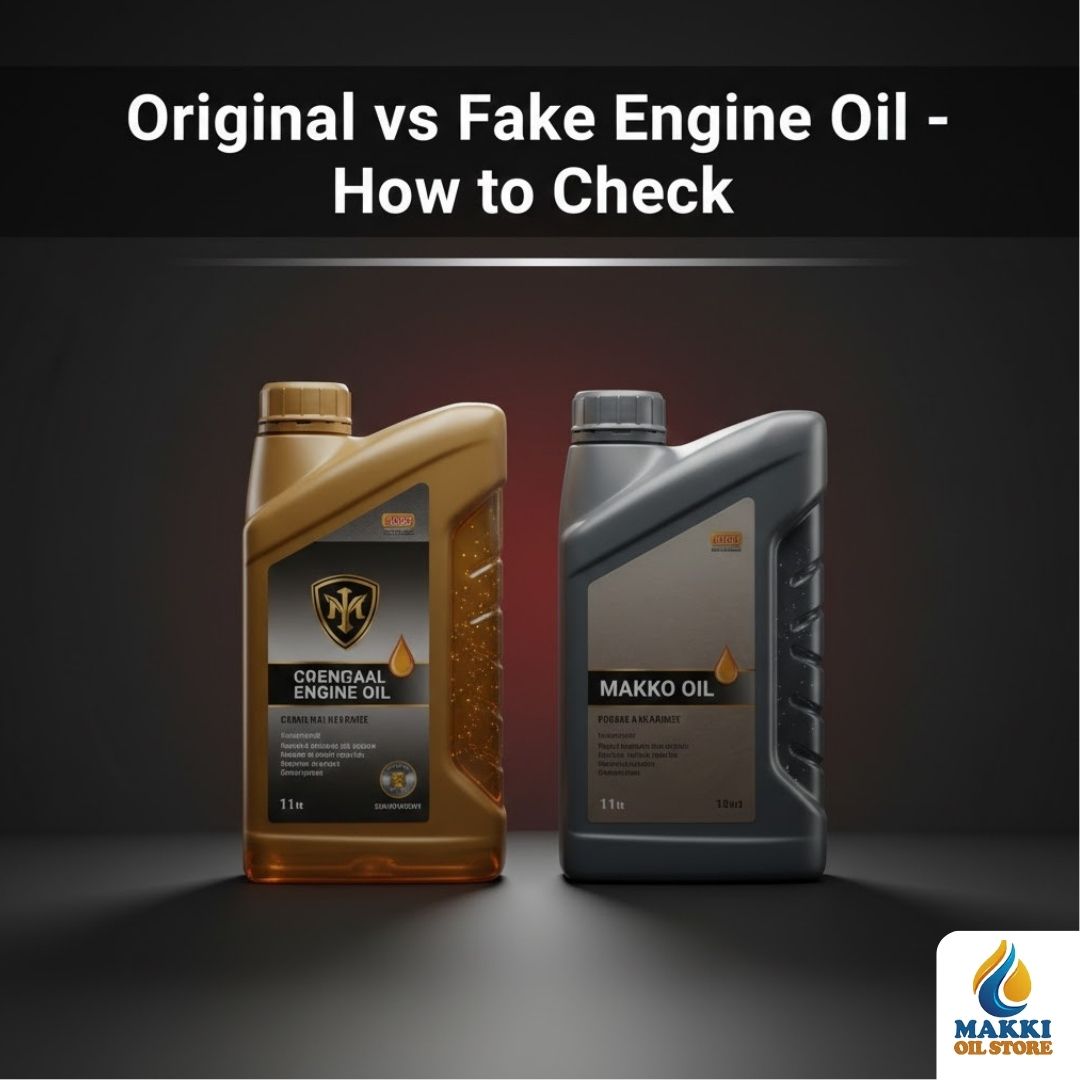
Authentic oil manufacturers invest heavily in premium packaging — clean printing, proper alignment, and strong bottle material. Counterfeit oils often reveal themselves through slightly dull colours, blurred text, or labels that don’t feel firmly attached.
2. Look Closely at the Cap Seal
Every reputable oil brand uses a tamper-proof seal. If the cap feels loose, resealed, or uneven, this is a strong indication that the product is not original.
3. Verify Through QR Codes or Serial Numbers
Most brands now offer authenticity checks through QR codes or verification numbers. A genuine code takes you to an official verification page instantly. Fake ones either do not scan or redirect to suspicious pages.
4. Compare the Oil’s Colour and Consistency
Once opened, the original oil has a smooth pour and a uniform texture. If the oil appears unusually thick, watery, or has a burnt smell before even touching the engine, it’s a red flag.
5. Be Careful with “Too Good to Be True” Pricing
Fake oils are usually priced noticeably lower than the market. If the rate seems much cheaper than normal, the product likely isn’t original.
Quick Comparison of Original vs Fake Engine Oil
| Feature | Genuine Oil | Counterfeit Oil |
| Packaging | Clean, premium-quality, aligned printing | Dull colours, misaligned or cheap printing |
| Bottle Seal | Tamper-proof and firm | Often loose, broken, or re-glued |
| QR/Serial Code | Verified immediately | Invalid, duplicated, or unresponsive |
| Oil Consistency | Smooth, stable viscosity | Burnt smell, watery or overly thick |
| Pricing | Standard market rates | Cheaper than normal |
What Happens When You Use Fake Engine Oil?
If you’ve been struggling with high temperature readings, rough acceleration, or poor mileage lately, counterfeit oil might be the hidden reason. Fake oil burns faster, breaks down quicker in heat, and offers almost no protection to metal components.
Drivers who notice sudden drops in fuel efficiency often discover that the oil used in their last service wasn’t genuine. For a deeper explanation, Makki Oil has an excellent guide on how engine oil affects overall performance and mileage — and how the right oil can make the ride noticeably smoother. You can read it here through this helpful article on maintaining fuel efficiency with the right oil.
Engine Problems Caused by Fake Oil (and What You’ll Notice)
| Problem | Cause | What You Feel While Driving |
| Overheating | Poor lubrication & unstable viscosity | Temperature rising quickly, burning smell |
| Low Mileage | Wrong oil grade & impurities | More petrol consumption |
| Engine Noise | Extra friction between metal surfaces | Rough sound especially on cold start |
| Sludge Build-Up | No detergents or cleaning additives | Dark deposits inside the engine |
| Weak Acceleration | Oil breaking down too fast | Slow pickup, heavy engine feel |
Why Drivers in Lahore Trust Makki Oil for Genuine Oils
The easiest way to avoid fake oil is simple: buy from a service provider who works directly with verified distributors. At Makki Oil, every bottle is inspected, every seal is checked, and the team is trained to reject any product that even slightly looks suspicious.
Whether you prefer ZIC, Shell, Total, Mobil, or Liqui Moly, you’ll always receive authentic, fresh stock. It’s one of the reasons customers from Defence Road, Wapda Town, Bahria Town, and surrounding areas rely on our service. You can explore more about us anytime through our official website, where we regularly update service details and product availability at Makki Oil.
How Makki Oil Ensures Your Engine Stays Protected
When you arrive for an oil change, the team doesn’t just pour oil. They examine the bottle, test the seal, guide you about the best grade for your car, and perform a quick health check on the engine. This combination of expertise and genuine products is the reason drivers consistently return for repeat services.
Instead of guessing whether your oil is real or worrying about engine damage later, you walk away with complete peace of mind.
FAQs
Q1: What is the easiest way to confirm engine oil authenticity?
Checking the cap seal and verifying the QR code gives the quickest confirmation.
Q2: Can fake engine oil destroy my engine?
Yes, long-term use can cause overheating, sludge buildup, and internal wear.
Q3: Why is fake oil cheaper?
It contains low-quality recycled base oils without proper additives.
Q4: Should I buy engine oil from small roadside sellers?
It’s risky. Always choose a reputable workshop or store.
Q5: Can fake oil reduce mileage?
Absolutely — the wrong viscosity makes the engine work harder, consuming more fuel.