


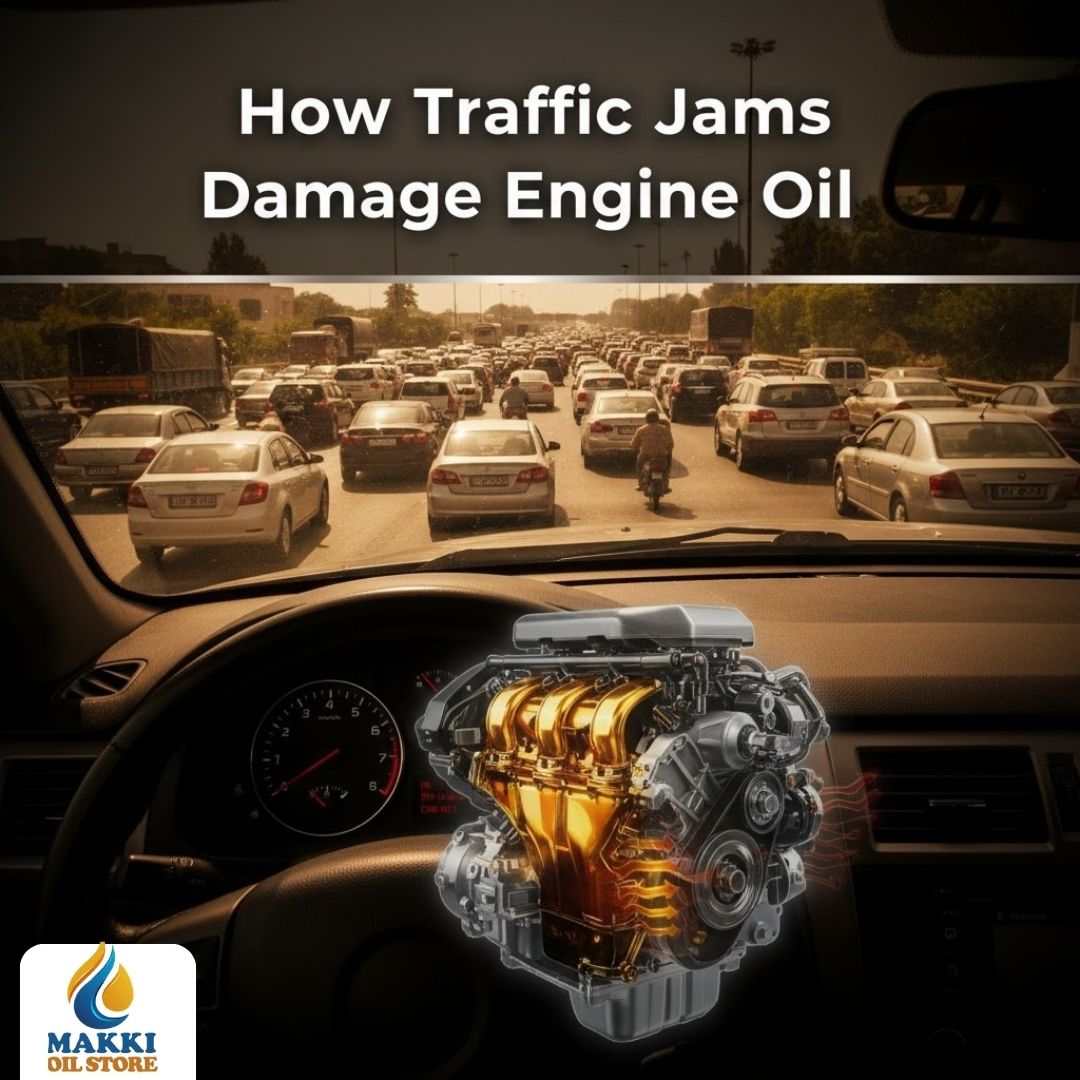
If you drive regularly in Lahore, traffic jams are not an exception they are part of daily life. From Canal Road to Ferozepur Road, Defence to Gulberg, slow-moving traffic has become routine. While most drivers worry about fuel consumption and time loss, very few realize how long traffic jams quietly damage engine oil and, over time, affect overall engine health.
This issue has become more relevant in recent months due to rising temperatures, increased road congestion, and extended idling hours. For professionals who rely on their vehicles daily, understanding what traffic does to engine oil is no longer optional it’s essential.
Why Lahore’s Traffic Is Uniquely Harsh on Engines
Lahore’s traffic pattern is different from open-road driving. Engines spend long periods running at low speed, frequently stopping and restarting. Airflow is limited, temperatures remain high, and engines rarely get the chance to operate at optimal efficiency.
In such conditions, engine oil is under constant stress. Instead of lubricating smoothly at stable temperatures, it is repeatedly exposed to heat spikes, contamination, and incomplete circulation.
For cars driven daily through congested areas like Johar Town, DHA, or Shahdara, this wear adds up faster than most people expect.
How Traffic Jams Affect Engine Oil Performance
Extended Idling Breaks Down Oil Faster
When a car is stuck in traffic, the engine continues running without meaningful movement. This creates heat without the cooling benefit of airflow. Over time, engine oil loses its viscosity stability and begins to thin out, reducing its ability to protect internal components.
Incomplete Oil Circulation Increases Wear
At low speeds, oil circulation is less efficient. Critical engine parts do not receive consistent lubrication, especially during repeated stop-and-go movement. This leads to higher friction and faster oil degradation.
Dust and Pollution Contaminate the Oil
Lahore’s environment introduces fine dust particles that gradually make their way into the engine. These contaminants mix with engine oil, reducing its effectiveness and accelerating internal wear.
Why Drivers Often Miss the Early Warning Signs
Most drivers associate engine oil problems with long routes or high-speed driving. Traffic damage feels invisible because it happens slowly. The car may continue running normally for weeks before symptoms appear.
Common signs usually surface later, including rough engine sound, reduced pickup, frequent heating, or oil darkening sooner than expected. By the time these symptoms appear, the oil has already lost much of its protective capability.
The Link Between Traffic Jams and Engine Heating
One of the most common outcomes of traffic-damaged oil is rising engine temperature. When oil loses its viscosity or becomes contaminated, friction increases and heat builds up faster.
This is why many drivers experience engine temperature issues even after recent oil changes. The relationship between oil condition and temperature is explained in detail in this guide on car-engine-heat-up, which helps clarify why traffic stress amplifies overheating problems.
Table: How Traffic Conditions Impact Engine Oil
| Traffic Condition | Impact on Engine Oil | Long-Term Effect |
| Prolonged idling | Oil overheats without airflow | Faster breakdown |
| Stop-and-go driving | Uneven oil circulation | Increased friction |
| Dusty environment | Oil contamination | Reduced lubrication |
| High ambient heat | Viscosity instability | Engine wear |
| Short daily trips | Oil never reaches optimal temp | Sludge formation |
Why Professionals Are More Affected Than Other Drivers
Professionals often drive during peak hours, park frequently, and restart engines multiple times a day. These patterns prevent oil from stabilizing and significantly shorten its effective life.
Unlike long-route drivers who maintain steady speeds, city professionals unknowingly expose their engines to harsher conditions daily. This makes routine oil checks and timely changes far more important.
Does Changing Oil More Frequently Help?
Yes! but only if the right oil is used and changed correctly. Traffic-heavy driving requires oil that can handle thermal stress and resist breakdown. Using the wrong grade or low-quality oil worsens the problem instead of solving it.
Drivers who rely on verified service providers are better protected. Choosing a trusted Engine oil shop in lahore ensures proper oil selection, correct intervals, and professional handling — all of which matter in traffic-dominated driving environments.
Practical Steps to Reduce Traffic-Related Oil Damage
The solution is not avoiding traffic that’s unrealistic in Lahore. Instead, drivers should adapt maintenance habits to match real driving conditions.
This includes monitoring oil color regularly, avoiding unnecessary idling, ensuring air filters remain clean, and adjusting oil change intervals based on usage rather than mileage alone.
Why This Issue Matters More in Current Weather Conditions
Recent heat patterns have made traffic even more damaging to engine oil. Higher ambient temperatures mean oil reaches stress limits faster. Combined with congestion, this creates the perfect conditions for oil breakdown.
Drivers who previously changed oil every few months may now need closer monitoring to prevent performance issues.
FAQs
How do traffic jams affect engine oil differently than highway driving?
Traffic causes prolonged idling and uneven circulation, which breaks down oil faster than steady-speed driving.
Can traffic damage engine oil even if the car is not overheating?
Yes. Oil can degrade internally long before visible overheating occurs.
How often should engine oil be checked in Lahore traffic conditions?
Regular monthly checks are recommended for daily city drivers.
Does traffic increase oil contamination?
Yes. Dust, pollution, and incomplete combustion contribute to faster contamination.
Is frequent oil change necessary for city driving professionals?
In most cases, yes — especially during hot weather and peak traffic months.