


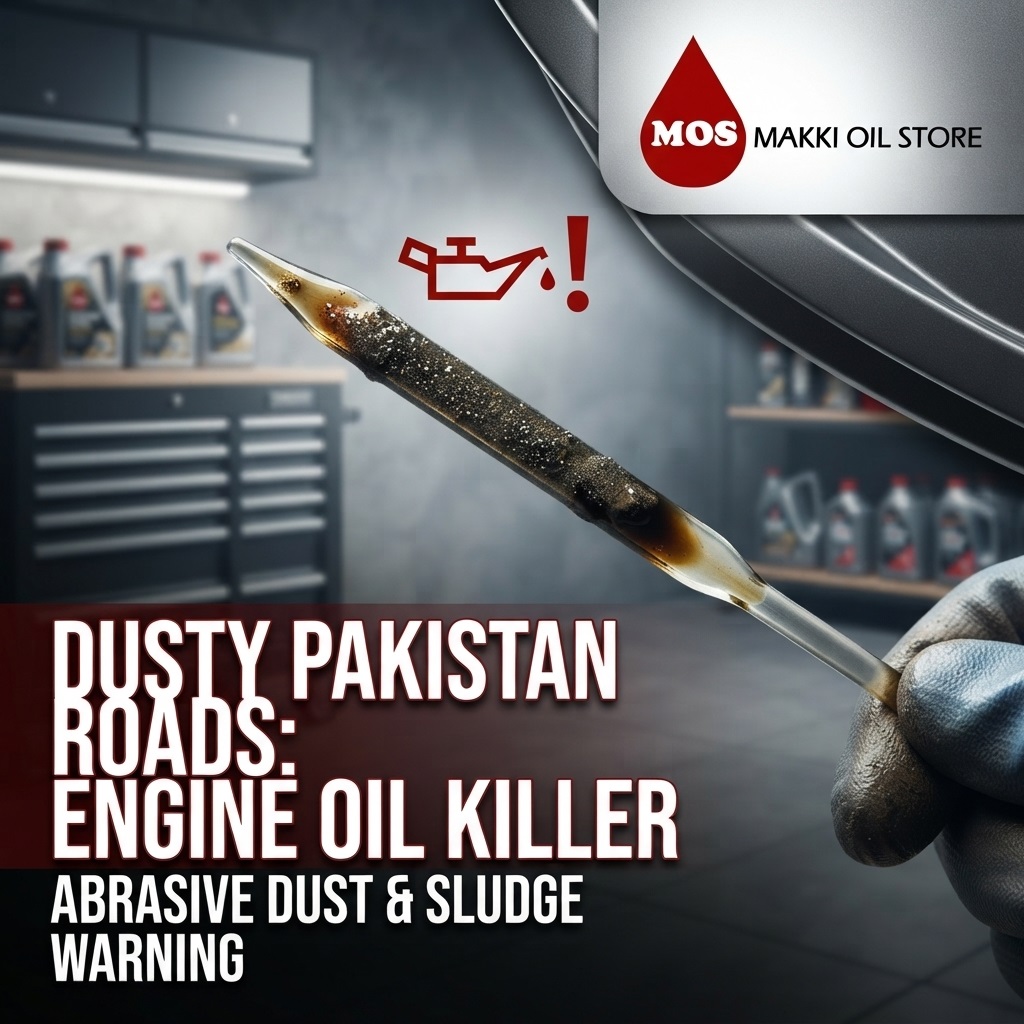
Operating a vehicle across Pakistan exposes mechanical systems to environmental factors that go far beyond standard laboratory testing. From urban construction sites kicking up fine silt in Lahore to unpaved rural tracks and desert winds carrying abrasive particulate matter, the atmosphere is saturated with microscopic dust. When these airborne particles breach your filtration barriers, they mix directly into your lubricant, transforming a protective fluid into an abrasive compound. Understanding how engine oil in dusty conditions behaves helps vehicle owners protect vital bearings, piston rings, and cylinder walls against premature internal wear.
The Journey of Airborne Dust into Your Engine
The primary defense against airborne debris is your engine’s air intake filter. However, when driving through severe dust storms, heavy traffic kicking up roadside silt, or unpaved regional roads, fine silica particles constantly bombard the outer filter medium. Over time, microscopic dust particles bypass worn seals or overwhelm clogged filter fibers, entering the combustion chambers.
Once inside, unburned carbon and abrasive silica bypass the piston rings during the power stroke and settle directly down into the oil pan. This contamination acts like liquid sandpaper, accelerating wear on close-tolerance components such as oil pumps, crankshaft journals, and valve guides. To understand how environmental stressors combine to shorten lubricant lifespan, motorists can explore expert findings on how engine oil changes with heat, dust, and traffic to evaluate the compounding physical strain placed on modern engines.
How Contaminants Degrade Lubricant Chemistry
Silica dust does not just float passively inside your oil pan; it actively alters the chemical composition of the fluid. Fine particulate matter absorbs dispersant additives—the chemical compounds responsible for keeping soot and carbon suspended in liquid form. When these additives become saturated with abrasive dust, they clump together into sticky sludge deposits.
- Accelerated Additive Depletion: Detergents and anti-wear agents exhaust themselves rapidly trying to neutralize suspended grit.
- Viscosity Thickening: Accumulated dust and sludge turn the fluid into a thick, tar-like substance that struggles to flow through narrow oil galleries.
- Filter Saturation: Oil filters become completely blocked much earlier than expected, forcing internal bypass valves to open and circulate dirty fluid directly through the engine.
Recognizing these regional environmental challenges requires adjusting standard maintenance routines rather than relying blindly on factory mileage charts. Vehicle owners can review comprehensive maintenance adjustments by examining how Pakistan’s road conditions affect oil changes to determine the ideal intervals for severe service environments.
| Operating Environment | Dust Severity | Additive Depletion Rate | Recommended Oil Change Interval |
| Clean Motorways & Highways | Low | Slow and predictable | Standard manufacturer mileage |
| Urban Streets & Suburban Commutes | Moderate | Accelerated due to soot and silt | Reduced by 20 to 30 percent |
| Unpaved Rural Roads & Construction Zones | Extreme | Rapid particulate saturation | Reduced by 40 to 50 percent |
Protecting Your Engine Against Abrasive Wear
Combating the harsh effects of local dust requires a proactive maintenance approach. Changing both your engine air intake filter and your oil filter concurrently is essential; installing fresh oil while leaving a choked, dust-laden air filter guarantees immediate recontamination.
At the Makki Oil Store, our expert technicians inspect air intake housings, evaluate oil contamination levels, and recommend high-detergent synthetic formulations engineered to handle severe particulate loads, keeping your engine running smoothly across every terrain.
Frequently Asked Questions
How does road dust actually enter my car’s engine oil?
Road dust enters the engine primarily through the air intake if the air filter is old, damaged, or improperly seated. Once microscopic silica particles pass through the combustion chamber during the intake and compression strokes, blow-by gases push them past the piston rings down into the oil pan, where they contaminate the circulating fluid.
Can a dirty oil filter trap all the dust that enters my engine?
An oil filter traps larger particulate debris, but microscopic sub-micron dust particles can pass right through standard filter media. Over time, as the filter becomes saturated with sludge and debris, its internal pressure relief valve may open, allowing unfiltered, abrasive fluid to circulate freely through the engine bearings.
Should I change my oil filter every time I change my engine oil in dusty conditions?
Yes, replacing the oil filter during every single oil change is absolutely mandatory when driving in dusty environments. Reusing an old oil filter leaves behind trapped abrasive grit that immediately contaminates your fresh oil charge, drastically reducing its protective lifespan.
How do I know if my engine oil is contaminated with dust and grit?
Severe dust contamination typically causes the oil to darken rapidly and take on a gritty texture. You can test a drop of oil from the dipstick by rubbing it between your fingers; if it feels coarse or sandy rather than smooth, the oil is heavily contaminated with abrasive particulate matter and requires immediate replacement.
Is synthetic oil more resistant to dust contamination than conventional oil?
Fully synthetic oils possess superior detergent and dispersant additive packages that hold suspended soot and fine dust particles much more effectively than conventional mineral oils, preventing them from coagulating into hard sludge deposits inside the engine block.