


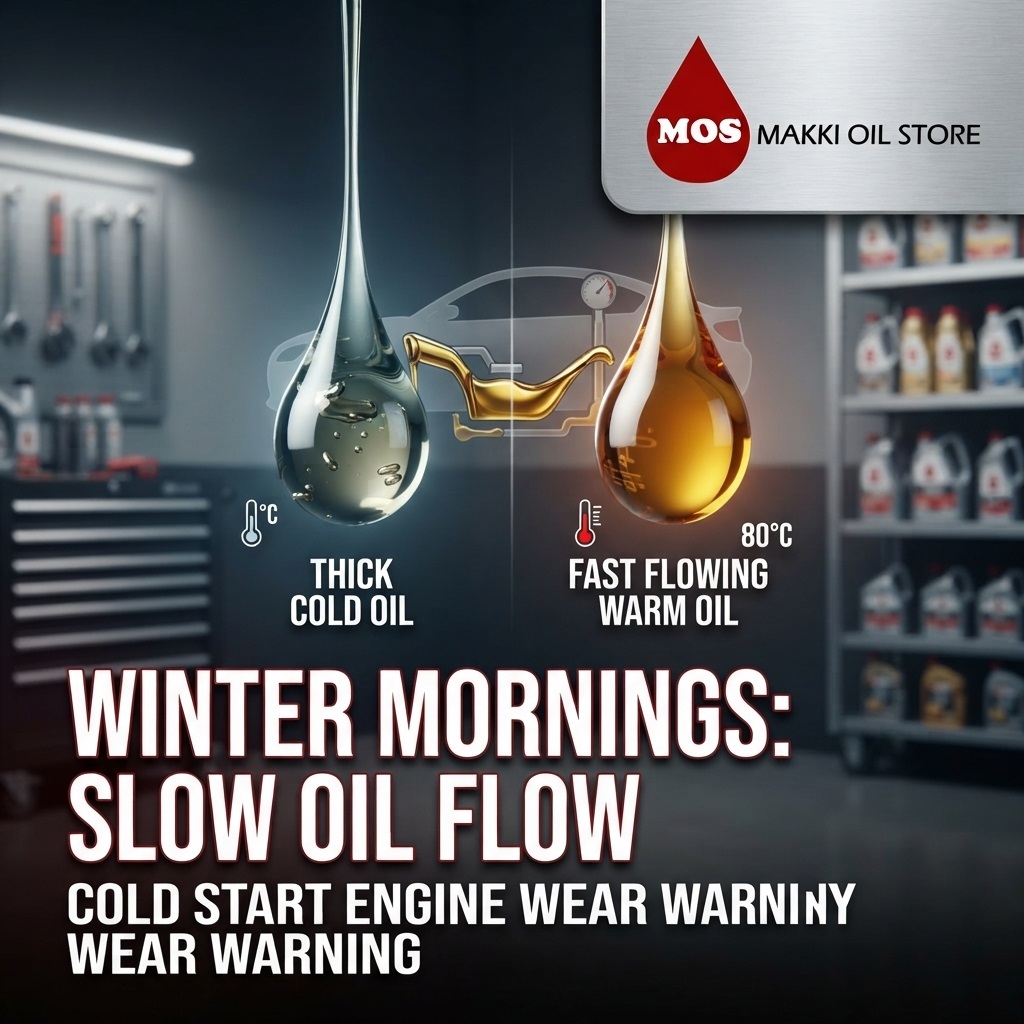
When freezing fog rolls across regional plains and morning temperatures plunge toward single digits, starting a car or motorcycle becomes an entirely different physical challenge. While most drivers focus on weak batteries or sluggish starter motors during cold snaps, the most critical vulnerability lies deep inside the oil pan. As the ambient thermometer drops, lubricants undergo a dramatic shift in thickness that temporarily restricts vital fluid circulation. Understanding how engine oil flow in winter behaves during freezing startups is essential for protecting internal bearings, camshafts, and piston rings against severe cold-weather friction.
The Physics of Cold-Weather Fluid Thickening
Liquid lubricants lose their fluidity as temperatures fall. When an engine sits overnight in freezing weather, the oil settles into the bottom of the oil pan and thickens considerably, resembling maple syrup or heavy honey. When you turn the ignition key on a frosty morning, the oil pump must work extra hard to draw this sluggish fluid through the pickup tube and force it through narrow internal galleries.
During the critical first few seconds after startup, moving metal parts rely entirely on the residual film left on their surfaces while the oil pump struggles to establish full pressure. If the fluid is too thick to flow rapidly, those metal components experience temporary oil starvation, resulting in accelerated cold wear. To grasp how plunging seasonal temperatures stress internal lubrication mechanics across local commuter routes, vehicle owners can review expert insights on cold-weather engine oil guide to appreciate the physical strain placed on engines during dawn departures.
Decoding Multi-Grade Ratings for Winter Protection
Selecting the correct lubricant requires understanding how viscosity numbers dictate cold-weather performance. Multi-grade oils feature a rating system where the number preceding the letter W denotes low-temperature flow behavior. For instance, a 5W or 10W oil remains fluid enough at sub-zero temperatures to pump rapidly through the engine block, whereas older or improperly selected heavy weights can seize up and delay lubrication dangerously.
- The ‘W’ Factor: The number before the W stands for winter, measuring how quickly the oil flows at low temperatures. Lower numbers indicate better cold flow.
- Pumpability Thresholds: High-quality synthetic oils maintain low-temperature pumpability much better than conventional mineral bases, minimizing startup friction.
- Rapid Circulation: Fast-flowing winter oil reaches overhead valve trains within seconds of ignition, drastically cutting down cold-start wear.
Choosing an appropriate grade tailored to seasonal weather fluctuations ensures your engine receives immediate protection the moment combustion begins. Drivers can examine professional selection principles by reviewing this engine oil viscosity guide to pair their vehicle with the ideal multi-grade lubricant.
| Viscosity Grade | Cold-Weather Flow Rating | Low-Temp Pumpability | Recommended Seasonal Use |
| 0W-20 / 5W-30 | Excellent low-temp fluidity | Rapid circulation in freezing weather | Modern passenger cars in cold winter regions |
| 10W-40 | Moderate cold-temp flow | Acceptable for mild winter mornings | Standard commuter vehicles and motorcycles |
| 20W-50 | Sluggish in freezing conditions | Poor low-temp pumpability | Avoid during harsh winter mornings |
Preventing Cold-Start Damage Through Proper Maintenance
Allowing an engine to idle for hours to warm up is an outdated practice that actually increases fuel dilution and washes cylinder walls; instead, gentle driving within the first minute is far more effective. However, using fully synthetic lubricants with superior low-temperature fluidity remains the single best defense against winter startup wear.
At the Makki Oil Store, our expert technicians test oil condition, evaluate low-temperature flow ratings, and recommend premium synthetic formulations engineered to flow instantly on frosty mornings, ensuring your engine remains fully protected year-round.
Frequently Asked Questions
Why does engine oil become thick on cold winter mornings?
Cold temperatures cause the hydrocarbon molecules in liquid lubricants to slow down and pack closer together, increasing internal resistance to flow. This physical reaction turns the fluid thick and sluggish, making it much harder for the oil pump to circulate during initial startups.
How long does it take for engine oil to circulate on a freezing morning?
On a freezing morning, it can take anywhere from five to fifteen seconds for thick oil to reach the uppermost components of the engine like the camshaft and valve train, which is why the first few moments after ignition cause the most internal wear.
Is synthetic oil better for cold winter startups than conventional oil?
Fully synthetic engine oils possess superior molecular uniformity and maintain exceptional fluidity at sub-zero temperatures compared to conventional mineral oils, allowing them to pump rapidly through the engine the moment you turn the key.
What happens if I use an oil that is too thick for winter?
Using an oil with a high winter rating (such as a heavy 20W oil in freezing weather) can cause the fluid to flow too slowly during startup, leaving critical engine bearings starved of lubrication and draining power from your starter motor and battery.
Should I warm up my car engine before driving in winter?
Modern fuel-injected engines only require thirty seconds to one minute of gentle idling after a cold start before they are ready to drive. Driving gently at low RPMs warms up the entire engine and oil system much faster and more efficiently than prolonged stationary idling.