


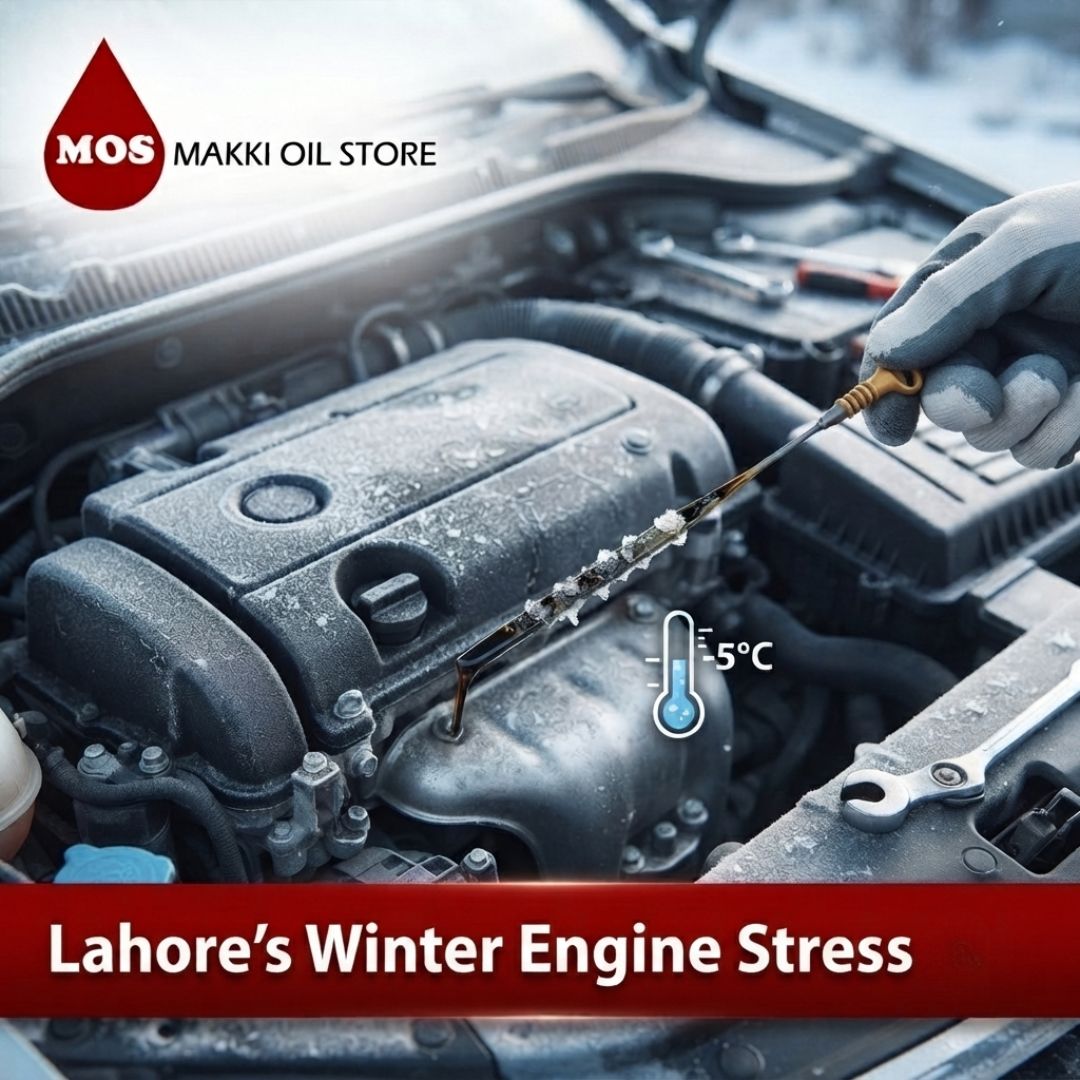
As the winter season settles over Lahore, many drivers notice their vehicles behaving differently during those initial few minutes on the road. The chilly morning air doesn’t just affect your comfort; it significantly impacts the performance of your engine oil. When temperatures drop, oil naturally becomes more viscous or thicker, which makes it harder for your engine to distribute that essential lubricant during the first few moments after startup.
The Cold Start Challenge
Every time you start your car after it has been sitting in the cold overnight, the oil has drained down into the oil pan, leaving the internal engine components relatively dry. In freezing or near-freezing temperatures, the oil flows more slowly. This delay, however brief, means that for a few critical seconds, your engine parts are rubbing against each other with minimal protection.
Modern synthetic oils are engineered to handle these temperature fluctuations much better than older mineral-based oils. If you are struggling to decide between different grades for your specific vehicle, it is helpful to look at the differences in viscosity, such as which is better 5W30 or 10W30 for your climate and engine type. Choosing the right oil ensures that it can reach critical engine components quickly, even on the coldest mornings in Lahore.
Protecting Your Engine Through Winter
Beyond just the choice of oil, how you manage your vehicle during these months matters. Allowing your engine to warm up for just thirty seconds to a minute before driving away and avoiding heavy acceleration until the temperature gauge rises is a simple, effective way to help your engine oil do its job.
At the Makki Oil Store, we frequently advise our customers to ensure their oil level and quality are checked as winter approaches. Fresh, high-quality oil maintains its fluidity better than degraded, sludge-filled oil, providing the instant protection your engine needs when the thermometer dips.
Frequently Asked Questions
Why does my engine sound louder on cold mornings?
The increased noise during a cold start is primarily due to the oil being thicker and taking longer to circulate through the engine’s narrow passages. As the oil pump works to push the thicker fluid, you may hear slight ticking or grinding noises from the valve train. Once the engine warms up and the oil reaches its optimal operating temperature, it thins out and flows efficiently, which should cause these startup noises to fade away.
Does cold weather increase the frequency of oil changes?
While cold weather itself isn’t the only factor, winter driving patterns often involve shorter trips. Short trips are notoriously hard on engines because they don’t allow the oil to get hot enough to evaporate moisture that accumulates from condensation. This can lead to an acidic sludge buildup. If you primarily do short commutes, you may find that your oil gets contaminated faster in winter than in summer, necessitating more frequent checks and potential changes.
Is it necessary to “warm up” my car for a long time in the winter?
Actually, no. Modern fuel-injected engines are designed to be ready to drive within about 30 to 60 seconds of starting. Idling your car for 10 or 15 minutes is not only inefficient and harmful to the environment, but it can actually be bad for the engine because it forces it to run in a cold, rich fuel state for too long. This causes extra fuel to wash off the protective oil film from your cylinder walls. A short, gentle warmup is all you need.
How do I know if my oil is too thick for Lahore’s winter?
If you are using a very heavy oil such as a straight 40 or 50-grade mineral oil you might notice that your engine cranks slowly or sounds very labored during a cold start. This is a sign that the oil is too viscous for the ambient temperature. Modern multi-grade oils, like the 5W or 0W series, are specifically designed to be thin enough to flow instantly in the cold while remaining thick enough to protect the engine when it reaches its full operating temperature.
Can old oil cause my engine to fail in cold weather?
Yes, old oil that has reached the end of its service life often contains contaminants and moisture that can freeze or create “gelling” issues in extreme cold. Furthermore, the additives that help the oil resist thickening in the cold break down over time. Using oil that is past its recommended mileage interval increases the risk of the oil being too thick to lubricate properly at startup, which is when the majority of long-term engine wear occurs.