

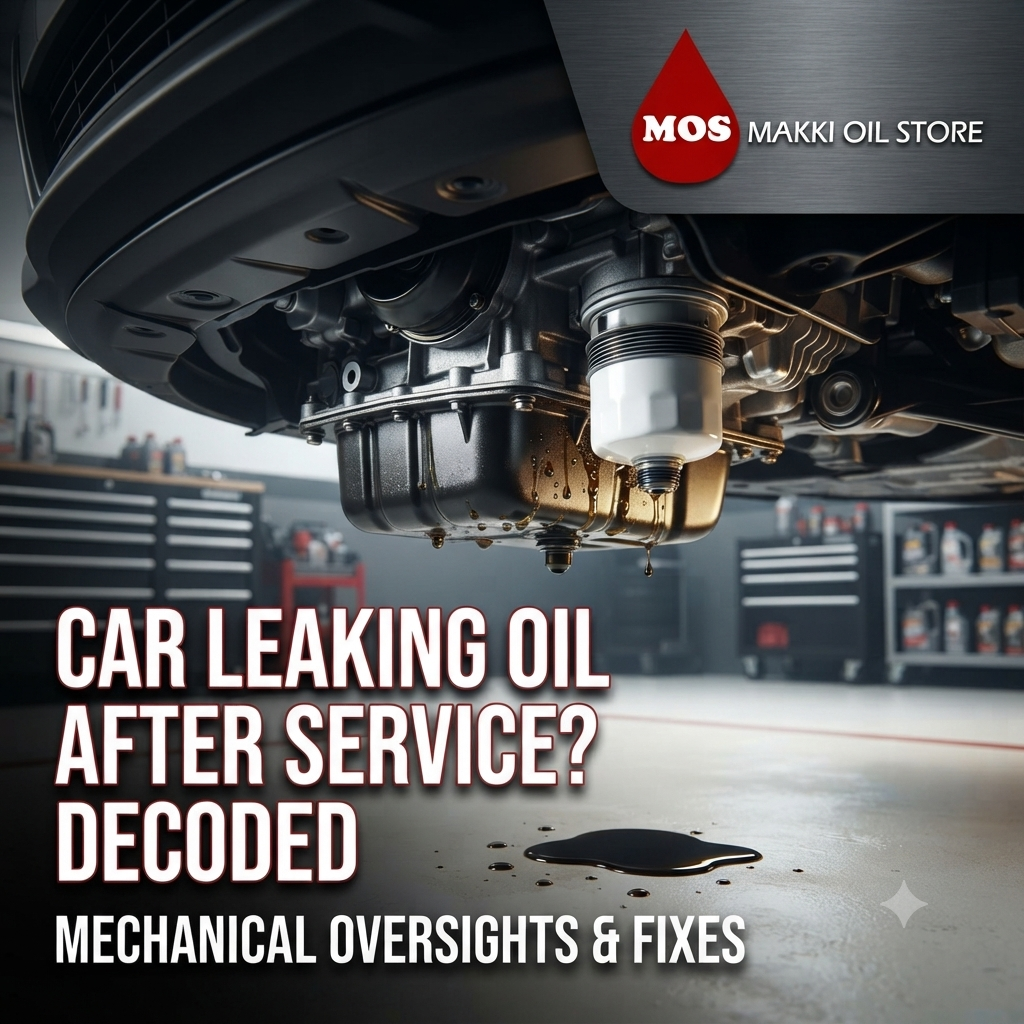
Finding a fresh puddle of dark fluid beneath your vehicle shortly after a routine maintenance check can be both baffling and frustrating. You take your car in to protect the engine, only to discover a sudden car oil leak developing right where it should be tightly sealed. This post-service issue usually stems from simple mechanical oversights during the replacement process, such as an unseated filter gasket, a loose drain plug, or residual spillage. Understanding why these leaks happen helps you quickly identify whether you are dealing with a harmless clean-up spill or a mechanical error that requires immediate correction.
The Most Common Post-Service Culprits
When an oil puddle appears after a recent service, the root cause is almost always tied directly to the hands-on actions performed during the fluid swap. The most frequent offender is the oil filter mounting area. If a technician fails to remove the old rubber O-ring gasket before installing a new filter, a frustrating phenomenon known as a double-gasket scenario, the mismatch creates an instant, heavy leak as soon as oil pressure builds. Similarly, an oil pan drain plug that has been cross-threaded, over-torqued, or fitted with a crushed or missing metal washer will steadily seep fluid onto your driveway.
Preventing these mechanical oversights requires meticulous attention to detail during every step of the maintenance procedure. To ensure your vehicle remains properly looked after throughout its operational lifespan, you can incorporate best practices by learning how to improve your oil change routine and emphasize careful assembly and post-service inspection. Taking these extra moments to verify hardware tightness protects your vehicle from avoidable fluid loss.
Residual Spillage Versus Active Leaks
Not every drop of fluid spotted after a service indicates a broken seal or a loose bolt. During a standard filter replacement, a certain amount of oil inevitably spills out of the old canister and runs down the sides of the engine block or collects on the protective skid plate underneath. Once you start driving, the wind and vibration cause this trapped residual oil to work its way down and drip onto the ground, mimicking the appearance of a severe leak.
This harmless spillage usually burns off or stops dripping entirely after a day or two of normal driving. However, if the fluid accumulation continues unabated, or if you notice fresh wet drops forming continuously while the engine idles, you are dealing with an active mechanical leak rather than simple clean-up runoff. Distinguishing between normal post-service runoff and an actual seal failure is vital for maintaining your engine’s oil volume and preventing unexpected pressure drops.
Environmental Stressors and Aging Gaskets
Regional driving conditions also play a quiet role in post-service fluid loss. Operating a vehicle through heavy urban congestion and extreme summer heat cycles places severe thermal stress on rubber hoses, plastic housings, and composite gaskets. When a technician disturbs older, hardened components such as loosening an oil filter housing cap or shifting a dipstick O-ring the brittle rubber may crack or fail to reseal properly under high operating pressures.
Maintaining high standards of workmanship and utilizing certified components makes all the difference when combating these regional challenges. Drivers seeking reliable, professional maintenance can explore what sets makki oil apart to understand how rigorous technical standards prevent common installation errors. Professional oversight ensures that every seal, gasket, and plug matches the manufacturer’s exact thermal specifications.
Professional Diagnostics and Corrective Actions
If you confirm that your vehicle is actively losing fluid after a service, you should avoid driving until the source is identified and corrected. Start by safely jacking up the vehicle and inspecting the oil filter housing and drain plug with a flashlight. If the drain plug is loose, a careful half-turn may stop the seepage, but if the threads are stripped, a professional re-threading or replacement pan is mandatory.
At the Makki Oil Store, we emphasize meticulous post-service checks to ensure every customer drives away with a completely dry, securely sealed engine block. Addressing post-service leaks immediately safeguards your engine against catastrophic pressure loss and preserves the longevity of your lubrication system.
Frequently Asked Questions
Why does a double gasket happen during an oil filter replacement?
A double gasket occurs when a technician removes an old oil filter but fails to notice that the old rubber O-ring gasket has stuck to the engine mounting surface. When the new filter which already has its own integrated rubber gasket is screwed directly on top of the old stuck ring, the two rubber pieces crush against each other unevenly. As soon as the engine starts and oil pressure surges, fluid forces its way past this compromised seal, resulting in a rapid and severe leak that can drain your oil pan in minutes.
How can I tell if fluid on my driveway is residual spillage or a real leak?
You can differentiate between residual spillage and an active leak by checking the location, volume, and duration of the fluid drops. Residual spillage typically consists of a small amount of oil that pooled on the engine skid plate or frame during the filter removal, and it will usually stop dripping entirely within forty-eight hours of driving. In contrast, an active leak caused by a loose drain plug or faulty gasket will continue to produce fresh puddles day after day, accompanied by a noticeable drop in your dipstick oil level.
Can an over-tightened oil filter cause a leak?
An over-tightened oil filter can indeed cause a significant leak by warping the filter canister or crushing and distorting its rubber sealing gasket. Filters should always be spun on snugly by hand or tightened according to the manufacturer’s specific torque guidelines, rather than wrenched down with excessive force using heavy tools. Over-tightening can also ruin the metal mounting threads or make the filter nearly impossible to remove during your next scheduled maintenance interval.
What should I do if my drain-plate-washer was not replaced?
If your oil pan drain plug was reinstalled with an old, flattened crush washer instead of a fresh one, the worn washer may fail to form a tight, leak-proof seal against the oil pan. While minor seepage can sometimes be temporarily slowed by gently tightening the bolt, the correct remedy is to drain the oil, remove the plug, and install a brand-new copper or aluminum crush washer. Reusing old washers under high thermal stress is a common shortcut that leads directly to persistent drips.
Is it safe to drive my car if it is leaking a small amount of oil after service?
Driving your car with any active oil leak is a risky gamble because a minor drip can quickly turn into a major gusher once vibration and thermal expansion stress the faulty seal further. Even if the leak appears slow, it can steadily deplete your total oil volume, leading to low oil pressure, noisy valve trains, and potential engine seizure. It is always safest to inspect the source immediately, top up your fluid level if necessary, and return the vehicle to the service shop to have the improper installation corrected free of charge.