


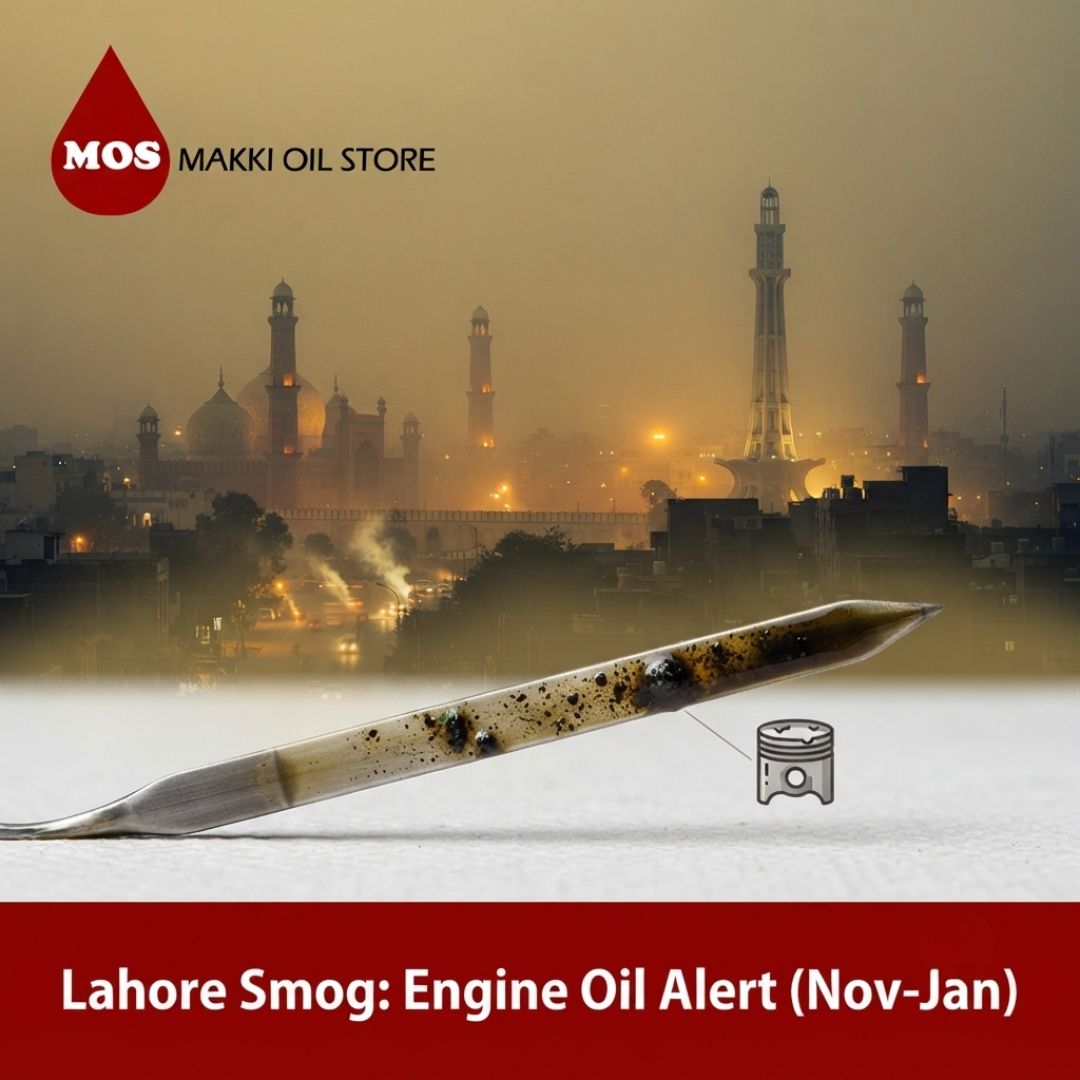
Every year, as November approaches, Lahore experiences a drastic shift in air quality. While we are all aware of the health implications of smog, many drivers overlook the hidden toll it takes on their vehicles. During these months, the dense mixture of pollutants, fine particulate matter, and cold, stagnant air creates an environment that damages your engine oil far more quickly than standard conditions. Understanding how this seasonal shift impacts your vehicle’s lubrication system is crucial for avoiding long-term mechanical issues.
The Chemistry of Smog and Engine Stress
The link between smog and engine oil health is rooted in how your engine “breathes.” Your vehicle’s air intake pulls in massive amounts of air to facilitate combustion. When the air is saturated with fine, abrasive particles typical of Lahore’s smog, even the best air filter faces a monumental task. Over time, microscopic dust and carbon particles inevitably bypass the filtration system and find their way into the crankcase.
Once these particles enter the oil supply, they act as an abrasive grit. This grit gets caught between moving parts like the piston rings and cylinder walls, accelerating wear. Furthermore, the colder temperatures during smog season mean that your engine takes longer to reach its optimal operating temperature. During this “cold start” period, the engine runs richer, meaning more unburned fuel can seep past the piston rings and dilute the oil, further degrading its protective properties.
Avoiding Counterfeit Products During Maintenance
Maintenance is critical during these months, but you must be careful about the quality of parts you choose. The market is often flooded with low-quality or fake products, especially when demand for oil and filters spikes during the winter prep season. It is vital that you learn how to spot fake engine oil before it damages your engine to ensure your vehicle is actually receiving the protection it needs. Using inferior oil during the smog season is a recipe for engine sludge, as the oil will break down under the stress of both the cold temperatures and the increased particulate contamination.
Proactive Care at the Makki Oil Store
To navigate the smog season safely, we recommend a more conservative maintenance schedule. If you typically change your oil every 5,000 kilometers, consider shortening this to 3,500 or 4,000 kilometers during the November-to-January window. At the Makki Oil Store, we focus on providing high-performance, full-synthetic lubricants that are specifically designed to resist oxidation and maintain flow in varying temperatures, which is essential for protecting your engine against the specific challenges of our local environment.
Protecting Yourself Beyond the Engine
While engine health is vital, true road safety encompasses the entire vehicle. With the new government regulations mandating fire safety equipment, ensure your car is also compliant. We currently stock essential car fire extinguishers for PKR 2,000. These units are a mandatory requirement for traveling on Pakistan’s motorways and are a critical addition to your vehicle’s emergency kit. Visit us to ensure your car is fully prepared for the road ahead.
Frequently Asked Questions
Does the cold weather during smog season change how my engine oil performs?
Yes, cold weather significantly impacts oil viscosity. When the temperature drops, conventional oils can become thicker, making it harder for the engine to crank and for the oil to circulate immediately upon startup. This is the period when most engine wear occurs. High-quality synthetic oils are engineered to remain fluid even in freezing temperatures, ensuring that your engine is protected the moment you turn the key, which is why synthetic is highly recommended during the winter months.
How do particulates in the air end up inside my engine oil?
Particulates like soot, dust, and fine chemical pollutants are everywhere during smog season. While your engine’s air filter catches the vast majority of these particles, it cannot capture 100% of them. Over months of heavy air pollution, the minute amount of dust that gets through accumulates in the oil. Once in the oil, these particles cluster together and turn into a sludge-like abrasive. This is why replacing your air filter at every oil change is just as important as the oil change itself during the winter.
Can smog-related engine issues trigger the “Check Engine” light?
Yes, they can. The accumulation of soot and pollutants can negatively affect your engine’s sensitive sensors, particularly the Mass Airflow (MAF) sensor and the oxygen (O₂) sensor. If the air filter becomes clogged with smog debris or if the oil becomes too contaminated, the engine’s performance suffers. The onboard computer detects these irregularities as a decrease in efficiency or an abnormal exhaust reading, which often triggers the “Check Engine” light to alert you that the vehicle needs professional attention.
Why is “short-trip” driving during smog season particularly harmful?
Short trips are detrimental because the engine never reaches a high enough temperature to fully “boil off” the moisture and fuel that collect in the oil during a cold start. During smog season, the ambient air is cold, making this process even slower. If you only drive for short distances, these contaminants build up rapidly, turning your oil acidic and sludge-prone. If you must drive short distances, try to take the car for a longer, 20-minute drive on the highway once a week to help the engine clear out these harmful byproducts.
Is it necessary to change the oil filter more frequently in winter?
Yes, the oil filter acts as the primary defense against the increased intake of pollutants and soot during the winter months. If you are operating in high-smog conditions, the filter media will reach its capacity for trapping particles much faster than it would in clear-air conditions. Leaving an old filter in the car means that once it is full, the bypass valve will open, allowing unfiltered, dirty oil to circulate directly through your engine, which defeats the entire purpose of an oil change.