


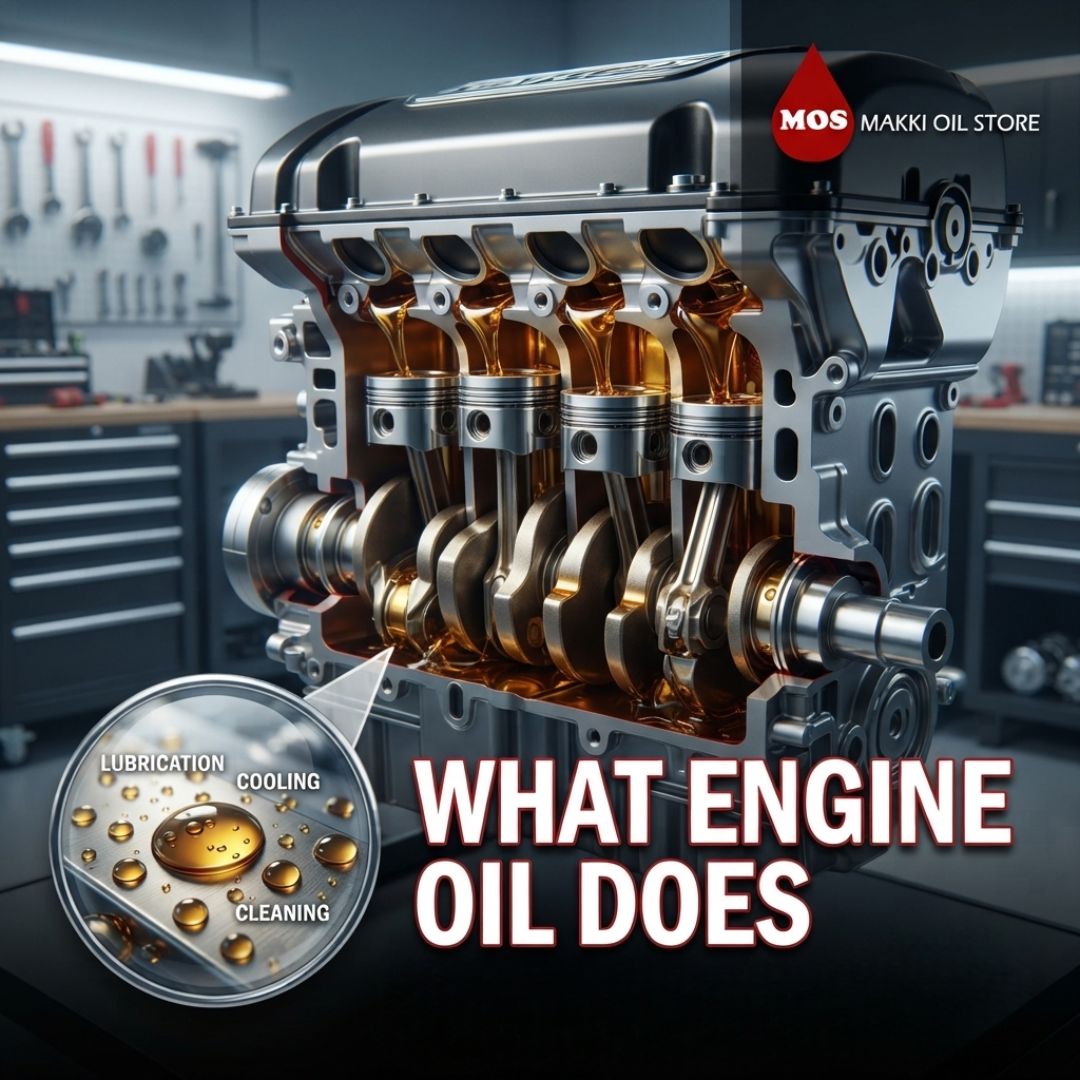
Many drivers view engine oil simply as a fluid that needs to be changed periodically to satisfy a mechanic. However, if you could peek inside your engine while it is running, you would see that oil is doing much more than just lubricating; it is acting as a specialized chemical shield that keeps your vehicle from tearing itself apart. Understanding these functions is the first step toward becoming a more informed car owner.
The Multiple Roles of Engine Oil
At its most basic level, engine oil serves as a lubricant, keeping metal-on-metal contact to a minimum. Without it, the thousands of internal parts like pistons, crankshafts, and bearings would generate so much heat through friction that the engine would weld itself shut in seconds. Beyond lubrication, the oil performs several other critical tasks:
- Cooling: While your car’s cooling system handles the bulk of heat removal, oil plays a vital role by absorbing heat from the combustion chamber and internal bearings, carrying it away to the oil pan where it can dissipate.
- Cleaning: Modern oils are packed with detergents that prevent carbon, sludge, and dirt from building up inside the engine. It collects these contaminants and transports them to the oil filter, where they are trapped.
- Sealing: Oil helps create a seal between the piston rings and the cylinder walls. This maintains the pressure needed during the combustion cycle, ensuring your engine delivers full power rather than losing it through leakage.
- Corrosion Protection: Over time, engines can develop internal rust due to moisture condensation. Oil forms a protective layer on all metal surfaces, neutralizing acids and preventing oxidation from damaging the engine internals.
If you are curious about the technical specifications required to perform these tasks effectively, it is helpful to look at our guide to what kind of oil is used in car engines based on your specific vehicle model and the environmental conditions of your region.
The Importance of Consistency
Using the right oil is only half the battle. Because oil is constantly picking up soot, dust, and metallic debris, it eventually becomes saturated. When that happens, it can no longer effectively hold these contaminants, and they begin to deposit themselves throughout your engine. This is why regular changes are non-negotiable. At the Makki Oil Store, we believe that the consistent application of high-quality, manufacturer-recommended oil is the most effective way to extend the lifespan of your vehicle and maintain its performance over the long term.
Frequently Asked Questions
Why does engine oil turn black over time?
Engine oil turning black is actually a sign that it is doing its job correctly. Because oil contains detergents and dispersants, it is designed to pick up microscopic particles of carbon, soot, and dirt that form during the combustion process. When the oil stays clean and golden for a long time, it might actually suggest that it lacks the cleaning additives needed to hold these contaminants in suspension. However, if the oil turns black almost immediately after a change, it may indicate a deeper issue like extreme sludge buildup in the engine.
Does the oil filter really affect how the oil works?
The oil filter is an essential partner to the engine oil. Its job is to capture the solid particles and contaminants that the oil has collected from the engine internals. If you change your oil but use an old or poor-quality filter, the new oil will immediately circulate through a dirty environment, negating the benefits of the fresh fluid. A high-quality filter ensures that the oil remains clean for as long as possible, allowing the additives in the oil to focus on protection rather than just managing debris.
Can old oil cause my engine to overheat?
While the primary job of the cooling system is to manage heat, oil plays a secondary but crucial role in thermal regulation. As oil ages, its ability to transfer heat decreases. It becomes thicker or potentially sludgy, which slows down its circulation. If the oil cannot effectively move heat away from high-temperature areas like the pistons and bearings, the local temperature within the engine block rises. This puts additional strain on the entire cooling system and can lead to the thermal breakdown of the oil itself.
How does oil help with fuel economy?
Proper lubrication significantly reduces internal engine friction. When your engine parts move against each other with minimal resistance, the engine does not have to work as hard to maintain its speed or produce power. This leads to better fuel efficiency. Conversely, if you use the wrong viscosity of oil or let it degrade until it becomes thick and contaminated, your engine must expend more energy just to keep its components turning, which noticeably increases your fuel consumption.
What is the difference between “synthetic” and “mineral” oil?
The main difference lies in how they are produced. Mineral oil is refined directly from crude oil, which means it contains natural impurities. Synthetic oil is engineered in a lab to have uniform, consistent molecules. Because synthetic oil is more chemically stable, it performs better under extreme heat, resists oxidation, and flows more reliably at startup, especially in hot climates. While synthetic oil is generally more expensive, its superior performance and longer service life often make it the better choice for protecting modern, high-tolerance engines.