


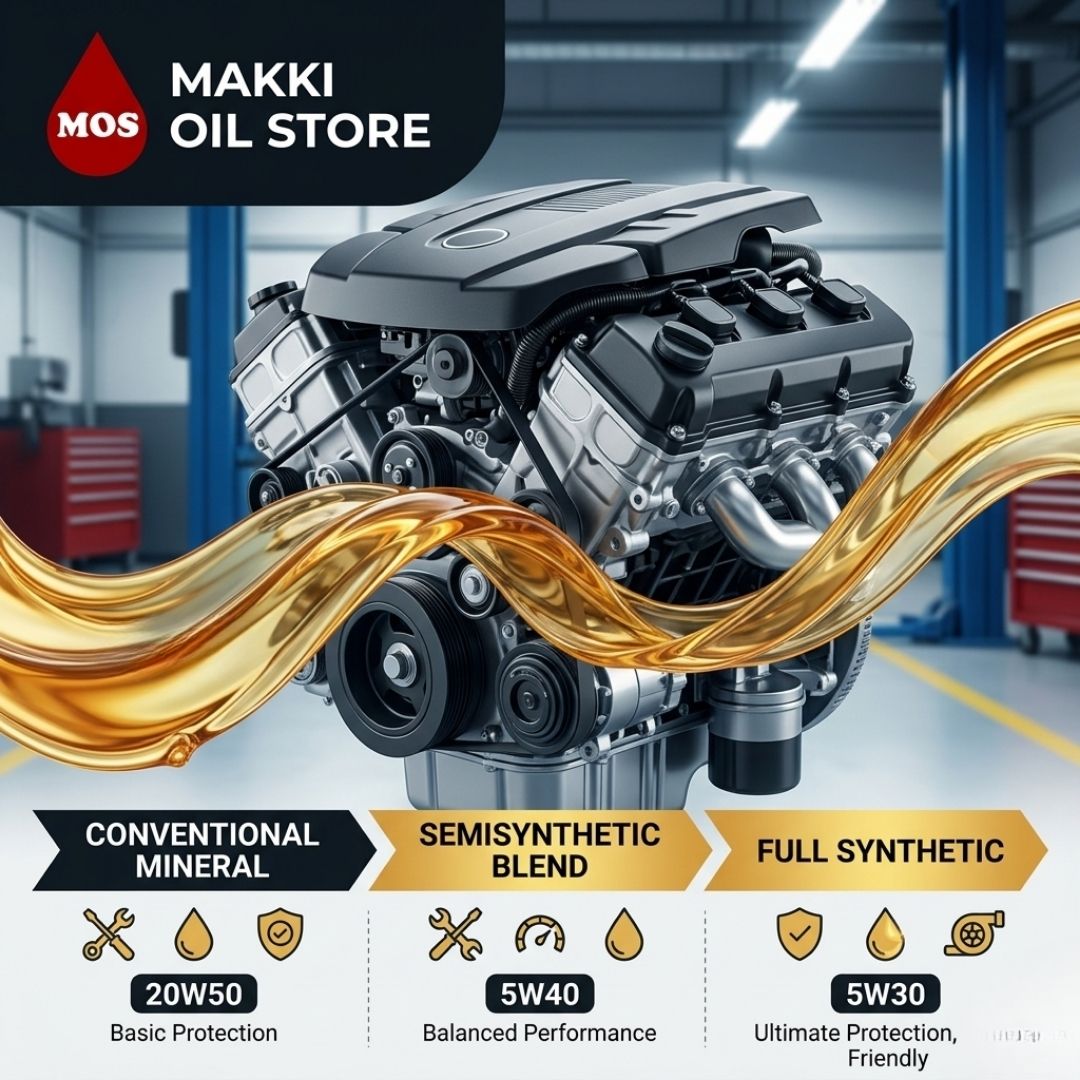
For many drivers in Lahore, the engine is a complex mystery that stays hidden under the hood. However, there is one component that every vehicle owner interacts with regularly: car engine oil. This vital fluid is often called the “lifeblood” of the vehicle, and for good reason. Without it, the thousands of metal parts moving at high speeds inside your motor would grind against each other, creating enough heat to weld themselves together in a matter of minutes.
Understanding the specific engine oil for cars isn’t just for mechanics or automotive engineers. Whether you are navigating the morning rush on the Canal Road or idling in the heat near Liberty Market, the quality and type of your car oil lubricant dictate how smoothly your vehicle runs and how long it will last. In this guide, we break down the different varieties of lubricants available and how they function to keep you on the move.
The Essential Role of Engine Lubrication
The primary job of automotive engine oil is to provide a thin, slippery barrier between moving parts. When your engine is running, pistons are firing and the crankshaft is spinning thousands of times per minute. Proper engine lubrication ensures these parts slide past each other rather than rubbing.
Beyond reducing friction, the oil also acts as a cooling agent. While the radiator handles the overall temperature, the oil carries heat away from the combustion chamber and the internal bearings—areas the coolant cannot reach. Additionally, modern oils are packed with detergents that pick up microscopic bits of dust, carbon, and metal shavings, carrying them to the filter to prevent buildup. This comprehensive engine performance protection is what allows a modern car to run for hundreds of thousands of kilometers.
Understanding Oil Viscosity Grades
When you look at a bottle of car motor oil, you will see a code like 5W-30 or 20W-50. This refers to the oil’s viscosity, which is a technical term for how thick or thin the fluid is. The “W” stands for Winter. The first number tells you how the oil flows in cold weather, while the second number tells you how it performs at high temperatures.
In the local Lahore climate, where we experience both chilly winter mornings and blistering 45°C summer afternoons, choosing the right grade is critical. A thinner oil flows faster at startup, providing immediate protection, while a thicker oil provides a heavier cushion during extreme heat. To make an informed decision, you should learn how to choose the right engine oil for your car based on your manufacturer’s requirements and your vehicle’s current mileage.
The Main Types of Car Motor Oil
Not all oils are created equal. Depending on your car’s age and your driving habits, you will likely choose from one of the following three categories:
Conventional Mineral Oil
This is the most basic form of car motor oil, refined directly from crude oil. It is generally the most affordable option and is perfectly suitable for older vehicle models with simple engine designs. However, it breaks down faster under high heat and requires more frequent oil change maintenance to prevent the formation of engine sludge.
Synthetic Engine Oil
Synthetic engine oil is chemically engineered in a laboratory to have a consistent molecular structure. It is far superior to mineral oil in almost every way; it resists breakdown at high temperatures, flows better in the cold, and provides better protection against wear. Most modern, turbocharged, or high-performance cars in Lahore’s urban areas now require full synthetic oil to maintain their warranty and performance levels.
Synthetic Blend (Semi-Synthetic)
This is a mixture of conventional and synthetic oils. It offers a middle ground, providing better protection than mineral oil at a lower price point than a full synthetic. It is a popular choice for daily commuters who want to reduce engine wear without the premium cost of a fully engineered lubricant.
Factors Influencing Your Choice in Lahore
While the car’s manual is the ultimate authority, local conditions in Lahore often influence what professional shops recommend. The city’s air can be quite dusty, and the stop-and-go nature of traffic in areas like Johar Town or Gulberg puts extra strain on the engine. Constant idling in high heat means the oil is working much harder to keep the engine cool than it would on a free-flowing highway.
For high-mileage vehicles that have seen years of use on our roads, a thicker oil might be suggested to help seal small gaps that have developed over time. Conversely, for a brand-new Japanese import, a very thin, high-tech synthetic is usually necessary to ensure all the precision parts are reached by the lubricant. Staying consistent with your maintenance schedule at a trusted Makki Oil Store service point is the best way to ensure your engine stays healthy regardless of the weather or traffic.
Frequently Asked Questions
How often should I really change my car engine oil?
The frequency of an oil change depends on the type of oil you use and your driving conditions. For conventional mineral oil, it is common practice in Lahore to change it every 3,000 to 5,000 kilometers. If you are using high-quality synthetic engine oil, you can often go 8,000 to 10,000 kilometers between changes. However, if you spend a lot of time idling in heavy traffic or driving in dusty conditions, you should stick to the shorter end of those ranges to ensure the oil hasn’t become too contaminated to protect your engine.
Can I switch from mineral oil to synthetic oil in an older car?
Yes, you can generally switch from mineral to synthetic engine oil at any time. Synthetic oils are designed to be compatible with conventional ones. In fact, the superior cleaning agents in synthetic oil can help remove old sludge buildup. However, in very old cars with worn seals, the thinner and more “slippery” nature of synthetic oil can occasionally reveal a leak that was previously blocked by gunk. It is a good idea to monitor your oil level closely for the first few weeks after making the switch in an older vehicle.
What happens if I forget to change my oil for a long time?
If you neglect your oil change maintenance, the oil will eventually turn into a thick, black “sludge” that looks like tar. This sludge cannot circulate through the engine, meaning parts will begin to rub together without lubrication. This causes extreme heat, leading to warped components, broken piston rings, and eventually, a total engine seizure. Repairing an engine that has seized due to lack of oil is often more expensive than the value of the car itself, making regular oil changes the most important maintenance task you can perform.
Why does my car need more oil in the summer heat?
High temperatures cause engine oil to thin out and, in some cases, evaporate slightly. In a city like Lahore where summer temperatures are extreme, your engine runs hotter, which can lead to higher oil consumption. This doesn’t necessarily mean you have a leak; it may simply be that the oil is breaking down or being consumed faster due to the thermal stress. It is a wise habit to check your dipstick at least once every two weeks during the summer months to ensure you are maintaining the correct level for engine performance protection.
Does the color of the oil on the dipstick tell me if it’s bad?
Not necessarily. While fresh car engine oil is usually a transparent amber color, it can turn dark or black quite quickly after being added to the engine—especially in diesel vehicles. This darkening actually means the oil is doing its job by picking up carbon and soot deposits and holding them in suspension so they don’t stick to your engine parts. Instead of judging by color alone, you should rely on your odometer and the date of your last service to decide when it is time for a fresh change.