


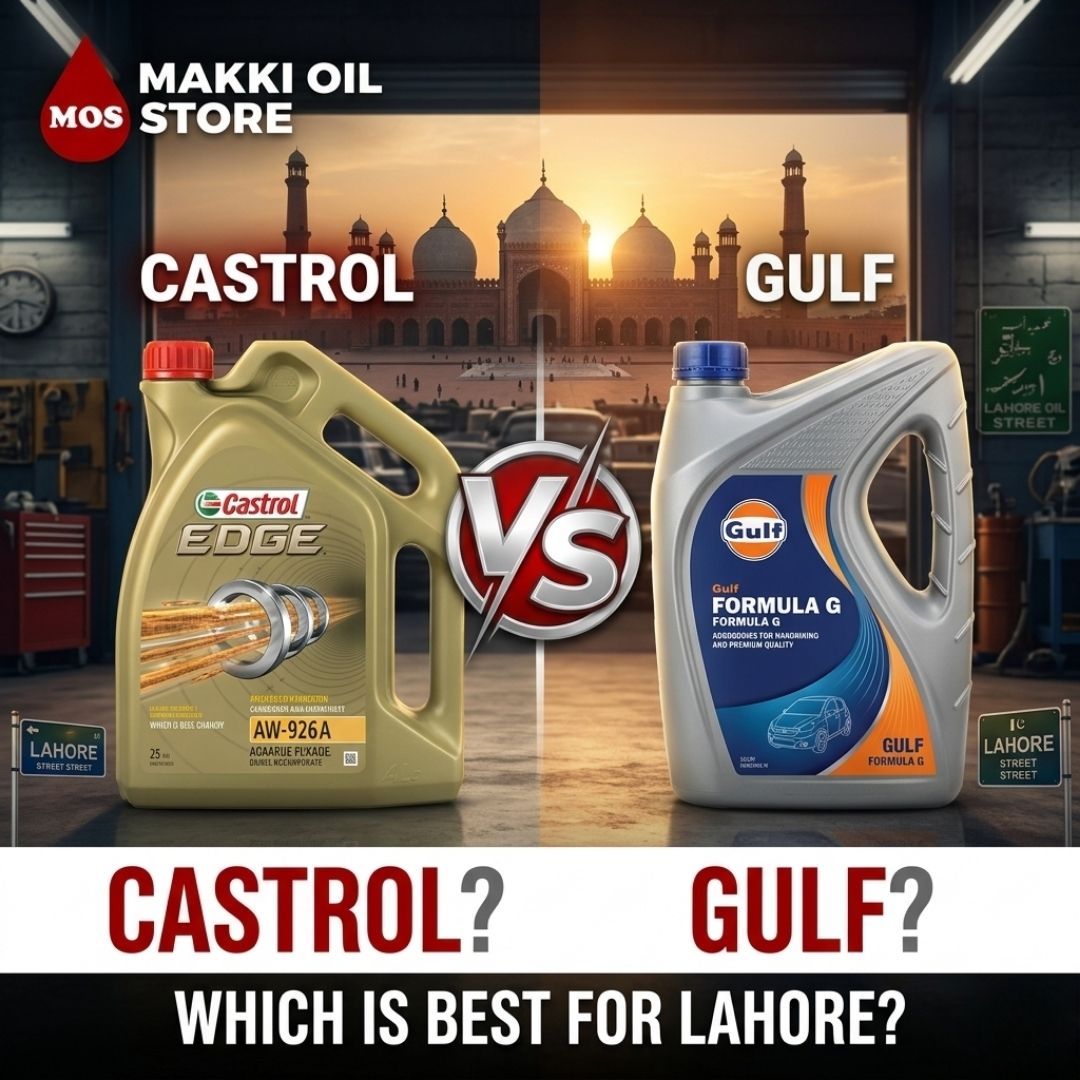
Choosing a lubricant for your vehicle often feels like a high-stakes decision, especially when you are standing in a shop in Lahore surrounded by rows of colorful bottles. Two names that frequently dominate the conversation are Castrol and Gulf. Both are global giants with decades of history in the petroleum industry, and both have built a significant presence in the Pakistani market. But when it comes to the specific needs of your engine whether you are driving a brand-new sedan or a high-mileage motorcycle deciding between Castrol vs Gulf requires looking past the branding and into the technical performance of the oil.
In a city like Lahore, where your engine has to endure the double challenge of intense summer heat and the thick, idling traffic of the Ring Road or Model Town, the quality of your oil is your only defense against mechanical failure. Understanding the nuances of a Castrol vs Gulf oil comparison helps you choose a product that doesn’t just “fit” but actually enhances your driving experience.
Castrol vs Gulf Performance: Engineering for Different Needs
When we analyze Castrol vs Gulf performance, we are looking at how these oils handle friction and thermal breakdown. Castrol is world-renowned for its focus on liquid engineering, often incorporating proprietary molecules that cling to engine parts even when the motor is turned off. This provides a specialized layer of protection during that critical moment of a cold start, which is a major benefit for city drivers who make frequent short trips.
On the other hand, Gulf has a legendary reputation rooted in endurance racing and heavy-duty performance. Their lubricants are often praised for their robust viscosity stability, meaning they resist thinning out even when the engine is running under extreme pressure for long periods. If your daily routine involves heavy loading or long-distance travel across the Punjab plains, the sheer durability of the Gulf formulation provides a high level of engine protection and durability.
Engine Oil Quality Comparison and Additive Technology
The real difference between Castrol engine oil vs Gulf engine oil lies in their additive packages. Every engine oil is a base oil mixed with chemicals designed to clean, cool, and protect. Castrol’s top-tier synthetic ranges are designed to reduce sludge buildup and keep the engine internals looking almost new. This focus on “engine hygiene” makes it a favorite for modern, turbocharged engines that are sensitive to carbon deposits.
Gulf’s approach often emphasizes seal protection and anti-wear technology. Their oils are designed to create a “tough” barrier between moving parts, which is particularly effective for vehicles that have surpassed the 50,000 km mark. In our experience, when users ask Castrol or Gulf which is better, the answer usually depends on the specific age of the vehicle. For a precision-engineered car under 3 years old, the cleaning power of Castrol is hard to beat, whereas an older engine might benefit from the rugged film strength of Gulf.
Castrol vs Gulf Price Comparison in the Lahore Market
For many local buyers, the budget is just as important as the viscosity. In a Castrol vs Gulf price comparison, Gulf typically positions itself as a more value-oriented option. It offers high-quality lubrication that meets international API standards but often at a slightly lower price point per litre than Castrol’s premium synthetic lines.
Castrol is often viewed as a premium investment. While the initial cost at the pump might be higher, many enthusiasts argue that the extended drain intervals and the potential for better fuel economy offset the price. However, in the current economic climate of Lahore, where fuel prices are high, finding the right balance between cost and quality is essential. To ensure you are getting genuine products at the right rates, you should learn how to find best engine oil shop in Lahore where experts can guide you based on your specific budget and vehicle requirements.
Fuel Efficiency and Engine Performance
Both brands aim to improve your vehicle’s mileage, but they do it in slightly different ways. By reducing internal drag, Castrol’s thinner synthetic grades allow the engine to move more freely, which can lead to a measurable increase in fuel efficiency. This is particularly noticeable in hybrid cars or smaller 660cc and 1000cc engines that are common in Lahore’s residential blocks.
Gulf lubricants focus on maintaining a consistent seal within the combustion chamber. By preventing power loss through “blow-by” (where gases escape past the piston rings), Gulf ensures that every drop of fuel is translated into maximum power. This focus on mechanical efficiency is why many heavy-duty vehicle owners prefer it. Regardless of your choice, getting the right grade is the key to a healthy engine. You can find a wide selection of both grades at the Makki Oil Store service centers, where we specialize in helping drivers pick the best engine oil for cars and bikes based on real-world Pakistani driving conditions.
Frequently Asked Questions
Which is better for a 125cc bike in Lahore, Castrol or Gulf?
The Castrol vs Gulf debate for motorcycles is very close. For a bike used mainly for city commuting, Castrol’s specialized motorcycle oils are excellent because they offer smooth gear shifts and prevent the engine from “stiffening” in stop-and-go traffic. However, if you use your bike for heavy loading or long daily distances, Gulf’s motorcycle range is highly respected for its ability to withstand extreme heat without losing its thickness. Both meet the required JASO MA2 standards, so the choice often comes down to whether you prioritize a “smooth” feel or “heavy-duty” protection.
Is Castrol oil better than Gulf for cold-start protection?
Generally, Castrol has invested heavily in “clinging” molecule technology, which is specifically designed to stay on the engine components even when the car is parked overnight. This gives it a slight edge in cold-start protection because the oil is already “there” when you turn the key. While Gulf also provides excellent flow at low temperatures, Castrol’s marketing and technical focus have traditionally centered on preventing wear during that first crucial minute of engine operation, making it a very strong contender for Castrol vs Gulf performance in winter months.
Why is Gulf oil often cheaper than Castrol in Pakistan?
The Castrol vs Gulf price comparison usually shows Gulf as the more affordable option because of their different marketing and distribution strategies. Castrol invests heavily in global sponsorships and high-tech research for Formula 1 and other motorsports, which is reflected in their premium pricing. Gulf, while still a premium global brand, often focuses on providing high-quality industrial and automotive lubricants with less “marketing fluff,” allowing them to offer competitive prices to the end consumer in markets like Lahore without compromising on the basic API quality standards.
Does Castrol provide better fuel efficiency than Gulf?
In many independent tests involving modern, low-viscosity engines (like those using 0W20 or 5W30), Castrol’s advanced synthetic blends have shown a slight advantage in reducing fluid friction. This reduction in drag allows the engine to run more efficiently, which can improve your kilometers-per-litre. However, for an older car that has some internal wear, Gulf’s ability to create a better seal in the cylinders can actually prevent fuel wastage, meaning the “better” oil for fuel efficiency is often the one that best matches the current mechanical state of your engine.
Can I switch from Gulf to Castrol at my next oil change?
Yes, you can absolutely switch between these brands. They are both based on similar petroleum chemistry and are fully compatible. The most important thing is not the brand name, but ensuring that the viscosity (e.g., 10W40) and the API rating (e.g., SP or SN) match what your vehicle manufacturer recommends. When you switch, it is a good idea to also replace your oil filter to ensure that the new additive package in the Castrol oil can work at its full potential without being contaminated by the old Gulf residue.