

Navigating the bustling, high-traffic corridors of Lahore from the relentless bumper-to-bumper congestion of Ferozepur Road to the fast-moving stretches of the Ring Road demands a lot from your vehicle. The intense local heat combined with urban stop-and-go driving places an immense thermal load on your engine. To keep your car running smoothly, regular lubrication with high-quality oil is essential.
However, because counterfeit and substandard lubricants are common in unverified markets, finding the best engine oil shop in Lahore is about more than just convenience. It is a critical step in protecting your vehicle’s engine from premature wear and expensive mechanical failures.
Why Authentic Lubrication is Vital for Your Engine
Engine oil acts as the protective lifeblood of your vehicle’s powertrain. It creates a microscopic film between fast-moving metal components, preventing destructive friction, dissipating intense combustion heat, and trapping harmful carbon deposits. When your engine uses high-quality, genuine oil, it runs cooler, delivers better throttle response, and maintains optimal fuel efficiency.
Conversely, using low-grade or counterfeit lubricants can cause severe problems. These inferior products break down rapidly under high operating temperatures, leaving behind a thick, sticky sludge that clogs oil passages and starves critical components like camshafts and piston rings. Over time, this restriction leads to low oil pressure, permanent engine wear, and eventual mechanical failure.
To keep your car running at its best, learning how to find the best engine oil shop in Lahore is essential for sourcing untampered products that match your manufacturer’s specifications.
What Defines a Top-Tier Engine Oil Shop
A premium automotive retail outlet stands out through its commitment to product integrity, technical expertise, and a structured approach to vehicle care. When evaluating local shops, look for these key indicators of reliability:
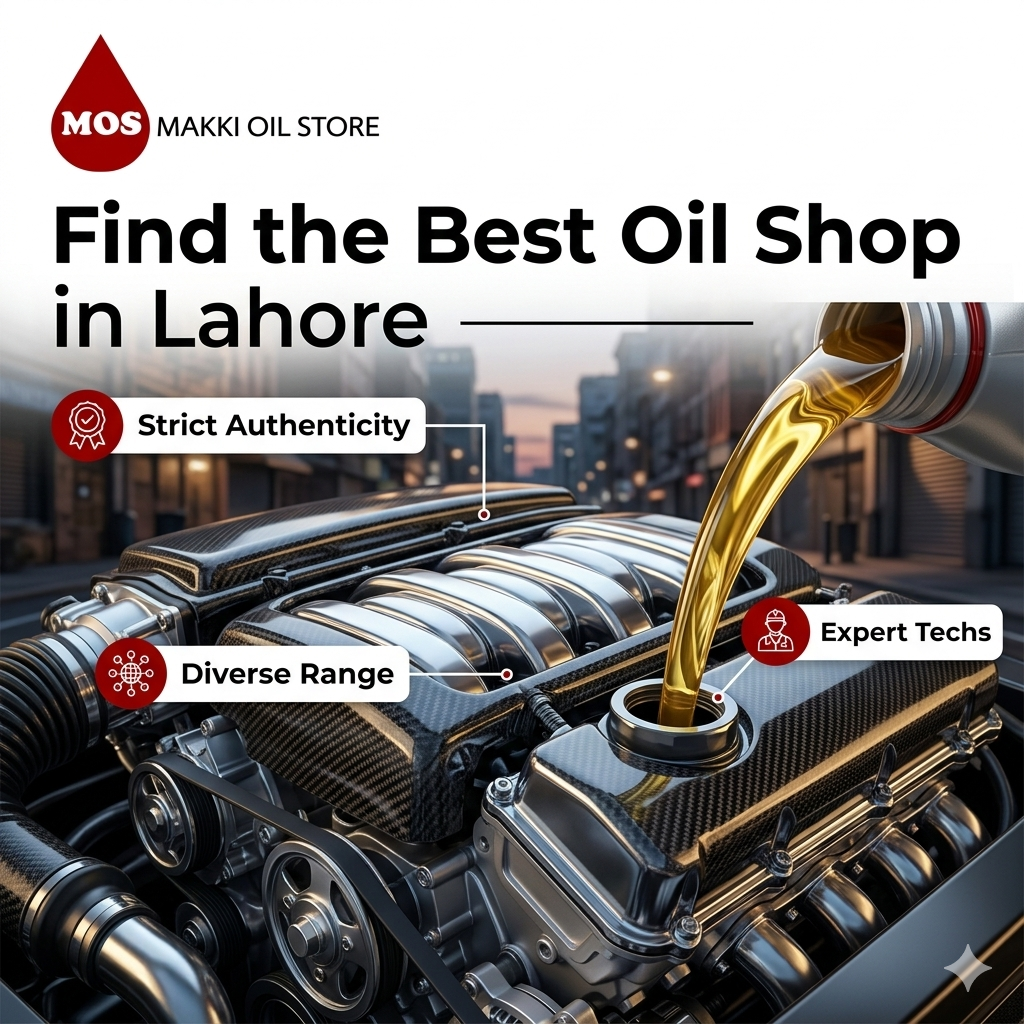
Strict Product Authenticity and Supply Chain Trust
The absolute baseline for a trusted shop is a verified supply chain. Reputable establishments source their inventory directly from authorized regional distributors for major brands like Shell, Mobil 1, Total, Caltex, and ZIC. They actively encourage customers to verify products by scratching off seals and scanning digital authentication QR codes before pouring the fluid into the engine.
A Diverse Range of Viscosity Grades
Every vehicle engine requires a specific oil formulation based on its age, design, and manufacturer requirements. A leading shop maintains a comprehensive inventory across all major categories:
- Fully Synthetic Oils: Chemically engineered formulations (like 0W-20 or 5W-30) that offer exceptional thermal stability and flow easily during cold starts.
- Semi-Synthetic Oils: Premium blends that combine synthetic and mineral base stocks to provide reliable protection and good value for daily commuters.
- Conventional Mineral Oils: Heavy-duty, budget-friendly options (like 20W-50) suited for older, high-mileage utility vehicles.
Knowledgeable Technical Support
A great shop does not just sell whatever is on the shelf. The staff should possess a clear understanding of API (American Petroleum Institute) classifications and international specifications. They can guide you toward the right choice, whether you need an API SP oil to prevent low-speed pre-ignition in a modern turbocharged car or a high-zinc formula for an older engine.
Selecting the Right Specification for the Lahore Climate
Lahore experiences extreme seasonal weather shifts, swinging from near-freezing winter mornings to blistering summer peaks above 45°C. This wide temperature range means choosing the correct viscosity rating is vital.
[Winter Mornings: ~5°C] —> Low “W” Number (e.g., 5W) ensures rapid fluid circulation at startup.
[Summer Traffic: ~45°C] —> High Second Number (e.g., 30/40) maintains a strong protective film.
For most modern passenger cars operating in the city, a high-quality fully synthetic 5W-30 or 5W-40 oil provides an excellent balance. The lower “5W” designation ensures the oil remains fluid enough to circulate instantly during cold winter starts, reducing initial startup wear. The higher “30” or “40” rating guarantees the fluid won’t thin out completely under severe summer heat, maintaining a robust protective film between moving parts.
The Value of a Professional and Complete Service
An oil change is most effective when performed as part of a complete fluid maintenance routine. Simply replacing the oil while leaving a dirty, clogged filter in place compromises the fresh lubricant almost immediately, as trapped contaminants mix back into the clean fluid.
| Service Element | Routine Check Interval | Main Performance Benefit |
| Synthetic Oil Swap | Every 7,000 – 10,000 KM | Reduces internal friction and heat |
| Premium Filter Change | With every oil swap | Traps microscopic carbon soot |
| Air Filter Inspection | Every 5,000 KM | Ensures clean airflow for combustion |
When you trust an established automotive care hub like the Makki Oil Store, you receive a comprehensive service. Experienced technicians use proper tools to prevent damage to oil pan drain plugs, check the condition of your air and cabin filters, inspect fluid levels, and ensure your vehicle is ready to handle urban driving conditions with maximum efficiency.
Frequently Asked Questions
How can I verify that the engine oil bottle I am buying is 100% genuine?
To protect your engine from counterfeit products, check the bottle’s physical and digital security features. Look for a clean, untampered factory cap ring that breaks uniformly when twisted, along with an unblemished aluminum foil seal beneath the cap. Most premium brands include a scratch-off label with a unique QR code or a numeric verification sequence. You can scan this code or text it to the manufacturer’s official number to receive instant confirmation of authenticity.
Is it safe to switch from mineral oil to fully synthetic oil in an older car?
Yes, it is generally safe and highly beneficial to upgrade to fully synthetic oil, provided your engine is mechanically sound and doesn’t have active oil leaks. Synthetic oil offers superior cleaning properties and flows more easily through old passages. However, if an older engine already has badly degraded rubber seals, the smaller, more uniform molecular structure of synthetic oil can sometimes slip through those pre-existing gaps, causing minor leaks that a thicker mineral oil managed to hide.
Why does my car’s engine oil level drop slightly over a few thousand kilometers?
A minor reduction in oil levels between services is quite normal for modern high-compression engines. Small amounts of oil coat the cylinder walls and burn off naturally during standard combustion. However, if your oil drops significantly below the low mark on your dipstick, it indicates an underlying issue. This is usually caused by worn valve guide seals, failing piston rings, or external leaks around the valve cover gasket that need to be checked by a professional.
What do the API ratings on the back of an engine oil bottle mean?
The American Petroleum Institute (API) rating indicates the performance level and manufacturing standards of the oil. For gasoline cars, look for service codes starting with “S” followed by a second letter (such as API SL, SN, or SP). The further along the alphabet the second letter is, the more advanced the oil’s formulation. An API SP oil is the current highest standard, engineered specifically to protect modern direct-injection turbocharged engines from internal timing chain wear and pre-ignition damage.
Why should I change my car’s engine oil based on time if I haven’t hit the mileage limit?
Engine oil degrades over time through a process called oxidation, even when the vehicle is sitting idle in a garage. As the car goes through ambient temperature changes, moisture condenses inside the oil pan. This moisture mixes with combustion byproducts to form harmful acids that can corrode internal engine components over time. Most manufacturers recommend changing your oil at least once every six months to a year, regardless of whether you have reached the mileage threshold.