Road safety is a priority that every driver must take seriously, and recent developments have made this responsibility clearer than ever. As of June 2026, the National Highway and Motorway Police (NHMP) in Pakistan have implemented a strict new regulation: it is now mandatory for all passenger and cargo vehicles traveling on motorways and national highways to carry a functional fire extinguisher.
This directive follows an intensified focus on road safety, aiming to prevent the devastating loss of life and property that can occur when vehicle fires escalate during travel. Starting June 24, 2026, vehicles found without an active, non-expired fire extinguisher will be barred from entry onto motorways and may face legal action. For every driver, this is no longer just a “good practice” it is a legal requirement for your journey.
Why Carrying a Fire Extinguisher is Essential
Beyond the legal mandate, the presence of a fire extinguisher in your vehicle is a critical safety measure. Vehicle fires can be triggered by a variety of factors, including electrical short circuits, engine overheating, or fuel leaks. When a small fire starts, you often have only a matter of seconds to act before it becomes an unmanageable blaze.
Having a portable extinguisher allows you to take immediate action. It transforms you from a helpless bystander into a proactive individual capable of suppressing a fire at its source. This can save your vehicle from a total loss and, more importantly, create a path for you and your passengers to exit the vehicle safely. Protecting yourself and your family is the primary reason to ensure your car is equipped with the right tools.
Choosing the Right Type for Your Vehicle
Not all fire extinguishers are suitable for automotive use. For most cars in Pakistan, experts recommend a Dry Chemical Powder (DCP) ABC extinguisher. This type is highly versatile and effective against:
- Class A Fires: Involving solid materials like car upholstery, textiles, and plastics.
- Class B Fires: Involving flammable liquids such as petrol, diesel, and engine oil.
- Class C Fires: Involving electrical faults or short circuits.
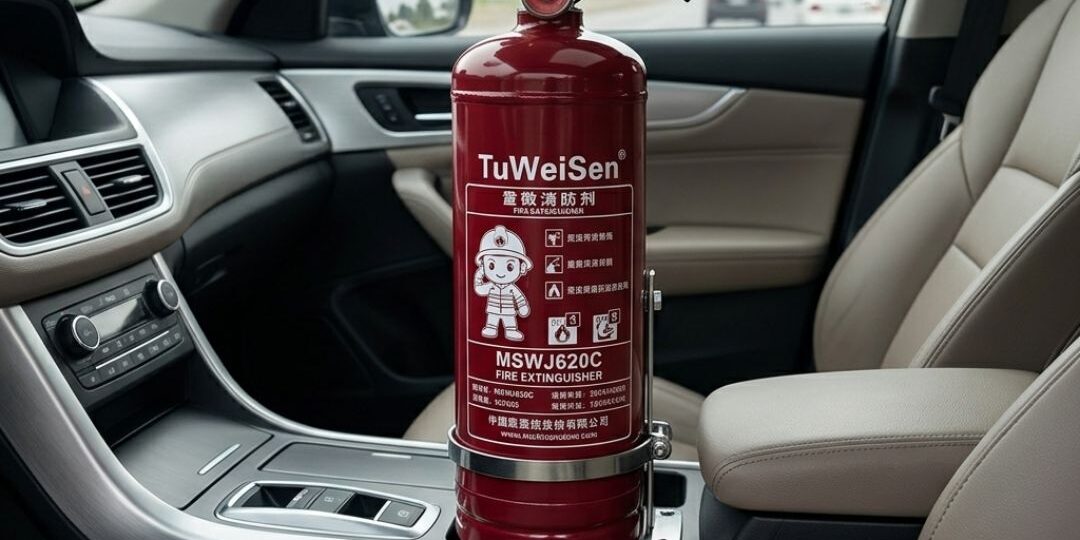
When purchasing, ensure you select a size appropriate for your vehicle. For standard passenger cars, a 1 kg or 2 kg unit is generally sufficient and fits easily under the driver’s seat or in an easily accessible storage compartment.
Proactive Maintenance and Usage
A fire extinguisher is only effective if it works when you need it. Under the new NHMP regulations, expired or non-functional units are not considered valid. You should:
- Check the Pressure Gauge: Ensure the needle is in the green zone regularly.
- Verify the Expiry Date: Most car extinguishers last 5 to 10 years; replace them before they expire.
- Use the PASS Technique: If you ever need to use it, remember to pull the pin, Aim at the base of the fire, Squeeze the handle, and sweep from side to side.
If you ever notice symptoms highlighted in our guide on how to identify the warning signs of brake oil failure, address them immediately, as fluid leaks near hot engine components are a common fire risk.
Stay Compliant and Safe with Makki Oil Store
With the new government regulations now in effect, ensuring your vehicle is compliant is urgent. You can acquire a reliable, high-quality fire extinguisher at the Makki Oil Store. We are currently offering essential automotive fire extinguishers for just PKR 2,000. Do not wait for an emergency to realize the importance of safety. Visit us today to secure your vehicle and ensure you are ready for your next trip on the motorway.
Frequently Asked Questions
Is it legal to have an expired fire extinguisher in my car?
No, the NHMP has clarified that expired or non-functional fire extinguishers are not considered valid under the new safety regulations. Motorway police officers are empowered to inspect these devices, and having an expired unit may result in you being denied entry to the motorway or facing legal consequences. Always check your gauge and expiry date before beginning a long journey.
Where is the best place to store an extinguisher in my car?
The best location is one that is easily reachable from the driver’s seat in an emergency but secure enough that it won’t become a projectile during a sudden stop or crash. Many drivers prefer mounting them under the front seat using a proper bracket. Avoid placing it in the trunk, as you may not be able to reach it quickly if smoke or fire blocks your access to the rear of the vehicle.
Can I use a fire extinguisher on any type of car fire?
An ABC dry powder extinguisher is designed for most common vehicle fires involving liquids, electrical components, and solids. However, always exercise caution. If a fire has already spread to the fuel tank or if the smoke is overwhelming, your priority must be to evacuate the vehicle and move to a safe distance. Never risk your life trying to fight an uncontrollable, large-scale fire.
How often should I have my car’s fire extinguisher checked?
You should visually inspect your extinguisher at least once a month. Look at the pressure gauge to ensure it is in the “green” or “operational” range, check the nozzle for any blockages, and ensure the tamper seal is intact. If you have ever used the extinguisher, even for a short burst, it must be recharged or replaced immediately, as the internal pressure will have dropped, rendering it useless for future emergencies.
Does the new rule apply to all vehicles?
Yes, the NHMP mandate applies to all passenger and cargo vehicles operating on motorways and national highways. Whether you are driving a small hatchback, a sedan, or a heavy-duty transport vehicle, you are required to have a working fire extinguisher. The police are conducting awareness campaigns, but enforcement is strict, and entry will be denied to non-compliant vehicles.
Meet the Author
Muhammad Ikram | Founder of Makki Oil Store
With over 25 years of practical industry experience, Muhammad Ikram is one of Lahore’s most experienced voices in automotive lubrication and vehicle care. He founded Makki Oil Store in 1999 with a clear mission: to protect vehicle engines by providing genuine, high-quality lubricants paired with expert maintenance advice.
Over the last two and a half decades, Muhammad has developed a deep, practical knowledge of engine mechanics, fluid chemistry, and local driving demands. Whether dealing with high-mileage daily drivers, modern imported vehicles, or heavy-duty power equipment, his hands-on approach ensures that every customer receives the precise care needed to keep their engine running smoothly for years to come.