


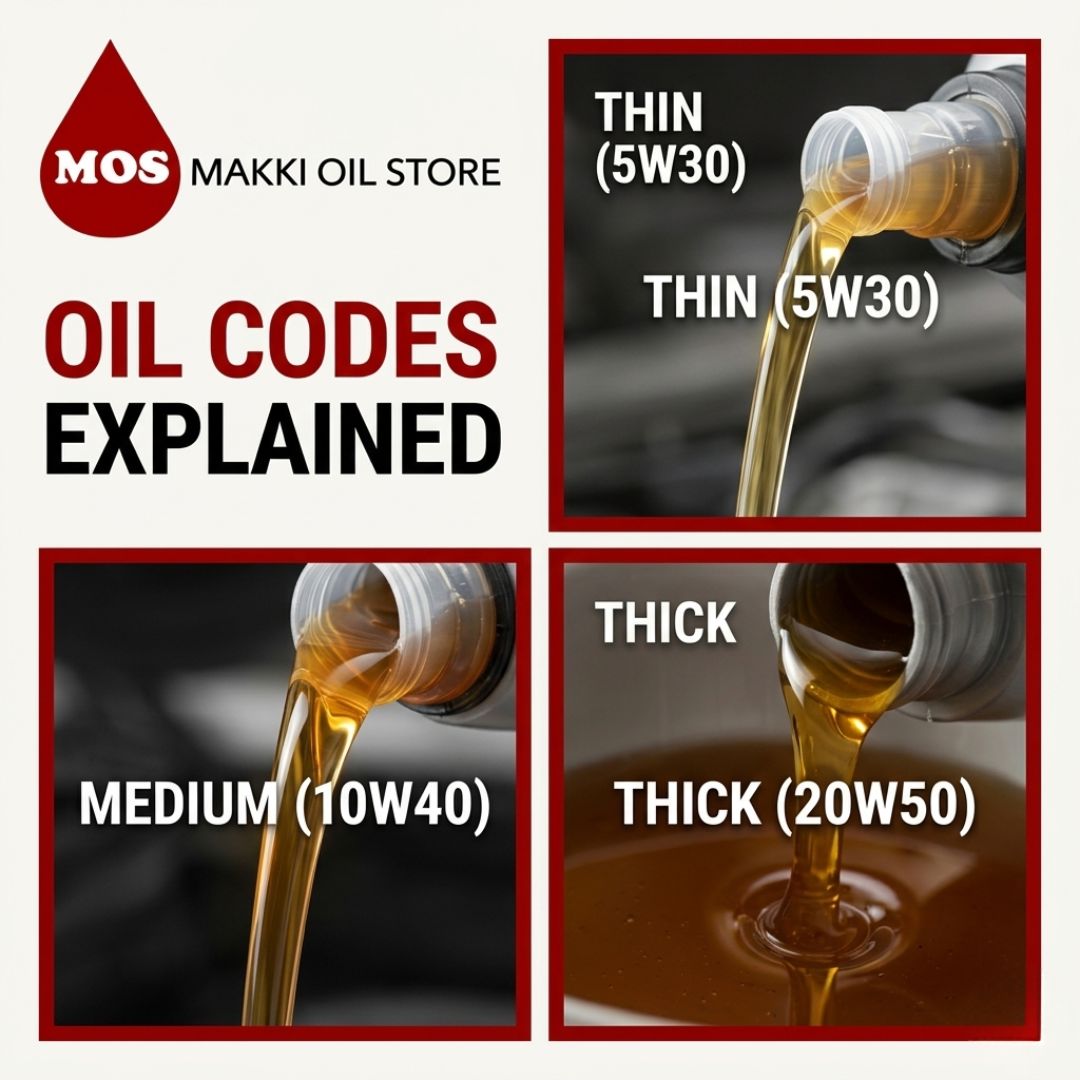
For many drivers in Pakistan, walking into an auto shop can feel overwhelming due to the sheer variety of numbers and codes printed on oil bottles. Understanding engine oil labels is more than just a technical exercise; it is the key to ensuring your vehicle performs reliably in our unique climate. These codes, such as 5W-30 or 20W-50, are not just random figures they are specific classifications that dictate how well your engine is protected during the heat of a Lahore summer or a chilly winter morning.
Decoding the Viscosity Code
The primary numbers on an oil bottle refer to “viscosity,” which is essentially the fluid’s resistance to flow. The Society of Automotive Engineers (SAE) developed this classification system to help users choose the right oil based on their engine’s design and local temperatures.
When you see a code like 5W-30, the letter “W” stands for “Winter.” The number preceding the “W” indicates how the oil flows at low temperatures. A lower number, such as 0W or 5W, means the oil remains thin and pumpable even when it is very cold, allowing it to reach and lubricate critical engine parts immediately after you start your car. The second number, after the dash, represents the oil’s thickness at the engine’s normal operating temperature (typically 100°C). A higher number like 40 or 50 means the oil maintains a thicker film to protect components under high-heat conditions. Deciding which oil is better 5w30 or 10w40 for your specific vehicle depends on these fundamental flow characteristics.
Common Grades in the Pakistani Market
Different engines require different viscosity profiles. Older engines with wider internal clearances often require thicker oils to maintain proper pressure, while modern engines with tight tolerances demand thinner, high-flow oils to ensure efficiency and fuel economy.
5W-30 and 5W-40
These are the industry standards for most modern, fuel-efficient vehicles. They provide excellent protection during the startup phase, where most engine wear occurs, while remaining robust enough to handle the thermal demands of modern driving.
10W-40
This is a versatile, semi-synthetic grade frequently used in vehicles that have crossed the 100,000-kilometer mark. It offers a slightly higher viscosity than 5W-30, which can help compensate for the minor wear and increased clearances found in aging engines.
20W-50
Often viewed as a traditional choice for older engines, 20W-50 is a heavy-duty lubricant. Because it is much thicker, it is typically used in older, high-mileage vehicles that may burn oil or have significantly worn components. It is generally not recommended for modern, precision-engineered engines, as it can cause sluggish performance and reduced fuel efficiency.
Understanding Performance Standards
Beyond viscosity, engine oil labels contain crucial information regarding performance certifications. You will often see codes like API (American Petroleum Institute) SN, SP, or ILSAC ratings. These letters represent the oil’s chemical composition, including the detergents, anti-wear agents, and anti-oxidants added to the base oil.
Modern engines, particularly those with direct injection or turbochargers, require specific certifications like API SP to prevent issues such as Low-Speed Pre-Ignition (LSPI), which can cause catastrophic engine damage. Choosing the right certified product from a trusted provider like the Makki Oil Store ensures that you are getting a lubricant that meets these essential international performance benchmarks.
Making the Right Choice for Your Engine
Selecting the wrong oil is one of the fastest ways to compromise your car’s performance. If you use an oil that is too thin, you might experience oil pressure issues or increased engine noise. Conversely, using an oil that is too thick will force your engine to work harder to push the fluid through the system, leading to higher fuel consumption and reduced power. Always consult your vehicle’s owner’s manual before making a selection. The manufacturer has tested the engine extensively to determine the exact viscosity that provides the best balance of protection, cooling, and efficiency.
Frequently Asked Questions
What does the ‘W’ in an oil viscosity rating actually stand for?
The ‘W’ stands for ‘Winter.’ It indicates the oil’s performance in cold weather, specifically its ability to flow at low temperatures. A lower number before the ‘W’ signifies that the oil remains fluid even in freezing conditions, which is crucial for preventing metal-on-metal wear during the first few seconds of an engine startup. In Pakistan, even if it does not reach extreme freezing temperatures, a low ‘W’ rating ensures that the oil is light enough to reach all engine components instantly, drastically reducing the wear that occurs while the engine warms up.
Is it safe to switch to a higher viscosity oil as my car gets older?
Switching to a higher viscosity oil, such as moving from 5W-30 to 10W-40, is a common practice for older vehicles that may have developed slightly larger internal clearances due to long-term wear. A thicker oil can help maintain better oil pressure and reduce minor oil consumption in high-mileage engines. However, this should only be done if you notice symptoms like increased oil burning or if your mechanic advises it after a thorough engine inspection. Always check with your manufacturer’s manual, as some engines require specific thin oils regardless of age.
Can I mix two different brands of engine oil with the same viscosity?
While it is generally safe in an emergency to mix two brands of the same viscosity and type (e.g., two 5W-30 synthetic oils), it is not a recommended long-term practice. Every brand uses a unique blend of proprietary additives, detergents, and dispersants. Mixing these different chemical formulations can potentially disrupt the performance and balance of these additives, which may shorten the effective life of the oil. It is always better to use the same brand and product line to ensure your engine receives the consistent protection it was designed to have.
Why do modern engines require thinner oils like 0W-20?
Modern engines are built with extremely tight tolerances between moving parts to maximize fuel efficiency and power output. These engines require thin, low-viscosity oils like 0W-20 to flow rapidly through narrow oil galleries and provide a thin, yet durable, protective film between these tightly fitted components. Using a thicker oil in these modern engines would create excessive drag and internal resistance, leading to sluggish performance, decreased fuel economy, and potential issues with the sensitive hydraulic systems that control variable valve timing.
What is the difference between synthetic, semi-synthetic, and mineral oil?
The main difference lies in the base oil and the additive package. Mineral oil is refined from crude oil and is the most basic form of lubricant, suitable for older engines with simpler designs. Synthetic oil is engineered in a lab to have a uniform molecular structure, offering superior protection against extreme heat, sludge formation, and engine wear. Semi-synthetic, or synthetic blend, is a mixture of the two. It provides a more affordable middle ground, offering better protection than pure mineral oil while being more cost-effective than a full synthetic formulation.