


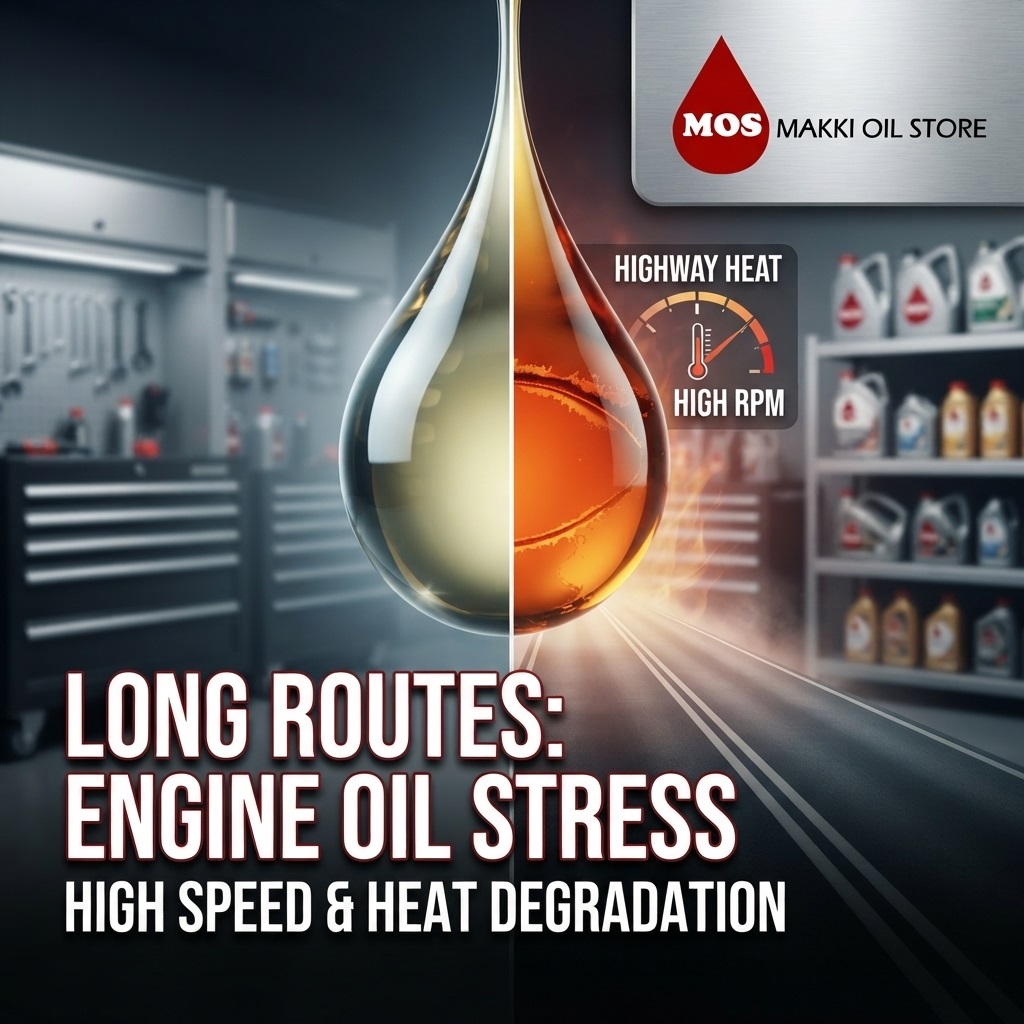
Embarking on extended road trips across motorways and national highways places unique demands on your vehicle’s internal lubrication network. While city driving subjects lubricants to thermal shock from frequent idling and stop-and-go congestion, cross-country cruising exposes the engine to sustained high-speed operations, constant thermal loads, and elevated operating temperatures for hours on end. Understanding how long routes and engine oil interact under continuous driving conditions helps vehicle owners anticipate wear patterns, manage fluid consumption, and protect vital moving parts against premature degradation during interstate travel.
The Dual Nature of Highway Driving on Lubricants
Sustained highway cruising offers one major advantage over urban commuting: the engine reaches and maintains its optimal thermal operating range, allowing moisture and raw fuel condensation accumulated in the oil pan to evaporate harmlessly through the PCV system. However, keeping RPMs elevated for hours at a time also accelerates oil shearing.
As the crankshaft and connecting rod bearings spin at thousands of revolutions per minute, the shearing forces break down the long-chain polymer viscosity index improvers suspended in the fluid. Over hundreds of kilometers of uninterrupted driving, this constant mechanical stress gradually thins the oil, reducing its film strength. To evaluate how varied terrain, regional climates, and extended distances impact total fluid longevity, drivers can review professional guidelines covering how road conditions affect oil changes to determine realistic maintenance intervals.
High-Speed Thermal Stress and Oxidation
Driving at high speeds across open motorways generates continuous friction and intense heat across the entire engine block. When ambient summer temperatures combine with hours of high-load operation, the oil’s oxidation rate spikes significantly. Oxygen molecules bond rapidly with the heated hydrocarbon base stock, causing the fluid to darken, thicken, and form varnish deposits.
Selecting the correct lubricant formulation before undertaking long cross-country journeys is critical for preventing thermal breakdown. Motorists can consult expert selection criteria by exploring how to choose the right Makki oil for their car to ensure their engine is paired with a high-stability synthetic fluid capable of withstanding extreme thermal stress.
| Driving Condition | Engine Thermal State | Mechanical Shearing Stress | Primary Lubricant Risk |
| Short Urban Trips | Fluctuating and often under-heated | Low to moderate | Fuel dilution and moisture sludge buildup |
| Extended Motorway Cruising | Stable, high operating temperature | High and continuous | Viscosity breakdown and thermal oxidation |
| Mountainous Incline Driving | Maximum load and high cylinder pressure | Extreme | Rapid additive depletion and film thinning |
Monitoring Oil Consumption During Extended Trips
An often-overlooked consequence of long-distance driving is accelerated oil consumption. When engines operate at sustained high speeds for hours, pistons move rapidly within the cylinders, and even minor microscopic gaps past the valve seals or piston rings can result in noticeable oil burning. High temperatures thin the fluid, making it easier for microscopic quantities to slip past combustion seals.
Checking your oil level at every refueling stop during a long journey is a vital habit. Catching low oil levels early prevents catastrophic oil starvation, bearing damage, and engine seizure when far from home.
At the Makki Oil Store, our expert technicians recommend performing comprehensive fluid checks and filter inspections before and after any major road trip, ensuring your vehicle remains fully protected for the long haul ahead.
Frequently Asked Questions
Why does long-distance driving cause engines to consume more oil?
Sustained high-speed driving keeps engine RPMs elevated for hours, generating high internal temperatures that thin out the lubricating fluid. This reduced viscosity, combined with increased cylinder pressures and continuous piston movement, allows tiny amounts of oil to slip past the piston rings and valve seals to be burned off in the combustion chamber.
Does highway driving burn off harmful moisture in the engine oil?
Yes, prolonged highway driving allows the engine oil to maintain a high operating temperature long enough to boil off moisture condensation and unburned fuel that accumulates during short cold-start city trips. This evaporation helps clean the fluid of volatile contaminants.
Should I change my oil before or after a long cross-country road trip?
It is generally best to change your engine oil before a major road trip if you are close to your scheduled interval. Fresh oil provides maximum thermal stability and additive protection when your engine faces hours of continuous high-speed operation.
How often should I check my oil level during a long road trip?
When embarking on a long cross-country journey, you should check your engine oil level using the dipstick at every second fuel stop or roughly every 500 kilometers of driving to ensure no unexpected oil consumption has occurred.
Is synthetic oil safer than conventional oil for long-distance driving?
Fully synthetic oils possess superior resistance to thermal breakdown, oxidation, and high-temperature viscosity thinning compared to conventional mineral oils, making them the safest and most reliable choice for extended motorway driving.