


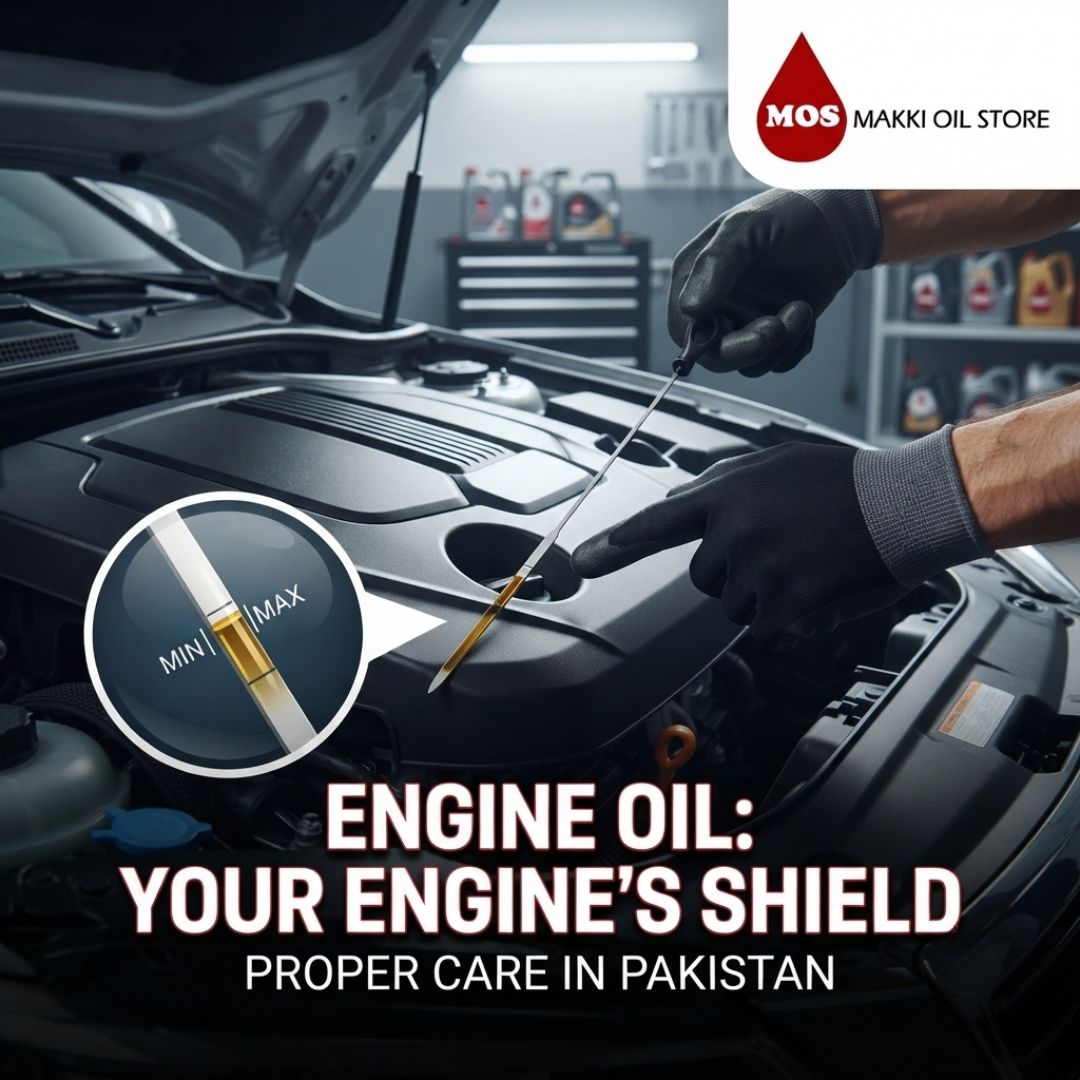
Your vehicle is a significant investment, and like any machine with thousands of moving parts, it relies on one core element to function: engine oil. Often, drivers think of oil merely as a lubricant, but it serves as the primary shield protecting your engine from the harsh realities of daily driving. In an environment like Pakistan, where vehicles face extreme heat, heavy congestion, and significant road dust, the quality and condition of your engine oil are the most critical factors determining how long your car will remain reliable.
The Invisible Work of Engine Oil
The primary job of oil is to reduce friction between metal components, such as pistons, valves, and crankshafts. Without this continuous lubrication, these parts would generate immense heat and wear down in minutes. However, the protection goes much deeper. Oil acts as a cleaning agent, carrying away carbon, sludge, and metal particulates to the oil filter, preventing these materials from accumulating and causing blockages.
Furthermore, oil helps dissipate heat, especially in turbocharged or high-performance engines, by moving thermal energy away from the hottest internal surfaces. It also acts as a seal for piston rings, ensuring that the pressure generated during the combustion cycle produces power rather than escaping into the crankcase. If you are mindful of your vehicle’s long-term operating costs, it is vital to read our guide to maintaining fuel efficiency with the right engine oil to ensure your engine works with minimal internal resistance.
Consistent Care at Makki Oil Store
Maintenance is not just about replacing fluid; it is about establishing a pattern of care. At the Makki Oil Store, we frequently encounter vehicles that have been properly maintained and those that have been pushed far beyond their limits. The difference in engine health is stark. Properly cared-for engines run smoother, cooler, and with far greater longevity. By prioritizing consistent service intervals, you protect your vehicle against the permanent wear that inevitably occurs when lubrication fails.
Frequently Asked Questions
Why does engine oil degrade faster in Pakistan?
Engine oil degrades due to a combination of high ambient temperatures, excessive idling in heavy traffic, and airborne contaminants. In our climate, the heat causes the oil to break down chemically, while the dust we encounter on the road inevitably makes its way into the engine intake and eventually finds its way into the lubrication system. This combination of “severe” factors means that international service intervals, which might be suitable for cleaner, cooler climates, often fail to provide adequate protection here.
Can old engine oil cause my car to fail a start?
While old oil doesn’t usually cause a starting issue directly (that is typically a battery or starter motor problem), it can make the engine harder to turn over. As oil ages, it can thicken, especially in colder mornings, making the engine sluggish during start-up. More importantly, if you have been neglecting your oil changes, the buildup of internal sludge can increase the drag on the engine, forcing the starter motor to work harder than it was designed to, which can eventually lead to the premature failure of the starter itself.
Is it necessary to change the oil filter every time?
Yes, replacing the oil filter is mandatory during every oil change. The filter captures the soot, metal shavings, and debris that the oil has trapped throughout its service life. If you leave the old filter in place, it will be saturated with these contaminants. As soon as you put in fresh oil, it will pass through the dirty filter and immediately become contaminated again, effectively ruining the quality of the new oil within a very short amount of time.
How do I know if I have the right oil for my engine?
The best source for this information is your vehicle’s owner’s manual, which specifies the exact viscosity (like 5W-30) and the quality standards (API or ACEA) that your engine requires. You can also look for a sticker inside the engine bay or on the oil filler cap. Using the manufacturer-specified oil is the most reliable way to ensure your engine receives the protection it was engineered for, whereas guessing or using “general” oil can lead to reduced fuel economy and potential long-term damage.
Does the “color” of the oil tell me when it needs a change?
While oil will naturally turn darker as it collects carbon and soot from the combustion process, color alone is not a foolproof indicator of the oil’s remaining life. Some oils are designed to darken quickly as they trap debris, while others stay lighter for longer. The best way to track your oil health is by keeping a strict log of your kilometers and following a consistent schedule. If the oil ever feels gritty or smells burnt, it should be changed immediately, regardless of the distance traveled.