


We often think of our car’s engine as a robust, indestructible piece of machinery, but it is actually a delicate ecosystem of high-precision components. At the center of this ecosystem is engine oil. When oil is fresh, it flows effortlessly, coating every gear, piston, and bearing in a protective film. However, as that oil ages, its chemical composition begins to shift, and the internal environment of your engine changes from a protected, lubricated space into one plagued by friction and heat.
The Chemistry of Deterioration
Engine oil performs an immense amount of work. It is not just lubricating; it is neutralizing acids created during combustion, suspending microscopic soot particles, and absorbing intense heat. Every time you drive, the oil’s additives designed to handle these stresses slowly deplete. Once these additives are exhausted, the oil begins to oxidize. It thickens and loses its ability to flow freely, which is the first step toward significant internal engine damage.
As the oil degrades, the protective film between moving parts becomes inconsistent. You stop getting the seamless “glide” that keeps the engine quiet and efficient. Instead, metal surfaces begin to experience microscopic contact. If you have ever wondered if your vehicle is reaching this breaking point, it is crucial to learn how to tell if your engine oil needs changing to prevent this internal degradation from becoming a permanent issue.
From Sludge to Mechanical Failure
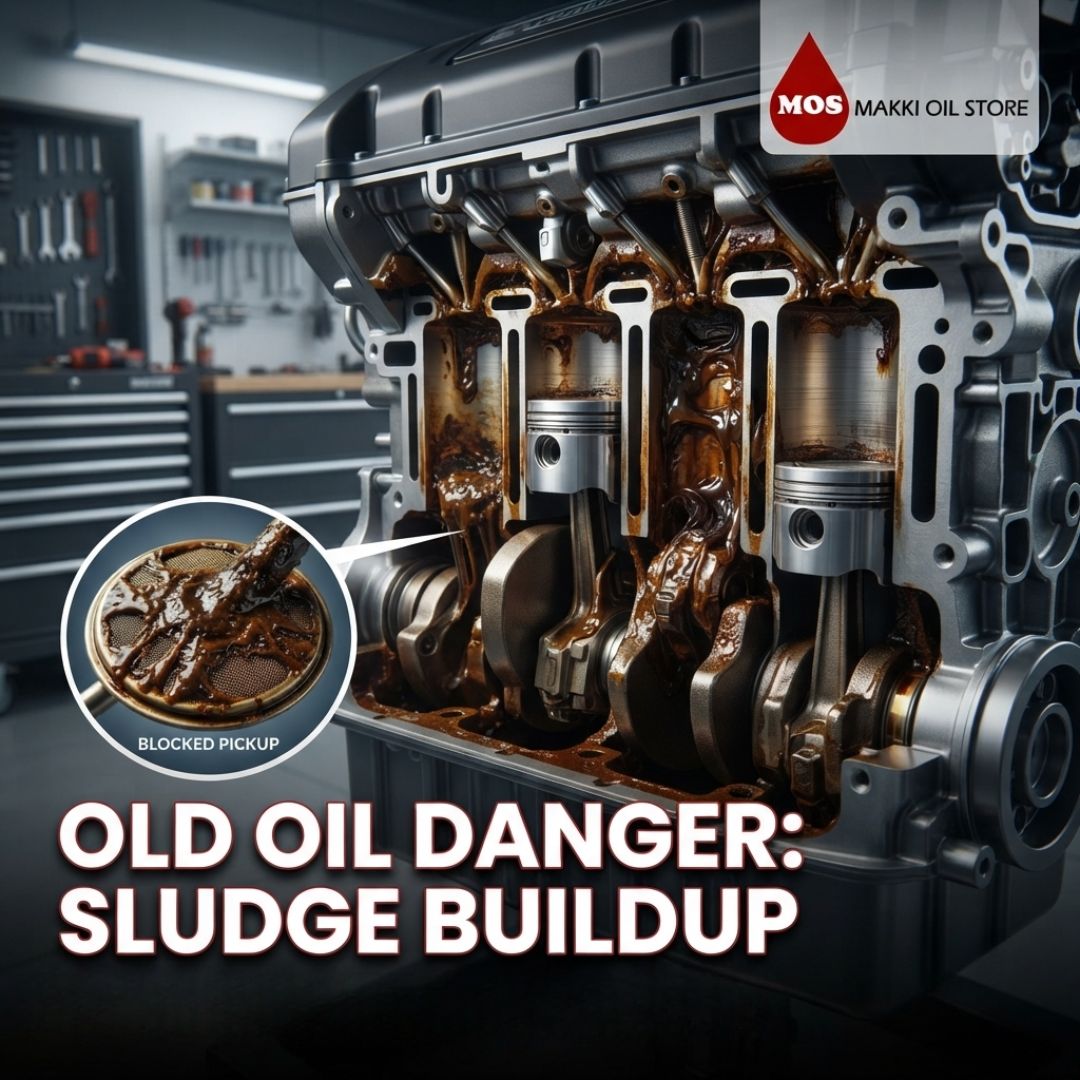
The most visible sign of old oil is the formation of sludge. This is a thick, jelly-like substance that develops when old oil mixes with dirt, water, and fuel residue. In the demanding driving conditions of Lahore where dust and heavy idling are constants this sludge forms much faster than in cooler, cleaner climates. Once this sludge begins to circulate, it clogs oil passages, blocks the oil pickup screen, and prevents oil from reaching the most critical parts of the engine.
At the Makki Oil Store, we frequently see engines where the internal galleries have become choked with these deposits. Once an engine reaches this state, simply changing the oil is often not enough to clear the damage. Carbon deposits build up on piston rings, causing them to stick, which leads to a loss of compression and an engine that is noticeably less powerful and more fuel-hungry.
Frequently Asked Questions
Can old oil cause my engine to overheat?
Yes, old oil can absolutely contribute to engine overheating. A major, often overlooked function of engine oil is its role in heat transfer. It acts as a coolant for internal components that the radiator cannot reach, such as the bottom of the pistons and turbocharger bearings. When oil becomes old and sludgy, its ability to absorb and move heat is severely reduced. As a result, internal temperatures rise, placing immense additional stress on your cooling system and eventually leading to thermal breakdown.
How does oil degradation impact fuel economy?
As oil ages, it loses its ideal viscosity, often becoming thicker or more resistant to flow. This forces your engine to exert more energy just to keep its internal components moving against the increased drag of the contaminated, sluggish oil. This lost energy is energy that would otherwise be used to move your vehicle forward. Consequently, you will notice a gradual decline in your fuel economy, as your engine has to work significantly harder to achieve the same performance levels it had with fresh, high-quality oil.
Will changing the oil late “fix” the engine?
Unfortunately, changing the oil late is not a magic fix for damage that has already occurred. If sludge has built up or if internal parts have experienced wear due to a lack of lubrication, fresh oil cannot reverse that physical damage. The goal of changing your oil on time is preventative, not restorative. While fresh oil will stop the situation from getting worse and help prevent further sludge buildup, it cannot replace the metal that has been worn away during the periods of neglect.
Why do some oils stay cleaner than others?
Different oils have varying levels of detergent additives. An oil with high-quality detergents will work harder to actively clean the engine and keep carbon particles suspended, which may cause the oil to appear dark or black sooner. This is actually a positive sign, as it means the oil is successfully cleaning your engine. Conversely, if an oil stays perfectly golden for thousands of kilometers, it may lack the cleaning power necessary to keep your engine internals free of deposits and harmful varnish.
What is the most dangerous consequence of neglected oil?
The most dangerous result is a complete loss of oil pressure due to a blocked pickup screen. When sludge builds up in the oil pan, it eventually clogs the screen that feeds oil into the pump. When this happens, the engine loses its only source of lubrication. Within seconds of losing oil pressure, your bearings will seize, and your engine will effectively destroy itself. This is why strict adherence to your oil change interval is the single most important maintenance task you can perform.