

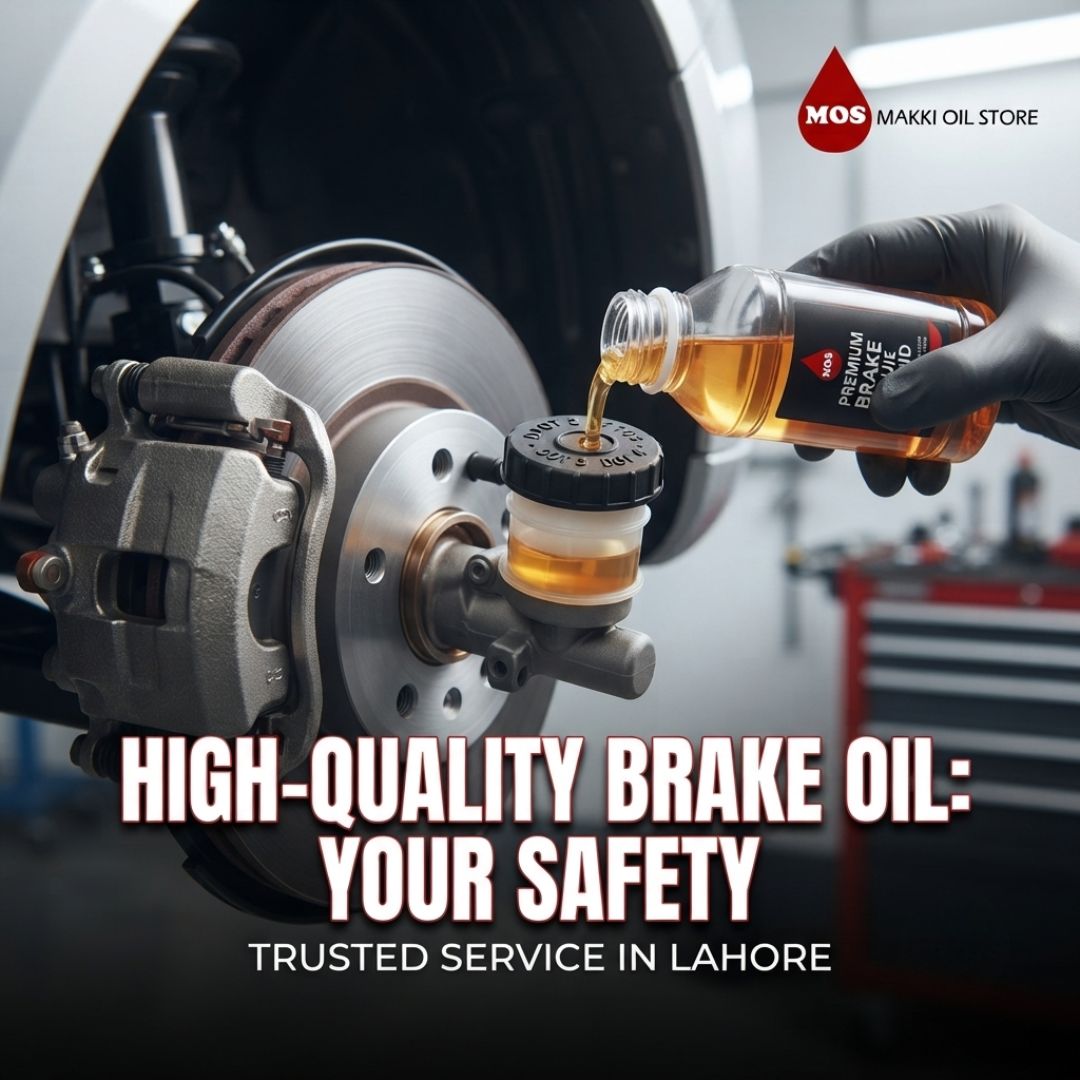
When you step on the brake pedal, you trust that your vehicle will come to a halt immediately. This split-second response is made possible by a complex hydraulic system that relies entirely on brake fluid to transfer force from your pedal to the wheels. Many drivers focus heavily on engine oil or tire pressure, but neglecting your brake fluid or settling for low-quality alternatives can compromise your safety in critical moments. Using high-quality brake oil is not just a performance upgrade; it is a fundamental necessity for reliable stopping power.
Why Brake Fluid Quality Matters
Your braking system is a closed hydraulic circuit that operates under intense pressure and extreme heat. Brake fluid is “hygroscopic,” meaning it naturally absorbs moisture from the atmosphere over time. In a humid and dusty environment like Lahore, this moisture absorption happens faster than you might expect.
- Boiling Point Stability: As brake fluid absorbs water, its boiling point drops significantly. If the fluid boils during heavy braking such as in stop-and-go traffic or descending a steep incline it creates gas bubbles. Because gas is compressible, unlike liquid, your brake pedal will feel “spongy” or “soft,” and you may experience a total loss of braking efficacy, known as “vapor lock.”
- Corrosion Protection: High-quality fluids contain chemical additives specifically designed to neutralize acids and prevent rust within your brake lines, calipers, and master cylinder. Cheap, inferior fluids lack these protective agents, leading to premature internal corrosion that can turn a simple fluid change into an expensive system overhaul.
- Consistent Pedal Feel: Premium fluids maintain their viscosity and chemical stability across a wider temperature range. This ensures that your pedal remains firm and responsive, giving you the confidence that your car will stop exactly when you need it to.
If you are unsure about the state of your current fluid, learning why Makki Oil is a trusted car brake oil shop in Lahore can help you distinguish between professional-grade maintenance and standard roadside services.
The Importance of Professional Standards
Not all brake fluids are created equal, and using the wrong specification can be just as dangerous as using old fluid. Manufacturers typically specify DOT 3 or DOT 4 fluid based on the system’s temperature demands. DOT 4, for instance, generally has a higher boiling point and is better suited for modern vehicles with anti-lock braking systems (ABS) or electronic stability programs (ESP).
At the Makki Oil Store, we prioritize technical precision. Our technicians do not just “top off” fluids; we evaluate the condition of your system to ensure that the fluid we use matches your manufacturer’s specific requirements. Whether you are driving a local sedan or a high-tech imported vehicle, using the correct, high-quality fluid is the only way to guarantee your safety on Lahore’s busy roads.
Frequently Asked Questions
How often should I replace my brake fluid?
Most manufacturers and automotive experts recommend flushing and replacing your brake fluid every 2 to 3 years or every 30,000 to 40,000 kilometers. However, in Pakistan’s climate, where high humidity and temperature fluctuations can accelerate moisture absorption, it is wise to have your fluid tested or changed every 2 years to ensure it remains free of contaminants and maintains its peak boiling point.
What are the warning signs of bad brake fluid?
If your brake pedal feels spongy, soft, or sinks further to the floor than usual when you apply pressure, it is a primary indicator of degraded fluid or air in the lines. You may also notice your ABS light appearing on the dashboard or experience a faint burning smell after heavy braking. Any change in how your brake pedal feels should be treated as an urgent maintenance matter rather than a routine issue to be ignored.
Can I mix different types of brake fluid?
You should generally avoid mixing different types of brake fluid unless specifically permitted by your vehicle’s owner’s manual. While some fluids are compatible, mixing a lower-grade fluid with a higher-performance one can dilute the protective properties of the better fluid. Always check your master cylinder cap for the recommended specification (e.g., DOT 3 or DOT 4) and stick to that exact type to maintain the integrity of your braking system.
Why is professional brake fluid replacement safer than DIY?
A professional brake fluid flush involves more than just pouring new liquid into the reservoir. Technicians use specialized equipment to bleed the old, moisture-laden fluid from the entire system, including the lines and calipers, ensuring no air bubbles remain. DIY methods often fail to remove the contaminated fluid deep within the system, which can leave your brakes feeling unresponsive despite your efforts. Professional service guarantees that the system is fully purged and properly pressurized.
Does high-quality brake oil really extend the life of my brakes?
Yes, it does. By preventing internal corrosion and rust, high-quality brake fluid protects expensive components like the master cylinder, ABS module, and calipers from failing prematurely. When your fluid is clean and free of moisture, the entire hydraulic system operates with less resistance and wear, which ultimately saves you from costly mechanical repairs and ensures your brake pads and rotors wear more evenly over time.