


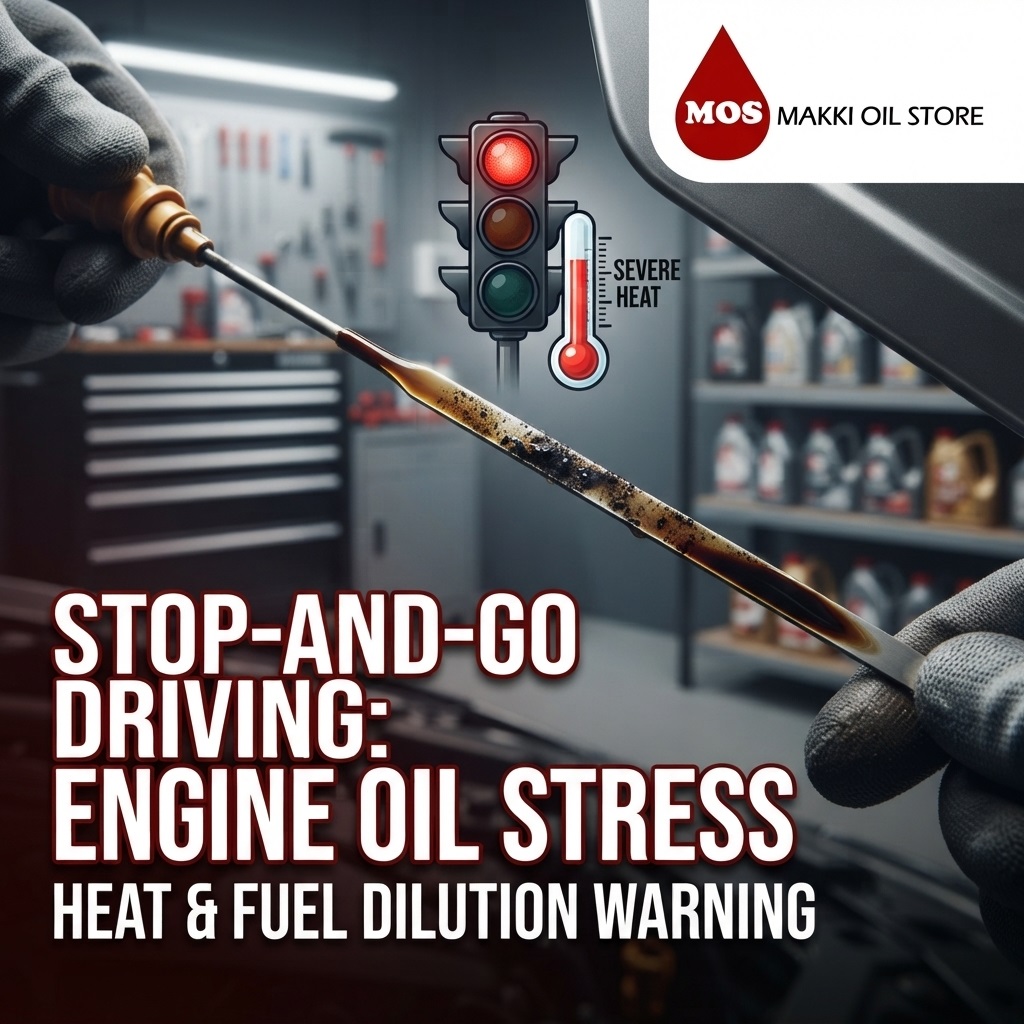
Navigating daily commutes through congested urban streets exposes vehicle engines to punishing operating conditions that standard laboratory mileage charts fail to account for. When cars and motorcycles creep forward in heavy queues, constantly alternating between acceleration and braking, the internal lubrication system experiences compounding physical and chemical stress. Motorists often assume that accumulating lower odometer numbers equals less wear, but the reality inside the engine block tells a completely different story. Understanding how stop-and-go driving degrades lubricants highlights why urban commuters must rethink traditional maintenance habits to prevent premature mechanical failure.
The Mechanics of Urban Heat and Idle Stress
When a vehicle sits idling or crawls slowly at low speeds, the cooling airflow rushing across the radiator drops dramatically. Without sufficient airflow, engine bay temperatures spike, subjecting the circulating oil to intense thermal loads. Furthermore, constant low-speed operation means the engine rarely achieves steady highway cruising temperatures, preventing trapped moisture and unburned fuel from evaporating through the crankcase ventilation system.
To grasp how metropolitan climate challenges combine with urban gridlock to destroy fluid integrity over time, vehicle owners can review expert technical findings detailing how engine oil changes with heat, dust, and traffic to evaluate the true physical strain placed on modern lubricants.
Fuel Dilution and Additive Depletion in Congested Streets
Repeated acceleration cycles from dead stops require rich air-fuel mixtures that often lead to incomplete combustion. Unburned fuel washes down past the piston rings and mixes directly into the oil pan, diluting the fluid’s viscosity and stripping away its protective film strength. At the same time, detergents and anti-wear additives work overtime to neutralize soot and carbon deposits generated during constant idling.
- Viscosity Thinning: Fuel dilution lowers the oil’s resistance to flow, reducing its ability to cushion fast-moving metal bearings.
- Additive Exhaustion: Detergents deplete rapidly, leading to the formation of harmful sludge and varnish on critical engine surfaces.
- Hour vs. Distance Mismatch: Idling accumulates engine operating hours while the odometer remains stagnant, meaning your oil degrades long before standard mileage targets are reached.
To counter these severe operating realities, drivers must adjust their service schedules away from generalized factory manuals. Vehicle owners can examine tailored service adjustments by reviewing expert recommendations on how often you should change engine oil to protect critical engine components from oil starvation.
| Driving Environment | Average Speed | Engine Stress Level | Fluid Longevity Impact |
| Open Motorway Cruising | 80 to 110 km/h | Low and stable | Full manufacturer interval lifespan |
| Mixed Suburban Commuting | 40 to 60 km/h | Moderate | Standard maintenance interval |
| Dense Urban Stop-and-Go | 5 to 25 km/h | Extreme (high heat and fuel dilution) | Reduced lifespan; requires early oil changes |
Protecting Your Engine Against Urban Wear
Combating the harsh effects of urban congestion requires switching to high-stability synthetic formulations that resist thermal breakdown and fuel dilution far better than conventional mineral oils. Regular fluid checks between scheduled service intervals are equally vital for catching oil consumption early.
At the Makki Oil Store, our expert technicians inspect oil condition, evaluate contamination levels, and help city drivers select premium lubricants engineered to handle the rigorous demands of daily stop-and-go commuting.
Frequently Asked Questions
Why does stop-and-go driving degrade engine oil faster than highway driving?
Stop-and-go driving forces the engine to endure constant temperature fluctuations, prolonged idling, and low-speed gear shifts that prevent the oil from maintaining a stable operating temperature. This environment increases fuel dilution, moisture condensation, and soot accumulation, causing chemical additives in the lubricant to exhaust much faster.
Should I change my oil based on mileage or time when driving in heavy traffic?
When driving primarily in dense city traffic, you should replace your engine oil based on whichever comes first, leaning toward shortened intervals. Because idling accumulates engine hours without adding odometer kilometers, waiting for high mileage targets means your oil has already lost its protective properties.
How does fuel dilution weaken engine oil?
Fuel dilution occurs when unburned gasoline or diesel seeps past the piston rings during frequent low-speed idling and mixes with the engine oil. This liquid fuel thins the oil’s viscosity, reducing its ability to maintain a protective film barrier between fast-moving metal parts.
Can using synthetic oil protect my engine better against urban traffic stress?
Fully synthetic engine oils possess superior molecular stability and stronger resistance to thermal breakdown and fuel dilution compared to conventional mineral oils. They maintain consistent viscosity across wide temperature ranges, providing much better protection against sludge formation during severe stop-and-go commuting.
What are the early warning signs that city driving has ruined my engine oil?
Early warning signs include a noticeable darkening of the oil color to pitch black accompanied by a burnt smell, increased engine noise or tappet ticking during startup, a slight drop in fuel efficiency, and sluggish throttle response when accelerating out of traffic stops.
Meta Title:
Why Stop-and-Go Driving Is Hard on Engine Oil
Meta Description:
Discover why stop-and-go driving is hard on engine oil. Learn about fuel dilution, idling heat stress, severe service intervals, and expert tips.
Navigating daily commutes through congested urban streets exposes vehicle engines to punishing operating conditions that standard laboratory mileage charts fail to account for. When cars and motorcycles creep forward in heavy queues, constantly alternating between acceleration and braking, the internal lubrication system experiences compounding physical and chemical stress. Motorists often assume that accumulating lower odometer numbers equals less wear, but the reality inside the engine block tells a completely different story. Understanding how stop-and-go driving degrades lubricants highlights why urban commuters must rethink traditional maintenance habits to prevent premature mechanical failure.
The Mechanics of Urban Heat and Idle Stress
When a vehicle sits idling or crawls slowly at low speeds, the cooling airflow rushing across the radiator drops dramatically. Without sufficient airflow, engine bay temperatures spike, subjecting the circulating oil to intense thermal loads. Furthermore, constant low-speed operation means the engine rarely achieves steady highway cruising temperatures, preventing trapped moisture and unburned fuel from evaporating through the crankcase ventilation system.
To grasp how metropolitan climate challenges combine with urban gridlock to destroy fluid integrity over time, vehicle owners can review expert technical findings detailing how engine oil changes with heat, dust, and traffic to evaluate the true physical strain placed on modern lubricants.
Fuel Dilution and Additive Depletion in Congested Streets
Repeated acceleration cycles from dead stops require rich air-fuel mixtures that often lead to incomplete combustion. Unburned fuel washes down past the piston rings and mixes directly into the oil pan, diluting the fluid’s viscosity and stripping away its protective film strength. At the same time, detergents and anti-wear additives work overtime to neutralize soot and carbon deposits generated during constant idling.
- Viscosity Thinning: Fuel dilution lowers the oil’s resistance to flow, reducing its ability to cushion fast-moving metal bearings.
- Additive Exhaustion: Detergents deplete rapidly, leading to the formation of harmful sludge and varnish on critical engine surfaces.
- Hour vs. Distance Mismatch: Idling accumulates engine operating hours while the odometer remains stagnant, meaning your oil degrades long before standard mileage targets are reached.
To counter these severe operating realities, drivers must adjust their service schedules away from generalized factory manuals. Vehicle owners can examine tailored service adjustments by reviewing expert recommendations on how often you should change engine oil to protect critical engine components from oil starvation.
| Driving Environment | Average Speed | Engine Stress Level | Fluid Longevity Impact |
| Open Motorway Cruising | 80 to 110 km/h | Low and stable | Full manufacturer interval lifespan |
| Mixed Suburban Commuting | 40 to 60 km/h | Moderate | Standard maintenance interval |
| Dense Urban Stop-and-Go | 5 to 25 km/h | Extreme (high heat and fuel dilution) | Reduced lifespan; requires early oil changes |
Protecting Your Engine Against Urban Wear
Combating the harsh effects of urban congestion requires switching to high-stability synthetic formulations that resist thermal breakdown and fuel dilution far better than conventional mineral oils. Regular fluid checks between scheduled service intervals are equally vital for catching oil consumption early.
At the Makki Oil Store, our expert technicians inspect oil condition, evaluate contamination levels, and help city drivers select premium lubricants engineered to handle the rigorous demands of daily stop-and-go commuting.
Frequently Asked Questions
Why does stop-and-go driving degrade engine oil faster than highway driving?
Stop-and-go driving forces the engine to endure constant temperature fluctuations, prolonged idling, and low-speed gear shifts that prevent the oil from maintaining a stable operating temperature. This environment increases fuel dilution, moisture condensation, and soot accumulation, causing chemical additives in the lubricant to exhaust much faster.
Should I change my oil based on mileage or time when driving in heavy traffic?
When driving primarily in dense city traffic, you should replace your engine oil based on whichever comes first, leaning toward shortened intervals. Because idling accumulates engine hours without adding odometer kilometers, waiting for high mileage targets means your oil has already lost its protective properties.
How does fuel dilution weaken engine oil?
Fuel dilution occurs when unburned gasoline or diesel seeps past the piston rings during frequent low-speed idling and mixes with the engine oil. This liquid fuel thins the oil’s viscosity, reducing its ability to maintain a protective film barrier between fast-moving metal parts.
Can using synthetic oil protect my engine better against urban traffic stress?
Fully synthetic engine oils possess superior molecular stability and stronger resistance to thermal breakdown and fuel dilution compared to conventional mineral oils. They maintain consistent viscosity across wide temperature ranges, providing much better protection against sludge formation during severe stop-and-go commuting.
What are the early warning signs that city driving has ruined my engine oil?
Early warning signs include a noticeable darkening of the oil color to pitch black accompanied by a burnt smell, increased engine noise or tappet ticking during startup, a slight drop in fuel efficiency, and sluggish throttle response when accelerating out of traffic stops.