

While most motorists pay close attention to engine oil levels, transmission fluid is frequently overlooked until severe drivability issues arise. Operating a vehicle through heavy urban traffic gridlock, stop-and-go commuting, and extreme summer temperatures places intense thermal and mechanical stress on your gearbox. Whether your car utilizes a traditional automatic transmission, a continuous variable transmission, or a manual setup, clean hydraulic fluid is vital for smooth gear engagement and temperature regulation. Recognizing when your gearbox requires a prompt transmission oil change can prevent catastrophic mechanical failures and expensive transmission replacements.
The Critical Role of Transmission Fluid in Stop-and-Go Driving
Transmission fluid functions as both a hydraulic operating medium and a thermal coolant. Inside a modern automatic gearbox, fluid pressure engages clutch packs and shifts gears seamlessly while absorbing the heat generated by torque converter slip. When driving in congested city environments, frequent gear shifts and extended idling cause fluid temperatures to spike.
Over thousands of kilometers, this intense heat breaks down the complex additive packages within the fluid, reducing its ability to lubricate internal planetary gears and valve bodies. To understand the specific operational timelines and regional factors influencing local gearboxes, car owners can review detailed insights on when pakistani car owners should change it to establish proper service intervals.
Seven Critical Warning Signs of Degraded Fluid
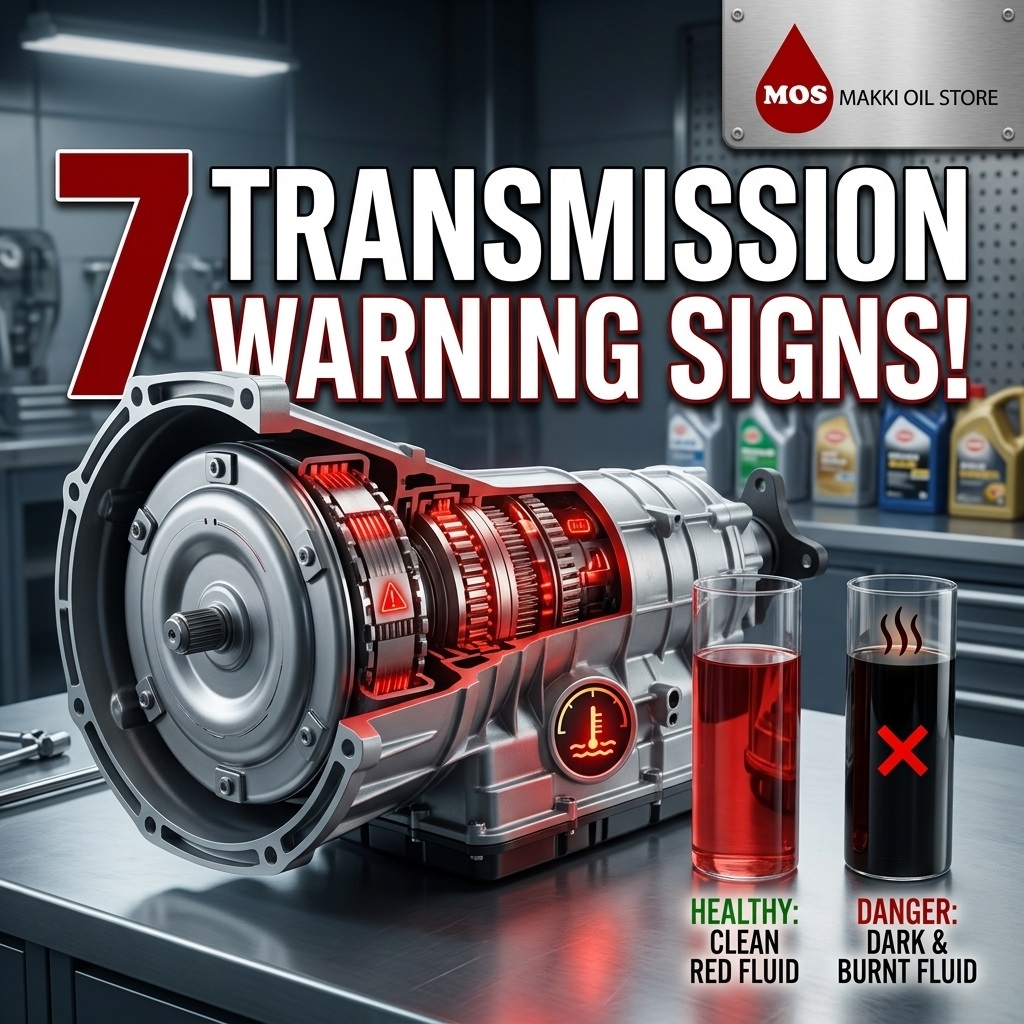
When your gearbox oil loses its protective viscosity and chemical integrity, your vehicle will display distinct operational symptoms. Ignoring these early warning indicators allows metallic friction debris to accumulate, scoring valve bodies and clogging narrow hydraulic channels.
- Delayed or Sluggish Gear Engagement: If your car hesitates for several seconds after shifting from park into drive or reverse, low fluid pressure or thick, contaminated oil is usually the culprit.
- Unusual Grinding or Whining Noises: Degraded fluid fails to cushion spinning gears adequately, producing a noticeable mechanical whine or mechanical buzzing sound while accelerating.
- Rough or Jerking Gear Shifts: Slipping clutches cause harsh, abrupt gear changes or unexpected surging as the transmission struggles to maintain hydraulic pressure.
- Burning Smell from the Engine Bay: Overheated transmission fluid emits a distinct, sharp burning odor, indicating that the fluid has burned and lost its cooling properties.
- Slipping Gears and RPM Surges: If your engine revs unexpectedly high without a corresponding increase in vehicle speed, the transmission clutches are slipping due to lack of friction control.
- Transmission Fluid Leaks on the Ground: Reddish or dark brown puddles underneath your vehicle point to failing pan gaskets, hardened seals, or damaged cooler lines.
- Check Engine Light Illumination: Modern vehicle computers monitor transmission slip ratios and fluid temperatures, triggering diagnostic codes when internal anomalies occur.
When you notice any of these red flags, seeking professional diagnostic assistance ensures the issue is resolved before permanent internal damage happens. Motorists can explore expert preventative solutions by visiting service transmission oil to evaluate proper fluid flushing and replacement procedures.
| Fluid Condition | Visual Appearance | Operational Smell | Recommended Action |
| Healthy Fluid | Bright translucent red or pink | Sweet, mild petroleum scent | Routine monitoring per mileage guide |
| Aging Fluid | Dark red or light brown | Neutral or slightly oxidized | Schedule service within coming weeks |
| Spent, Burned Fluid | Dark brown or opaque black | Sharp, acrid burning odor | Immediate transmission oil change required |
Protecting Your Gearbox Through Professional Maintenance
Addressing transmission health proactively saves vehicle owners from staggering repair bills. A standard fluid drain and refill replaces a portion of the old fluid, whereas a complete system flush purges contaminated lubricant from the torque converter, cooler lines, and hydraulic passages entirely.
To explore a complete suite of preventative maintenance procedures tailored to local driving demands, vehicle owners can review comprehensive offerings detailed on our services to keep every mechanical system operating at peak efficiency.
At the Makki Oil Store, our trained technicians utilize high-grade transmission fluids and specialized replacement equipment to protect your drivetrain against premature wear and thermal breakdown.
Frequently Asked Questions
How often should I change my transmission oil?
Most automatic transmissions require a fluid and filter change every 40,000 to 60,000 kilometers, though severe stop-and-go city driving may necessitate more frequent servicing.
Can I mix different types of transmission fluid?
No, never mix different fluid specifications, such as ATF Type T-IV with Dexron VI or CVT fluid, because incompatible chemical formulations can destroy internal seals and clutches.
What causes transmission fluid to turn dark and smell burnt?
Severe operating heat, towing heavy loads, and extended service intervals cause the fluid to oxidize, breaking down its chemical structure and burning its friction modifiers.
Is a transmission fluid flush better than a simple drain and fill?
A drain and fill replaces about half of the total fluid volume, while a complete flush exchanges old fluid throughout the entire system, though your vehicle manufacturer guidelines should always be followed.
Can low transmission fluid cause my car not to move?
Yes, insufficient fluid pressure prevents the hydraulic system from engaging clutch packs, meaning the vehicle will not transmit engine power to the wheels when shifted into gear.