


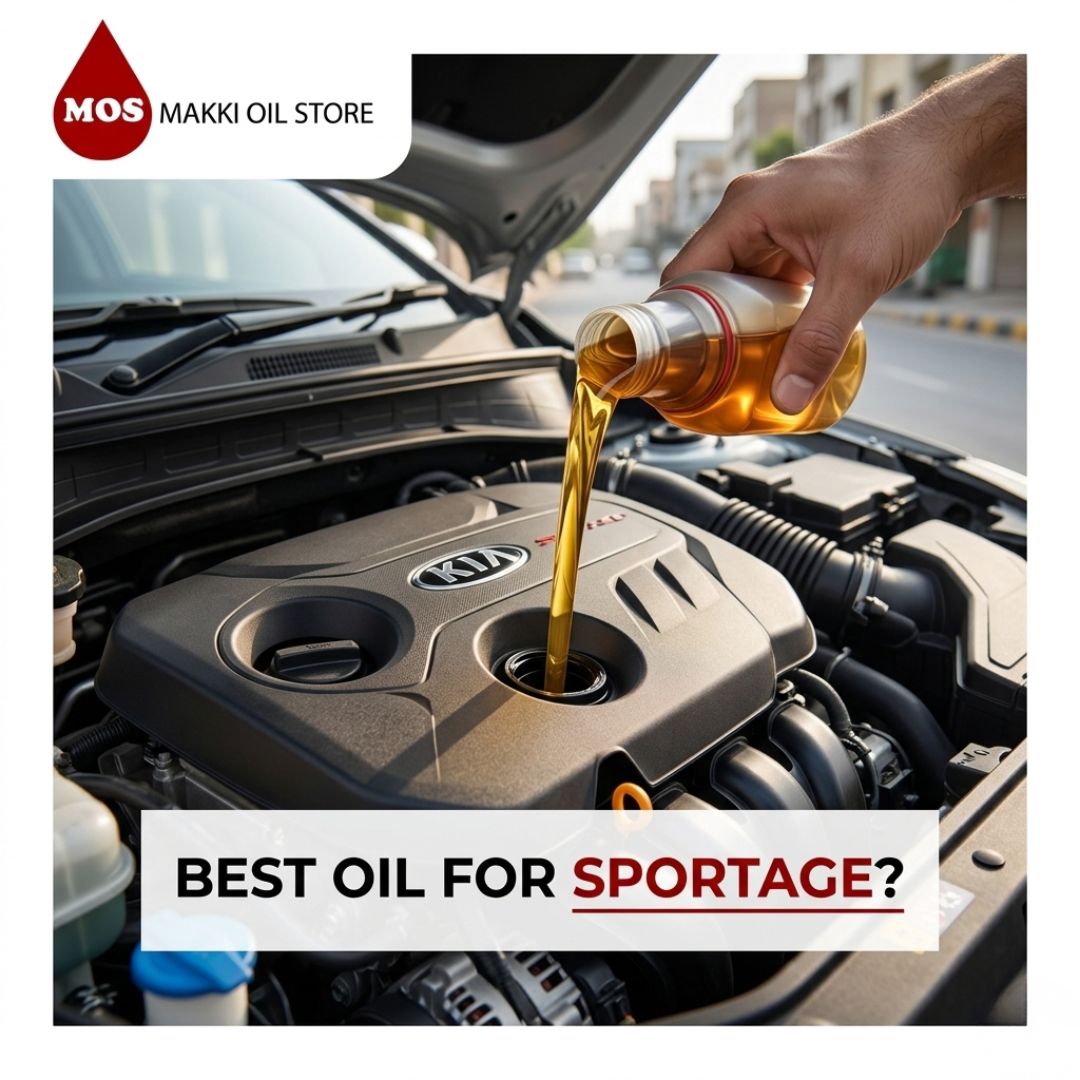
The Kia Sportage has become a common sight on Pakistani roads, favored for its comfortable ride, modern features, and reliable performance. However, maintaining that reliability requires more than just routine driving; it demands a disciplined approach to preventative maintenance. Central to this care is selecting the correct engine oil use for Kia Sportage models. Because these vehicles often feature direct-injection and sometimes turbocharged engines, they are sensitive to the chemical composition of the lubricants they run on. Using an incorrect grade can lead to thermal stress, sluggish throttle response, or even long-term damage to the internal components.
Decoding Engine Requirements for the Kia Sportage
The Sportage is equipped with sophisticated engine technology designed to maximize power while maintaining fuel efficiency. Whether you are driving the 2.0L naturally aspirated variant or the more performance-oriented turbocharged version, these engines operate under precise conditions. They require lubricants that provide a delicate balance between flowability during cold starts and structural strength under high operating temperatures.
In Pakistan, the climate adds another layer of complexity. The intense summer heat in cities like Lahore or Faisalabad means that engine oil is subjected to extreme thermal loads for extended periods. When you choose a lubricant, you are not just selecting a brand; you are choosing the chemical barrier that will prevent metal-on-metal contact when your engine is working at its peak. Understanding the foundational science behind what kind of oil is used in car engines will help you appreciate why modern synthetic formulations are non-negotiable for a high-tech crossover like the Sportage.
Choosing the Right Viscosity Grade
For the vast majority of Kia Sportage models in Pakistan, the manufacturer recommends full synthetic oil with a viscosity grade of 5W-30 or 0W-20, depending on the specific engine year and local service guidelines.
The “5W-30” grade is often the sweet spot for the 2.0L naturally aspirated engines commonly found in the local market. It provides a robust film at operating temperatures while remaining thin enough to circulate rapidly during the initial moments after you turn the ignition key. If you are operating a newer model with a high-performance turbocharger, your manual might specify 0W-20. This lower viscosity allows for faster oil pressure buildup, which is critical for protecting the turbocharger bearings that spin at extremely high speeds. Never substitute these recommendations with thicker, conventional oils, as they can cause excessive drag and potential issues with the variable valve timing systems.
The Necessity of Synthetic Formulations and API Standards
Because of the Sportage’s modern engine architecture, conventional mineral oils are simply insufficient. Synthetic oils are engineered to have a uniform molecular structure, which allows them to resist breaking down under high-pressure conditions. They are also superior at preventing the buildup of “sludge,” the thick, tar-like substance that forms when inferior oils oxidize.
Additionally, you must pay attention to the API (American Petroleum Institute) service classification on the bottle. Modern Sportage engines, especially those with direct injection, require oils rated as API SN Plus or API SP. These standards were specifically developed to prevent Low-Speed Pre-Ignition (LSPI), a destructive knocking event that can cause severe damage to engine pistons. When you visit the Makki Oil Store, our team ensures that the products we recommend meet these rigorous international standards, protecting your engine from the inside out.
Managing Maintenance Intervals in Local Driving Conditions
While global manuals may suggest extended oil change intervals, the reality of driving in Pakistan is different. Frequent idling in stop-and-go traffic, the presence of airborne dust, and variations in fuel quality mean that your engine oil works much harder than it would on a highway in a temperate climate.
To keep your Sportage in peak condition, it is advisable to stick to a conservative service interval, typically between 5,000 to 7,000 kilometers. During this service, always insist on a genuine, high-efficiency oil filter. An oil filter that is not rated for your engine’s pressure requirements will fail to trap fine contaminants, essentially allowing your high-quality synthetic oil to become polluted with grit and carbon within just a few thousand kilometers.
Frequently Asked Questions
Why is 0W-20 or 5W-30 specifically recommended for my Kia Sportage?
These viscosity grades are chosen because they offer the perfect balance of protection and efficiency for the tight internal tolerances of modern Kia engines. A thinner oil like 0W-20 or 5W-30 ensures that oil reaches critical components, such as the camshafts and turbo bearings, almost immediately upon startup. Using a thicker oil, such as 10W-40, would create excessive internal friction, reduce fuel economy, and potentially delay the activation of hydraulic components like the variable valve timing adjusters.
Can I safely switch between different brands of full synthetic engine oil?
Switching between reputable brands of full synthetic oil is generally safe, provided that both oils meet the exact viscosity and API/ILSAC requirements specified in your Kia Sportage owner’s manual. However, it is always best to perform a full drain and filter replacement when changing brands to avoid the mixing of different proprietary additive packages. While synthetic oils are chemically robust, consistent use of a single high-quality brand helps maintain a stable environment for your engine’s internal components.
Does the climate in Pakistan accelerate the degradation of engine oil?
Yes, the extreme heat prevalent in Pakistan significantly accelerates the oxidation of engine oil. Heat is the primary enemy of lubrication; when oil is exposed to high temperatures for prolonged periods, it loses its viscosity and its ability to hold contaminants in suspension. This creates a risk of sludge buildup in narrow oil passages. Because of this, it is highly recommended to follow shorter maintenance intervals (around 5,000 to 7,000 kilometers) to ensure the oil remains effective throughout its service life.
What are the consequences of using non-certified or counterfeit engine oil?
Counterfeit engine oil often lacks the necessary detergent and anti-wear additive packages that protect an engine under load. Using such products can lead to rapid wear of the piston rings and cylinder walls, as well as the formation of carbon deposits on the intake valves of direct-injection engines. Over time, this leads to a noticeable loss in power, increased oil consumption, and a significantly higher probability of catastrophic engine failure that is rarely covered under vehicle warranties.
How often should the oil filter be replaced in my Kia Sportage?
You must replace the oil filter during every single oil change. The oil filter is responsible for trapping the microscopic particles generated by the engine’s combustion process. If you leave an old, saturated filter on the engine, the oil will begin to bypass the filter media, effectively circulating dirty, abrasive oil through your engine. This defeats the purpose of adding fresh oil and will drastically shorten the lifespan of your engine’s rotating assembly.