

Modern electronic fuel injection systems have revolutionized how internal combustion engines deliver power, offering precise fuel metering, enhanced throttle response, and reduced emissions compared to older carburetor designs. However, operating a vehicle through heavy urban traffic and variable fuel quality conditions places severe strain on these delicate components. Over time, microscopic varnish deposits and carbon build-up can choke the tiny nozzle tips, altering spray patterns and causing rough idling or fuel starvation. When drivability issues surface, car owners often face a critical dilemma: is a professional fuel injector cleaning sufficient to restore performance, or do the components require complete replacement?
Understanding How Fuel Injectors Fail in Local Driving
Fuel injectors operate under intense heat and pressure, opening and closing millions of times per cycle to spray atomized fuel directly into the intake ports or combustion chambers. When vehicles endure extended stop-and-go gridlock, unburned fuel residues and heavy carbon can bake onto the injector nozzle tips during hot soaks after the engine is turned off.
Furthermore, variations in fuel purity across regional supply chains introduce particulate contaminants that bypass standard fuel filters over thousands of kilometers. This gradual clogging distorts the spray pattern from a fine, conical mist into irregular streams, leading to incomplete combustion, misfires, and surging fuel consumption. For motorists seeking professional restoration techniques, exploring specialized services through our services provides a clear roadmap for addressing powertrain maintenance issues before they escalate.
The Case for Professional Injector Cleaning
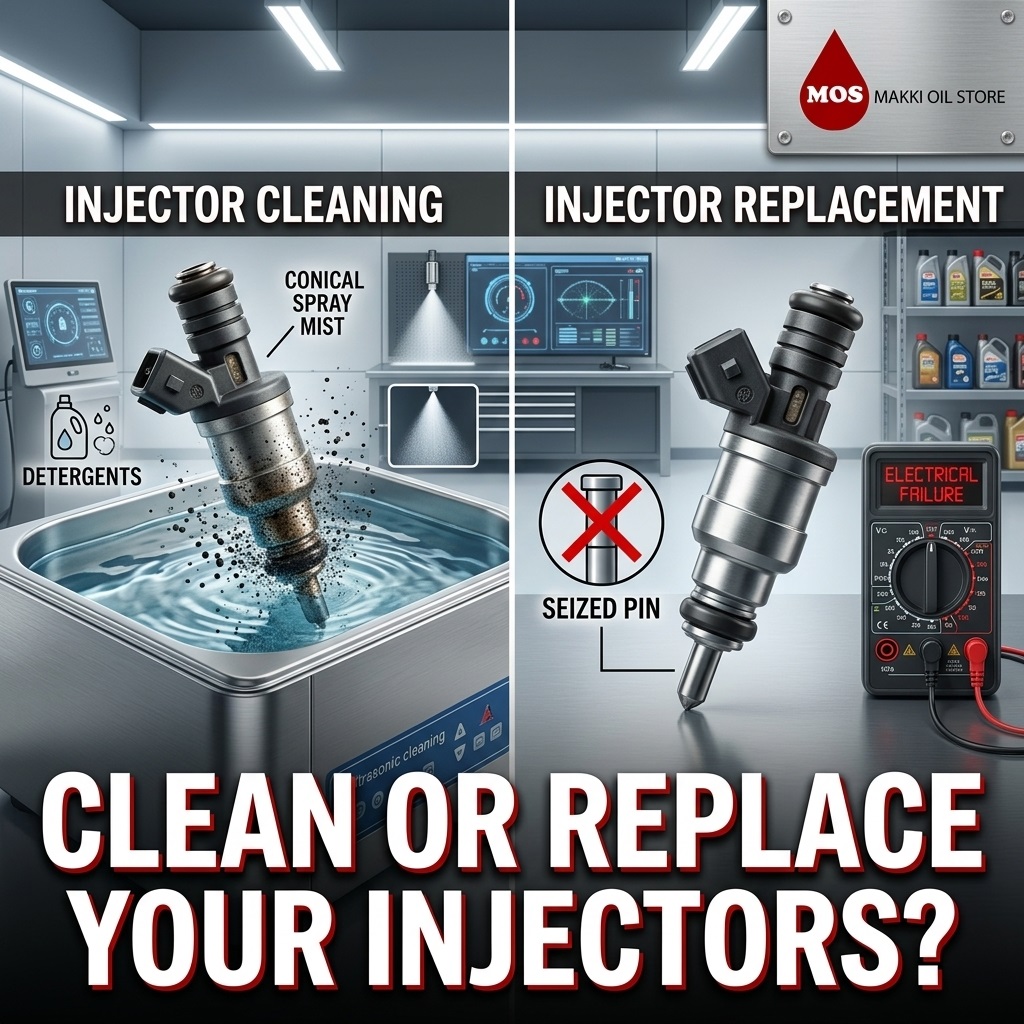
In the vast majority of cases, a sluggish or misfiring injector is not physically broken; it is simply fouled by stubborn carbon deposits and varnish. Professional ultrasonic cleaning and pressurized chemical flushing dissolve these internal blockages without requiring expensive hardware swaps.
During a professional service bench test, technicians measure individual flow rates, spray angles, and electronic coil integrity before and after cleaning to ensure factory performance is restored. Drivers who want to understand how proactive cleaning revitalizes throttle response and lowers fuel burn can review detailed technical insights on how it improves fuel efficiency and engine performance to see why maintenance is preferred over replacement.
| Symptom / Condition | Primary Cause | Recommended Solution |
| Rough idle and minor hesitation | Carbon varnish on nozzle tips | Ultrasonic cleaning and chemical flush |
| Persistent cylinder misfire code | Internal solenoid coil failure | Complete injector replacement |
| Reduced fuel economy over time | Partial spray pattern distortion | On-car or off-car injector servicing |
| External fuel leak or cracked body | O-ring hardening or plastic fatigue | Immediate replacement for safety |
When Complete Injector Replacement Becomes Unavoidable
While cleaning resolves most deposit-related problems, certain mechanical failures dictate that an injector has reached the end of its operational lifespan. Ignoring chronic electrical or structural faults can lead to catastrophic engine damage if a cylinder runs excessively lean or floods with raw fuel.
- Solenoid Electrical Failure: If the internal electromagnetic winding shorts out or opens completely, cleaning fluids cannot revive the dead electronic circuit.
- Internal Mechanical Seizure: Severe varnish accumulation can permanently lock the internal pintle valve shut or wedge it open, preventing proper sealing.
- External Housing Cracks: Plastic injector bodies or degraded O-ring seals can crack under extreme thermal cycling, creating dangerous fuel leaks in the engine bay.
For motorists residing near commercial hubs seeking expert evaluation and replacement components, finding specialized technical support is straightforward. Local vehicle owners can review neighborhood service options through finding the best car injector cleaner shop in banker society lahore to ensure precision diagnostics.
At the Makki Oil Store, our expert technicians utilize advanced diagnostic testing equipment and precision ultrasonic cleaning benches to determine whether your fuel system needs restoration or new hardware, keeping your engine running smoothly on every journey.
Frequently Asked Questions
How do I know if my car needs injector cleaning or replacement?
Most dirty injectors can be fully restored via ultrasonic cleaning, whereas electrical burnouts, mechanical internal binding, or cracked housings require complete component replacement.
What are the main symptoms of clogged fuel injectors?
Common symptoms include rough engine idling, engine misfires under acceleration, noticeable drops in fuel economy, and sluggish throttle response.
How often should fuel injectors be cleaned?
As a general preventative maintenance practice, fuel injectors should be professionally cleaned and tested every 30,000 to 40,000 kilometers.
Can bad fuel injectors cause my car to fail emissions tests?
Yes, distorted spray patterns lead to incomplete combustion, which significantly increases unburned hydrocarbons and carbon monoxide emissions in the exhaust.
Is fuel injector cleaner additive in the gas tank effective?
Tank additives help maintain clean injectors during normal driving, but heavily clogged injectors require professional ultrasonic bench cleaning for complete restoration.