


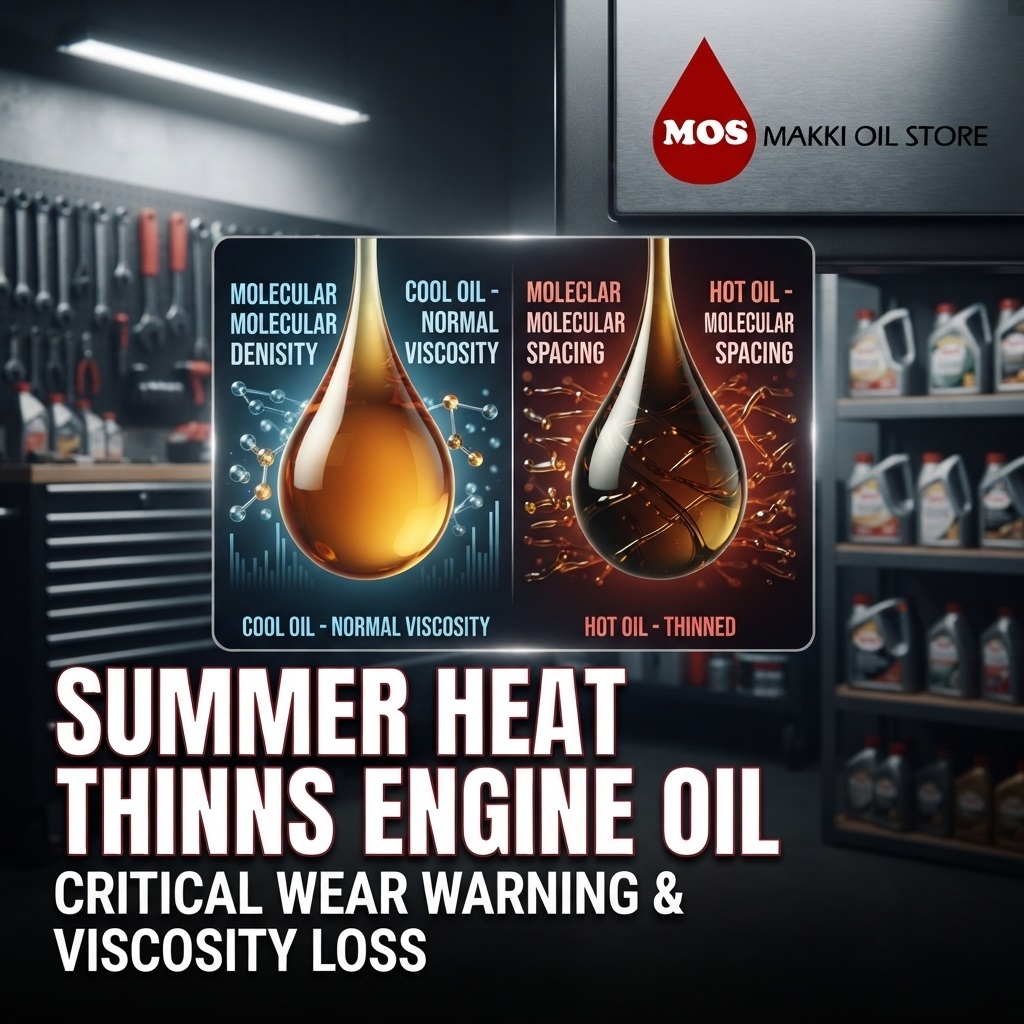
When regional summer temperatures climb past forty degrees Celsius, car and motorcycle engines operate under severe thermal duress. While components like radiators and cooling fans absorb the brunt of the external heat, the fluid circulating deep within the crankcase undergoes an invisible physical transformation. Managing this thermal transition requires a thorough understanding of how ambient heat alters engine oil viscosity, threatening the hydrodynamic barrier that keeps fast-moving metal parts from grinding together prematurely.
The Physical Science of Fluid Thinning Under High Heat
All liquid lubricants rely on a fundamental property known as resistance to flow, which determines how thickly or thinly a fluid behaves at specific temperature thresholds. As engine bay temperatures rise due to combined combustion heat and blazing regional sunshine, the molecular bonds within standard mineral lubricants become overexcited and move further apart. This molecular separation causes the fluid to thin out significantly compared to its performance during chilly winter mornings.
When a lubricant thins excessively under extreme thermal stress, its ability to maintain a pressurized cushion between piston rings, camshaft lobes, and main bearings drops dangerously low. This thinning effect can lead to metal-to-metal contact, accelerated component wear, and a drop in oil pressure indicated by dashboard warning lights. To ensure you select a lubricant capable of withstanding these severe seasonal shifts, car and motorcycle owners can review professional guidelines covering how to choose the right viscosity to evaluate proper multi-grade ratings for hot regional climates.
Evaluating High-Temperature Viscosity Ratings
Choosing the correct multi-grade rating becomes critical when operating vehicles during peak summer heatwaves. Many motorists driving older commuter cars or heavy-duty motorcycles frequently investigate whether heavier conventional weights provide superior protection when the thermometer peaks. For instance, drivers often research specific performance traits by examining a guide is 20w40 good for hot weather to determine if a thicker high-temperature rating prevents excessive fluid thinning during intense seasonal driving.
- Low-Temperature Rating (W-Number): The number preceding the ‘W’ indicates how fluidly the oil flows during cold startups, ensuring rapid circulation before operating temperatures are reached.
- High-Temperature Rating: The second number represents the fluid’s structural integrity and film strength when tested at 100 degrees Celsius and above.
- Shear Stability: Advanced synthetic formulations resist permanent molecular breakdown under continuous high-RPM motorway driving better than conventional mineral bases.
| Viscosity Grade | Low-Temp Flow Behavior | High-Temp Film Protection | Ideal Seasonal Application |
| 5W-30 | Highly fluid in winter | Standard thermal resistance | Modern passenger vehicles in moderate climates |
| 10W-40 | Balanced cold flow | Enhanced high-temp stability | Standard commuter cars in hot summer regions |
| 20W-50 | Stable cold flow | Maximum film strength under heavy load | Older engines, heavy-duty motorcycles, and extreme heat |
Oxidation, Sludge Formation, and Additive Depletion
Beyond simple thermal thinning, high operating temperatures accelerate oil oxidation—a destructive chemical reaction where oxygen molecules bond with hydrocarbon chains. This process causes the oil to darken rapidly, thicken into sticky sludge, and leave behind varnish deposits on vital internal components. Sludge accumulation restricts narrow oil supply galleries, starving hydraulic lifters and turbocharger bearings of necessary lubrication.
At the Makki Oil Store, our expert technicians recommend switching to premium synthetic formulations and shortening service intervals during peak summer months to protect your engine against thermal oxidation and sludge buildup.
Frequently Asked Questions
Why does summer heat cause engine oil to thin out?
Heat increases thermal energy within liquid lubricants, causing their molecules to move apart and reducing internal resistance to flow. When ambient temperatures and engine bay heat rise together, the oil’s viscosity drops, making it significantly thinner than intended for normal operating conditions.
Can using a thicker oil prevent heat-related wear?
Using a slightly heavier high-temperature viscosity grade recommended by your vehicle manufacturer can help maintain adequate oil pressure and film strength during extreme summer weather. However, using an oil that is too thick for your engine’s internal clearances can restrict flow during startup and cause accelerated wear, so always follow manufacturer specifications.
How does extreme heat affect oil change intervals?
Extreme heat accelerates thermal breakdown and additive depletion, meaning your engine oil loses its protective properties much faster during summer months. It is generally advisable to shorten your oil change intervals by twenty to thirty percent if you frequently drive in severe hot weather or heavy urban traffic.
What are the signs that my engine oil has broken down from heat?
Warning signs include a noticeable increase in engine noise or tappet ticking, a drop in oil pressure indicated by a dashboard gauge or warning light, a burning oil smell on the dipstick, and a slight decrease in engine performance during prolonged hot-weather driving.
Is synthetic oil more stable in summer heat than conventional oil?
Fully synthetic engine oils possess superior molecular stability and resist thermal breakdown and oxidation much better than conventional mineral oils. They maintain their viscosity across wider temperature ranges, making them the ideal choice for high-temperature driving conditions.