

When vehicle owners tally up their routine maintenance tasks, engine oil changes and tire rotations usually take top priority, while the hydraulic system often gets neglected until a problem arises. Yet, keeping your braking system fully operational is entirely dependent on the chemical integrity of the hydraulic fluid coursing through your master cylinder, lines, and calipers. Knowing the exact timeline for a brake fluid change is vital for preventing internal component corrosion, avoiding a spongy pedal feel, and ensuring your car or motorcycle can stop safely under emergency conditions.
The Standard Timeline and Mileage Milestones
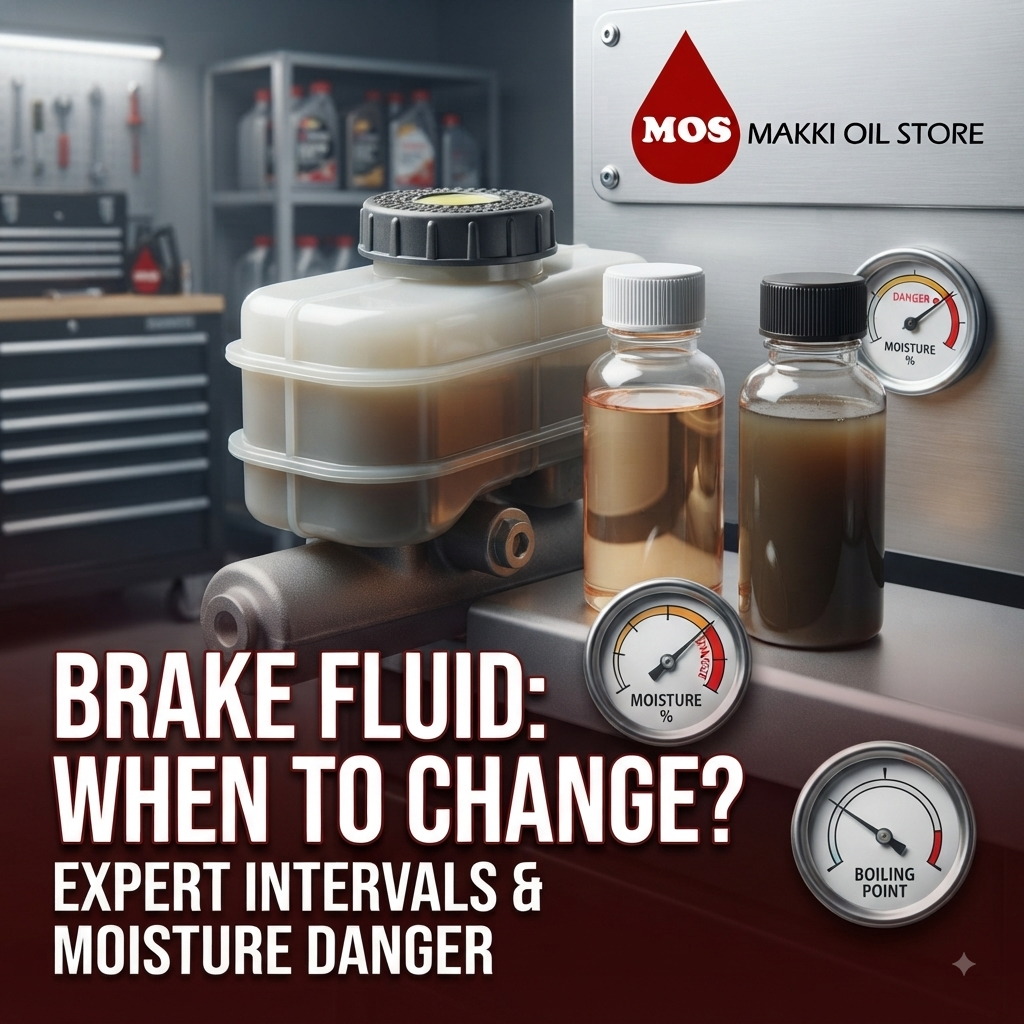
Most vehicle manufacturers and lubrication experts recommend replacing your brake fluid entirely every twenty-four months, or roughly every forty thousand kilometers, whichever milestone arrives first. Unlike engine oil, which degrades primarily due to thermal breakdown and soot accumulation, brake fluid faces a different enemy entirely: atmospheric moisture absorption.
Because glycol-based fluids are inherently hygroscopic, they pull water molecules through microscopic pores in rubber hoses and reservoir seals over time. Even if you drive very few kilometers a year, the fluid sitting dormant in your system still absorbs ambient moisture. Letting this water content accumulate unchecked lowers the boiling point of the fluid, paving the way for dangerous brake fade when you need stopping power the most.
Environmental Stressors That Accelerate Fluid Wear
Regional driving conditions play a massive role in dictating how quickly your hydraulic fluid degrades. Navigating heavy urban congestion filled with endless stop-and-go traffic forces drivers to apply their brakes dozens of times every single kilometer. This continuous frictional heat transfers directly from the brake pads and rotors into the caliper pistons, cooking the fluid and accelerating thermal breakdown.
Furthermore, high humidity levels during monsoon seasons drastically increase the rate at which moisture enters the braking system. Motorists preparing for seasonal driving shifts or long journeys can learn more by reading our summer road trip brake oil guide to understand how seasonal climate demands require more rigorous maintenance intervals.
| Driving Condition | Impact on Brake Fluid | Recommended Service Adjustment |
| Heavy Urban Commuting | Frequent thermal stress and high friction | Flush every 30,000 km or 18 months |
| Humid Climate / Monsoons | Rapid atmospheric moisture absorption | Flush every 24 months strictly |
| Highway / Long Distance | Stable operating temperatures | Follow standard 40,000 km interval |
Recognizing the Physical Signs of Contaminated Fluid
Waiting for a calendar reminder is a good baseline, but your vehicle will often give you physical warning signs when the hydraulic fluid has passed its operational limit. A failing fluid loses its viscosity stability and collects metallic microscopic debris from internal seal wear, turning dark brown or murky black instead of its original clear amber shade.
If you notice that your brake pedal feels unusually soft, travels further toward the floorboards than normal before engaging, or feels spongy during a sudden stop, your system is likely suffering from moisture contamination or trapped air pockets. Vehicle owners who notice these subtle shifts should review professional recommendations in our brake fluid replacement guide to identify the ideal moment for a comprehensive system flush before component failure occurs.
Professional Flushing Versus Top-Off Myths
A common mistake among vehicle owners is simply topping off the brake fluid reservoir when the fluid level drops slightly. As your brake pads wear down over time, the caliper pistons push further out, causing the fluid level in the master cylinder reservoir to dip. Adding fresh fluid to an old, contaminated batch does nothing to remove the accumulated water, oxidized sludge, and copper corrosion particles resting at the bottom of the lines.
At the Makki Oil Store, our technicians perform complete pressure-bleeding flushes that completely evacuate every drop of old, moisture-laden fluid from the system before introducing fresh, certified hydraulic fluid. This thorough flushing process protects your ABS modulators and master cylinder from premature failure.
Frequently Asked Questions
Why does brake fluid absorb moisture from the air?
Brake fluid is chemically hygroscopic by design, meaning its base formulation naturally attracts and binds with water molecules present in the atmosphere. Because hydraulic systems cannot be hermetically sealed against air pressure fluctuations, microscopic moisture enters through porous rubber lines and the master cylinder reservoir cap over time. As water content increases, it drastically lowers the fluid’s boiling point, creating a safety hazard during heavy braking.
Can I just top off my brake fluid instead of doing a complete flush?
Topping off your brake fluid only masks the symptom of low fluid levels, which usually occur because your brake pads have worn down and pushed the caliper pistons outward. Simply adding new fluid to an old, water-contaminated batch does not remove the moisture, debris, and corrosion particles trapped inside the lines. A complete system flush is required every two years to clear out the degraded fluid entirely.
How do I check the condition of my car’s brake fluid at home?
You can inspect your brake fluid condition by opening the hood and locating the translucent brake fluid reservoir near the rear of the engine bay. Examine the color and clarity of the fluid through the plastic wall; fresh fluid is light amber and translucent, whereas old, contaminated fluid appears dark brown, murky, or black. If you see floating debris or dark discoloration, it is time for a professional replacement.
Does driving style affect how often I need a brake fluid change?
Your driving style heavily influences your fluid lifespan. Drivers who frequently navigate steep hills, engage in aggressive driving, or spend hours daily in heavy stop-and-go urban traffic generate far more frictional heat at the brakes. This sustained high temperature cooks the fluid’s anti-oxidation additives much faster, requiring more frequent maintenance checks and earlier fluid flushes compared to highway-dominant driving.
What happens if I ignore my car’s scheduled brake fluid replacement?
Ignoring scheduled brake fluid replacements allows moisture levels to exceed safe limits, which causes two major problems: internal corrosion of metal brake lines and calipers, and a severe risk of vapor lock. When water inside the lines boils under heavy braking friction, it turns to steam, creating compressible gas pockets that cause your brake pedal to sink straight to the floor with zero stopping response.