Every time you get behind the wheel in Pakistan, your vehicle’s braking system is the single most important safety mechanism standing between a routine trip and a severe accident. Navigating our unique traffic conditions, whether handling the rapid stop-and-go gridlock of urban business centers, dealing with unexpected lane changes on the highway, or driving down steep, winding mountain passes, requires absolute brake reliability.
Yet, while most drivers are quick to replace worn brake pads or schedule an engine oil change, the underlying hydraulic fluid is frequently neglected. Over time, ignoring this critical system can compromise stopping power, cause internal component failure, and lead to expensive workshop bills. Understanding how brake oil degrades is essential for keeping your vehicle safe, reliable, and cost-effective over the long run.
The Core Science of Hydraulic Braking Systems
To understand why maintenance matters, it helps to look at how modern brakes function. Your vehicle’s braking system relies entirely on liquid pressure to operate. When you press the brake pedal, a mechanical lever pushes a piston inside the master cylinder. This action forces fluid through high-pressure steel lines down to the brake calipers or wheel cylinders at each corner of your car.
[Pedal Pressed] —> [Master Cylinder Piston] —> [Fluid Under Pressure] —> [Calipers Grip Rotors]
Because liquids cannot be compressed, the fluid transmits this kinetic force instantly. This pressure forces the brake calipers to squeeze specialized friction pads tightly against the spinning metallic brake rotors, generating intense friction that safely brings your multi-ton vehicle to a complete stop.
Why Brake Fluid Degrades Over Time
Most automotive hydraulic fluids are glycol-based chemical formulations that possess an inherent property known as hygroscopy. This means the fluid actively absorbs moisture and water vapor directly from the surrounding atmosphere over time.
Inspecting the master cylinder reservoir for fluid clarity and level. Source: Birdlkportfolio / Getty Images
1. The Danger of a Dropping Boiling Point
Braking systems generate intense thermal energy; under heavy use, the friction between pads and rotors can easily heat calipers to temperatures exceeding 200∘C. Fresh, uncompromised fluid is engineered with a high dry boiling point (often over 230∘C) to remain stable under these harsh conditions.
However, as moisture creeps into the system, it drastically lowers the fluid’s boiling point. If the water content reaches just 3 or 4 percent, the intense heat generated during sudden braking can cause the trapped moisture to boil instantly, turning it into pockets of highly compressible steam.
2. Understanding “Spongy” Pedal Feel and Vapor Lock
When moisture turns into steam inside your brake lines, it triggers a dangerous condition known as vapor lock. Unlike liquids, gas bubbles are highly compressible.
The next time you press the brake pedal during a sudden stop, the physical force you apply is wasted simply compressing those pockets of steam rather than moving the caliper pistons. This causes a soft, spongy pedal feel and a noticeable loss in stopping power, dramatically increasing your total braking distance.
How Routine Flushes Protect Core Financial Assets
Postponing a system flush to save a little money in the short term is counterproductive. Routine maintenance protects your vehicle’s most expensive internal mechanical components:
- Preventing Internal Rust and Corrosion: Absorbed water creates a highly corrosive environment inside your brake lines. This moisture gradually strips away protective zinc coatings, attacking polished steel pistons, sensitive anti-lock braking system (ABS) hydraulic modulators, and master cylinder walls, causing fine pitting and leaks.
- Avoiding Complete Component Seizures: As internal corrosion develops, microscopic rust flakes break off and mix into the fluid. This turns the liquid into a dark, abrasive slurry that ruins delicate internal rubber seals, eventually causing calipers to seize completely and ruin your brake pads.
- Saving on Component Replacements: A simple fluid flush costs a fraction of the price of major component overhauls. Replacing a corroded ABS control unit, a pitted master cylinder, or damaged calipers can easily end up costing tens of thousands of rupees.
To understand how tracking this single maintenance item helps protect your car’s underlying parts, it is highly useful to explore the benefits of regular brake oil checks to keep your car safe in Lahore before dealing with sudden mechanical performance drops.
The Proper Way to Execute a System Flush
A proper fluid service involves much more than simply draining the plastic reservoir under the hood and pouring in fresh liquid. True maintenance requires a comprehensive system flush, often referred to as bleeding the brakes.
During this service, a professional technician attaches specialized pressure equipment to the master cylinder or manually pumps the pedal while opening the individual bleeder valves located at each wheel caliper. Fresh fluid is continuously pushed through the entire system until all dark, moisture-laden old fluid, trapped air bubbles, and metallic grit are completely expelled from the lines.
By taking your vehicle to a modern, highly reputable automotive service center like the Makki Oil Store, you ensure your braking network receives direct access to authentic, factory-sealed products that perfectly match your manufacturer’s specifications (such as DOT 3, DOT 4, or DOT 5.1). Professional technicians execute the service using proper collection tools, keeping your stopping power sharp and your daily commutes safe.
Frequently Asked Questions
Can I mix different brake fluid specifications like DOT 3 and DOT 4 together in my car?
In general, you can safely add DOT 4 fluid into a system containing DOT 3, as both are glycol-based fluids and compatible with each other. However, you should never do the reverse; adding DOT 3 into a vehicle built for DOT 4 can lower the fluid’s boiling point below what the manufacturer intended, which can cause performance issues under heavy braking. Additionally, never mix silicone-based DOT 5 fluid with any glycol-based options, as they will separate and ruin internal seals.
How often should a daily driver schedule a complete brake fluid flush?
Most automobile manufacturers recommend scheduling a complete hydraulic fluid flush every two years or every 40,000 kilometers, whichever comes first. This timeline is independent of how many kilometers you drive because moisture continuously enters the system through microscopic pores in flexible rubber hoses and the reservoir cap vent, even when the vehicle is parked in a garage.
Why does my car pull to one side when I apply the brakes firmly?
When a vehicle pulls sharply to one side during braking, it often points to a stuck or restricted caliper piston on the opposite side. This mechanical failure is frequently caused by old, contaminated fluid that has allowed rust and sludge to accumulate behind the caliper seal. This buildup prevents the piston from moving smoothly, leaving one wheel doing all the stopping work and pulling the steering wheel.
What specific tools do professionals use to test the moisture level inside a reservoir?
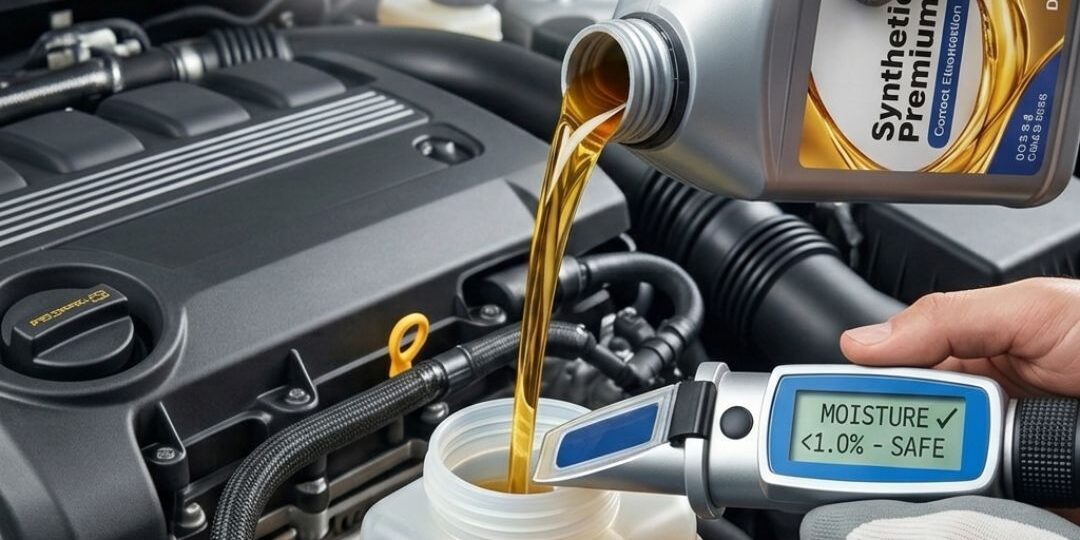
Professional automotive technicians utilize specialized electronic optical refractometers or electronic conductivity testers to measure moisture levels. These compact tools are dipped directly into the master cylinder reservoir to measure the fluid’s resistance to electrical current. Since water conducts electricity much faster than pure glycol, the digital readout gives an exact percentage of water contamination, indicating if a change is needed.
Is it normal for the fluid level in my master cylinder reservoir to drop slightly over time?
A slight drop in your fluid level is generally a normal sign of routine brake pad wear. As the thin friction material on your brake pads wears down over time, the caliper pistons must extend further outward to push the pads against the rotors. This draws more fluid down into the lines from the reservoir. However, if the fluid level drops rapidly over a few days, it indicates a dangerous external leak that requires immediate professional inspection.
Meet the Author
Muhammad Ikram | Founder of Makki Oil Store
With over 25 years of practical industry experience, Muhammad Ikram is one of Lahore’s most experienced voices in automotive lubrication and vehicle care. He founded Makki Oil Store in 1999 with a clear mission: to protect vehicle engines by providing genuine, high-quality lubricants paired with expert maintenance advice.
Over the last two and a half decades, Muhammad has developed a deep, practical knowledge of engine mechanics, fluid chemistry, and local driving demands. Whether dealing with high-mileage daily drivers, modern imported vehicles, or heavy-duty power equipment, his hands-on approach ensures that every customer receives the precise care needed to keep their engine running smoothly for years to come.