Every engine requires a precise balance of fluid viscosity to operate smoothly under varying thermal loads. When a lubricant loses its structural body or breaks down under intense operating conditions, it fails to maintain the necessary cushioning between fast-moving metal parts. Using or running on thin engine oil past its operational threshold can compromise internal hydraulic pressure, increase friction, and lead to accelerated component wear across your vehicle’s motor.
The Mechanical Risks of Excessive Thinning
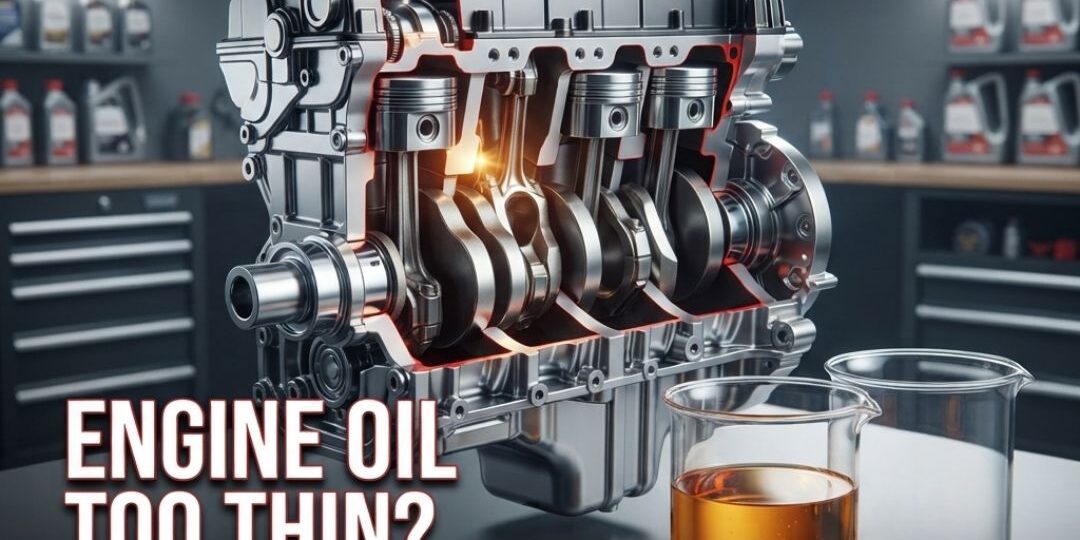
Engine oil acts as both a lubricant and a hydraulic fluid. When oil becomes excessively thin, whether due to thermal breakdown, fuel dilution, or selecting the wrong multi-grade classification, it loses its high-temperature film strength. Without this protective barrier, close-tolerance components such as journal bearings, camshaft lobes, and piston rings can experience metal-on-metal contact. This loss of viscosity causes oil pressure to drop, which can trigger dashboard warning lights and leave critical engine parts starved of proper cushioning during high-speed operation.
Grasping how viscosity ratings map out across different formulations is essential for preventing these mechanical failures. Before selecting a replacement fluid, you can review our technical breakdown on how to read engine oil labels to understand what 5W30, 10W40, and 20W50 actually mean and ensure you choose a grade that withstands local climate stresses. Matching your oil specifications to your engine’s design prevents premature thinning and protects internal components from heat-induced wear.
Environmental Stressors and Local Driving Realities
Driving conditions in Pakistan place severe demands on automotive lubricants. Blistering summer temperatures combined with heavy urban traffic congestion cause under-hood operating temperatures to soar. When an engine is forced to idle for prolonged periods without adequate airflow, the base stock of the lubricant is tested to its limits. If the oil lacks thermal stability, it shears down rapidly, becoming too thin to seal the gaps around piston rings effectively. This thinning results in blow-by, increased oil consumption, and a noticeable drop in overall engine efficiency.
At the Makki Oil Store, we frequently inspect engines that suffer from performance losses and abnormal ticking noises because degraded, thinned-out oil failed to maintain pressure. Proactive maintenance such as adhering to strict service intervals and using high-quality synthetic formulations ensures that your lubricant retains its protective body even when faced with extreme heat and heavy traffic loads.
Frequently Asked Questions
Why does engine oil become too thin over time?
Engine oil thins out over time due to a combination of thermal breakdown, mechanical shearing, and fuel dilution. As the oil circulates through high-temperature zones and tight clearances, the polymer viscosity index improvers that help maintain its thickness gradually break apart. Additionally, unburnt fuel can slip past piston rings during frequent cold starts or short trips, mixing directly with the lubricant and diluting its base stock. This cumulative degradation reduces the oil’s ability to maintain a strong protective film, leaving internal components vulnerable to friction and wear.
Can using an oil that is too thin damage my engine bearings?
Using an oil that is significantly thinner than what your vehicle manufacturer specifies can indeed damage your engine bearings. Engine bearings rely on a continuous, pressurized wedge of fluid to keep the rotating crankshaft separated from the engine block. If the oil is too thin, it cannot maintain this hydrodynamic wedge under high loads and temperatures, allowing metal components to touch. This direct friction causes scoring and rapid bearing degradation and can eventually lead to severe engine knocking and catastrophic mechanical failure.
How does high ambient heat contribute to oil thinning?
High ambient temperatures increase the baseline thermal load on your engine, causing the oil operating temperature to rise significantly. While multi-grade oils are specifically formulated with additives to resist thinning as temperatures climb, extreme and prolonged heat will eventually push these formulations past their limits. When the base oil overheats and loses its molecular stability, its viscosity drops sharply, compromising its ability to cushion moving parts and maintain stable oil pressure during demanding driving conditions.
What are the common warning signs that my engine oil has become too thin?
When engine oil becomes excessively thin, several warning signs usually manifest during operation. You may notice a flickering or fully illuminated oil pressure warning light on your dashboard, particularly when the car is idling in traffic after a long drive. Additionally, the engine may produce a distinct ticking or tapping noise from the valve train due to a lack of hydraulic pressure, and you might experience a drop in fuel economy, sluggish throttle response, or increased oil consumption as fluid slips past worn seals.
How can I prevent my engine oil from breaking down prematurely?
Preventing premature oil thinning and breakdown requires consistent preventive maintenance and careful product selection. Always choose a high-quality synthetic or mineral oil that strictly matches the viscosity grade recommended in your vehicle’s manual. Furthermore, commit to regular oil and filter changes based on your actual driving environment rather than waiting for ideal mileage milestones. Avoiding excessive idling in heavy traffic and ensuring your air filter is clean will also reduce contamination and thermal stress, helping your oil maintain its protective body throughout its service life.
Meet the Author
Muhammad Ikram | Founder of Makki Oil Store
With over 25 years of practical industry experience, Muhammad Ikram is one of Lahore’s most experienced voices in automotive lubrication and vehicle care. He founded Makki Oil Store in 1999 with a clear mission: to protect vehicle engines by providing genuine, high-quality lubricants paired with expert maintenance advice.
Over the last two and a half decades, Muhammad has developed a deep, practical knowledge of engine mechanics, fluid chemistry, and local driving demands. Whether dealing with high-mileage daily drivers, modern imported vehicles, or heavy-duty power equipment, his hands-on approach ensures that every customer receives the precise care needed to keep their engine running smoothly for years to come.
Meet the Author
Muhammad Ikram | Founder of Makki Oil Store
With over 25 years of practical industry experience, Muhammad Ikram is one of Lahore’s most experienced voices in automotive lubrication and vehicle care. He founded Makki Oil Store in 1999 with a clear mission: to protect vehicle engines by providing genuine, high-quality lubricants paired with expert maintenance advice.
Over the last two and a half decades, Muhammad has developed a deep, practical knowledge of engine mechanics, fluid chemistry, and local driving demands. Whether dealing with high-mileage daily drivers, modern imported vehicles, or heavy-duty power equipment, his hands-on approach ensures that every customer receives the precise care needed to keep their engine running smoothly for years to come.