


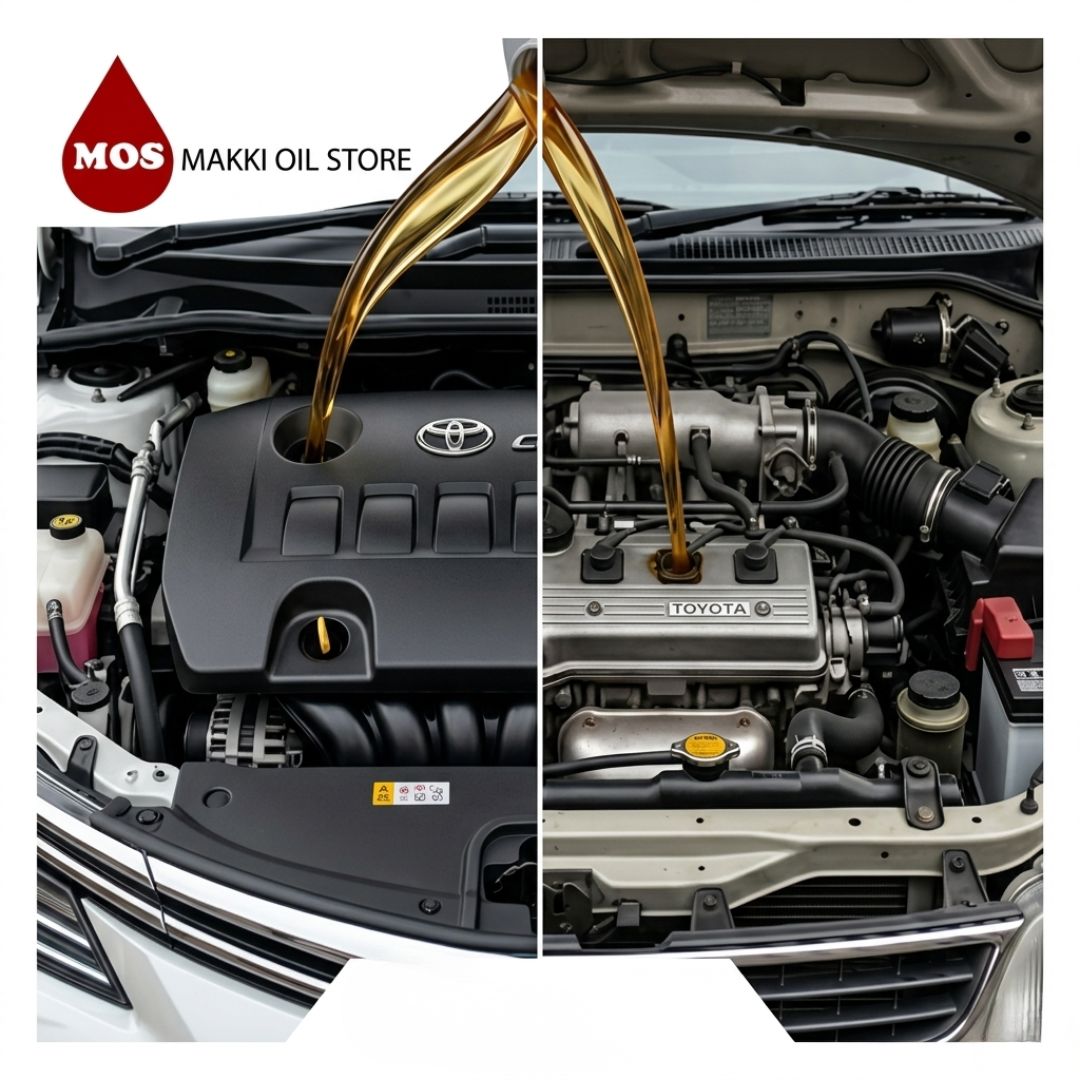
Choosing the correct engine oil for your Toyota Corolla is one of the most critical decisions you can make to preserve its performance, fuel efficiency, and long-term durability. In Pakistan, the Toyota Corolla is more than just a car; it is a household staple, a reliable commuter, and a prized asset. However, because this vehicle has been in continuous production for decades across multiple generations ranging from the rugged older 1.3L XLI and GLI variants to the sophisticated Altis 1.6L, 1.8L Grande, and modern Corolla Cross hybrids, there is no single “one-size-fits-all” lubricant.
The Pakistani driving environment presents distinct challenges. Intense summer heat, stop-and-go city traffic in major urban centers, dust, and varying fuel qualities all place unique demands on your vehicle’s lubrication system.
Selecting an inappropriate viscosity or oil type can lead to sluggish acceleration, increased fuel consumption, or premature component wear. This guide breaks down the precise oil requirements for every Corolla variant in Pakistan based on manufacturing years, engine architecture, and mileage profiles.
Understanding Oil Viscosity and Climate in Pakistan
Engine oil bottles feature an alphanumeric rating established by the Society of Automotive Engineers (SAE), such as 0W-20, 5W-30, or 10W-40. Understanding what these numbers mean is essential before making a purchase. The number preceding the “W” (which stands for Winter) denotes the oil’s flow rate at low temperatures. A lower number indicates that the oil remains fluid and circulates rapidly upon a cold start, reducing initial startup friction. The numbers following the “W” indicate the oil’s thickness or operating viscosity at high temperatures.
[0W or 5W] ————————-> [20, 30, or 40]
Cold Start Flow High-Temperature Thickness
(Crucial for instant protection) (Crucial for extreme summer heat)
In Pakistan’s climate, where ambient summer temperatures frequently surpass 40°C, there is a common misconception that cars require thick oils like 20W-50 to protect internal components. Modern Toyota engines are engineered with exceptionally tight internal tolerances and microscopic clearances between moving parts. Running an overly thick fluid prevents proper circulation, forces the oil pump to work harder, reduces fuel economy, and elevates operating temperatures. Modern synthetic formulations are chemically engineered to maintain an unbreakable protective film even at low viscosities under high heat.
Recommended Engine Oil by Toyota Corolla Generation
The correct fluid specification changes across different vehicle generations and engine families. Matching the oil chemistry to the specific demands of your vehicle’s engine architecture ensures optimal performance.
1. Modern Variants: Altis 1.6L, 1.8L Grande, and Corolla Cross (2014–Present)
Recent generations utilize modern engine configurations equipped with Dual VVT-i (Variable Valve Timing with intelligence). These systems rely on oil pressure to actuate valve timing mechanisms continuously.
- Recommended Viscosity: 0W-20 or 5W-30 Full Synthetic
- Engine Codes: 1ZR-FE (1.6L) and 2ZR-FE / 2ZR-FXE (1.8L / Hybrid)
- Why It Matters: These engines require rapid oil pressurized flow immediately upon ignition. A premium synthetic 0W-20 or 5W-30 maximizes fuel efficiency, minimizes friction, and keeps the internal VVT-i oil passages free of sludge. For brand-new vehicles and hybrid models, 0W-20 is the ideal choice, while 5W-30 offers balanced protection for everyday driving conditions.
2. Legacy Variants: Corolla XLI, GLI, and Altis (2009–2020)
The 11th and late 10th-generation models featured the reliable 1.3L 2NZ-FE engine alongside earlier iterations of the 1.6L and 1.8L powerplants. Millions of these vehicles serve as daily drivers across Pakistan.
- Recommended Viscosity: 5W-30 Full Synthetic or 10W-40 Semi-Synthetic
- Engine Codes: 2NZ-FE (1.3L), 1ZR-FE (1.6L)
- Why It Matters: For well-maintained vehicles with under 100,000 kilometers on the odometer, a high-quality 5W-30 fully synthetic fluid delivers excellent fuel economy and smooth operation. If the engine has high mileage or shows minor oil consumption, moving to a slightly higher viscosity like 10W-40 can provide enhanced sealing and protection against wear.
3. Classic Variants: Corolla Models (2002–2008)
Older generations, including the popular 9th-generation “Indus” shape and early 10th-generation models, generally feature older engine designs with wider operational tolerances.
- Recommended Viscosity: 10W-40 Semi-Synthetic or 15W-40 Premium Mineral
- Engine Codes: 2NZ-FE (1.3L), 3ZZ-FE (1.6L)
- Why It Matters: These older engines have logged significant mileage and operate with higher physical tolerances. Using an ultra-thin oil like 0W-20 can result in oil bypass or consumption. A robust 10W-40 semi-synthetic provides the necessary film thickness to cushion internal components while maintaining reliable oil pressure across hot operational cycles.
Synthetic vs. Semi-Synthetic vs. Mineral Oil
The base type of fluid you select directly determines its protective life cycle, chemical stability, and cost efficiency over time. Understanding these distinctions helps you balance maintenance budgets with mechanical longevity.
| Oil Type | Composition & Characteristics | Ideal For | Recommended Drain Interval |
| Fully Synthetic | Artificially formulated base oils with uniform molecules; premium thermal stability and low-temperature flow. | Modern variants, Hybrids, low-mileage engines. | 8,000 to 10,000 KM |
| Semi-Synthetic | A balanced blend of synthetic and conventional mineral fluids providing solid protection at a mid-tier price. | Mid-age cars, vehicles with 100k+ KM. | 5,000 to 7,000 KM |
| Mineral Oil | Refined crude petroleum; thicker molecular structures that break down faster under high heat. | Older classic models, budget-conscious maintenance. | 3,000 to 5,000 KM |
While mineral options carry a lower upfront price tag, their shorter operational lifespan requires more frequent changes. Fully synthetic products provide vastly superior defense against high-temperature breakdown, minimize engine deposit formations, and lower your annual maintenance costs by extending service intervals.
How Mileage Influences Your Oil Choice
As your Toyota Corolla accumulates kilometers, internal metal surfaces experience gradual, natural wear. The physical clearances between pistons, rings, and cylinder walls slowly expand. Consequently, an oil viscosity that performed perfectly during the vehicle’s first 50,000 kilometers might not be ideal once the vehicle crosses 150,000 kilometers.
For cars with under 100,000 kilometers, stick strictly to the manufacturer’s primary recommendation, typically a 0W-20 or 5W-30 grade. If your vehicle has surpassed 150,000 kilometers and you observe minor oil drops on the dipstick between scheduled services, shifting from a 5W-30 to a 10W-40 fluid can prove highly beneficial.
The increased high-temperature thickness helps seal the expanded gaps between piston rings and cylinder walls, maintaining compression, curbing oil consumption, and reducing mechanical noise. When addressing high-mileage wear, it is valuable to look at how to choose how to select the right engine oil grade for your car based on engine age and historical maintenance.
Avoiding Counterfeit Products in Pakistan
The local automotive market faces a widespread issue with counterfeit lubricants. Packaging can be easily copied, and using unverified, re-refined oil can cause severe engine damage within a few thousand kilometers. Counterfeit products fail to maintain viscosity under heat, which quickly leads to sludge buildup, blocked oil channels, and catastrophic component failures.
To protect your investment, avoid buying unsealed oil from unauthorized, roadside retailers. Always purchase your fluids from reputable, established dealers who offer verifiable supply chains and authentic products. For certified genuine lubricants and expert maintenance advice, sourcing through the Makki Oil Store ensuring your engine receives authentic, high-performance protection that meets international API standards.
Frequently Asked Questions
Can I switch from mineral oil to fully synthetic oil in an older Corolla?
Yes, you can transition from a conventional mineral fluid to a fully synthetic product, provided the engine is in sound mechanical condition without pre-existing oil leaks. Synthetic options feature active detergent additives that effectively dissolve legacy sludge and carbon deposits. In older cars with brittle, worn rubber seals, removing this old crust can sometimes reveal minor oil weeping that was previously blocked by sludge. If your engine is mechanically healthy and does not burn oil, making the switch to a synthetic or semi-synthetic 10W-40 fluid will deliver vastly superior internal cleanliness, smoother cold starts, and enhanced protection under high thermal stress.
How often should I change the engine oil in my Corolla under Pakistani driving conditions?
Your optimal drain interval depends primarily on the base type of lubricant used and your daily driving profile. If you use a high-grade fully synthetic fluid, you can confidently target a drain interval between 8,000 and 10,000 kilometers. For semi-synthetic formulations, the recommended interval is between 5,000 and 7,000 kilometers, while standard mineral options should be replaced every 3,000 to 5,000 kilometers. However, if your daily commute involves prolonged idling in dense urban traffic, short city trips under 10 kilometers, or operating in highly dusty environments, you are driving under what manufacturers classify as “severe conditions.” In these cases, you should reduce your target change interval by approximately 1,500 to 2,000 kilometers to prevent oil breakdown.
Why is my Toyota Corolla consuming oil between scheduled service intervals?
Minor oil consumption can occur normally over time, but noticeable drops on your dipstick usually point to specific mechanical factors. In newer cars, using an oil viscosity that is thinner than required can cause small amounts of fluid to bypass the piston rings and burn off in the combustion chamber. In older, high-mileage engines, gradual wear on the piston rings, cylinder walls, and valve stem seals allows oil to slip into the combustion zones. Additionally, a clogged Positive Crankcase Ventilation (PCV) valve can create excessive internal pressure, forcing oil vapor into the intake track or causing minor leaks around the valve cover gasket. Checking your PCV system and adjusting to a slightly more viscous engine oil can often help stabilize consumption.
Is 20W-50 oil acceptable for use in older Corolla models during summer?
While 20W-50 grade lubricants remain popular in the local market, they are generally too thick for the tight tolerances of modern overhead-camshaft Toyota engines. This high viscosity forces the oil pump to work significantly harder, which increases internal heat generation, creates parasitic drag that hurts fuel economy, and slows down fluid circulation during critical startup moments. Even for older legacy models with over 200,000 kilometers, a high-quality 10W-40 or 15W-40 fluid provides excellent film strength and structural protection during hot summer cycles without causing the unnecessary flow restriction or component strain associated with a 20W-50 fluid.
Should I change the oil filter with every scheduled oil change?
Yes, replacing your oil filter during every single oil service is an absolute necessity for proper engine care. The filter traps harmful metallic particles, carbon soot, and airborne dust captured by the lubrication system. Over time, the internal filtering medium becomes saturated and restricted. If you leave an old, dirty filter in place, its internal bypass valve may open, allowing unfiltered oil to recirculate back through your engine. Furthermore, an old filter retains roughly half a liter of dirty, contaminated oil. Leaving it on your engine immediately contaminates your fresh oil charge, reducing its protective lifespan and chemical effectiveness right from the start.