When operating a vehicle, few mechanical failures are as terrifying as a sudden loss of stopping power. The hydraulic system that translates physical pressure from your foot or hand into massive clamping force at the wheels relies entirely on a closed loop filled with clean fluid. If that volume drops significantly due to a leak or natural component wear, your vehicle will exhibit distinct warning signs long before total failure occurs. Recognizing the primary symptoms of low brake fluid early allows motorists to address hydraulic issues safely, preventing accidents and avoiding costly damage to master cylinders and ABS modulators.
Understanding Hydraulic Pressure and Fluid Loss
The braking mechanism in modern cars and motorcycles is a sealed hydraulic circuit. When you press the pedal or squeeze the lever, pistons push fluid through steel lines to actuate the brake calipers. Unlike engine oil, brake fluid is never consumed during normal operation; it does not burn off.
Therefore, a dropping fluid level in your master cylinder reservoir always points to one of two causes: normal brake pad wear that pushes the caliper pistons outward, or a physical leak somewhere in the system. To appreciate why maintaining adequate fluid levels is essential for daily safety, drivers can review professional advice in our brake oil check guide to understand how routine inspections catch hidden vulnerabilities before they escalate on busy roads.
Physical and Mechanical Warning Signs
When fluid volume drops below optimal operating thresholds, the hydraulic pressure required to clamp the brake pads against the rotors becomes compromised. Drivers will typically experience several distinct mechanical anomalies.
- Spongy or Soft Pedal Feel: A noticeable lack of firm resistance when pressing the pedal, often requiring you to push it down much further than usual to achieve deceleration.
- Delayed Braking Response: A fraction-of-a-second lag between pressing the pedal and feeling the vehicle actually slow down, caused by compressible air pockets filling the low-fluid lines.
- Dashboard Warning Indicators: The illumination of the red brake warning light or the ABS icon, triggered by a float sensor inside the master cylinder reservoir detecting low fluid volume.
- Pedal Sinking to the Floor: A dangerous condition where holding pressure at a stoplight causes the pedal to slowly sink all the way to the floorboards.
Ignoring these physical warnings allows minor leaks or worn components to deteriorate into catastrophic failures. Motorists encountering sudden braking discrepancies while navigating congested urban areas can explore local support guidelines in our Lahore brake problems guide to locate immediate professional assistance for diagnostics and fluid replenishment.
| Symptom Indicator | Underlying Hydraulic Cause | Potential Safety Risk |
| Soft or spongy pedal | Low volume or air entrainment in lines | Increased stopping distance in traffic |
| Pedal sinking to floor | Master cylinder seal bypass or severe leak | Total loss of hydraulic pressure |
| Dashboard warning light | Reservoir float sensor drop | Impending brake system failure |
| Grinding or scraping | Complete pad wear coupled with low fluid | Permanent rotor and caliper damage |
Professional Diagnosis and Prevention
Simply topping off a low reservoir without investigating why the fluid disappeared is a dangerous gamble. If your pads are heavily worn, replacing them will push the fluid level back up; however, if your lines or wheel cylinders are cracked, adding fluid will only lead to another rapid leak.
At the Makki Oil Store, our expert technicians conduct thorough pressure inspections of the entire hydraulic system, identifying leaks, flushing contaminated fluid, and replacing worn components with certified, high-grade parts designed to withstand local driving demands.
Frequently Asked Questions
Can low brake fluid cause my brakes to fail completely?
Yes, if the brake fluid level drops to absolute zero due to a major leak or total neglect, the master cylinder will pump air instead of hydraulic fluid into the lines. Because air is compressible, pressing the pedal will yield zero clamping force at the wheels, resulting in total brake failure.
Why is my brake fluid low if I don’t see any puddles on the ground?
If your fluid level is dropping but you see no puddles under your car, the most common reason is normal brake pad wear. As disc brake pads wear down thinner over time, the caliper pistons extend further outward, drawing more fluid out of the master cylinder reservoir to fill the expanded cavities.
Does low brake fluid trigger the ABS warning light?
In many modern vehicles, a low fluid level triggers the red brake warning lamp, but severe hydraulic pressure imbalances or related sensor faults can also illuminate the ABS light. Whenever a dashboard warning light concerning your braking system appears, you should have the vehicle inspected immediately.
Should I top off my brake fluid or get a complete flush?
Topping off should only be used as a temporary emergency measure if your pads are new and a minor drop occurred. If the fluid is dark, old, or contaminated with moisture, adding fresh fluid to the reservoir does not clean the lines. A complete system flush is required every two years to ensure safe performance.
How can I check my car’s brake fluid reservoir at home?
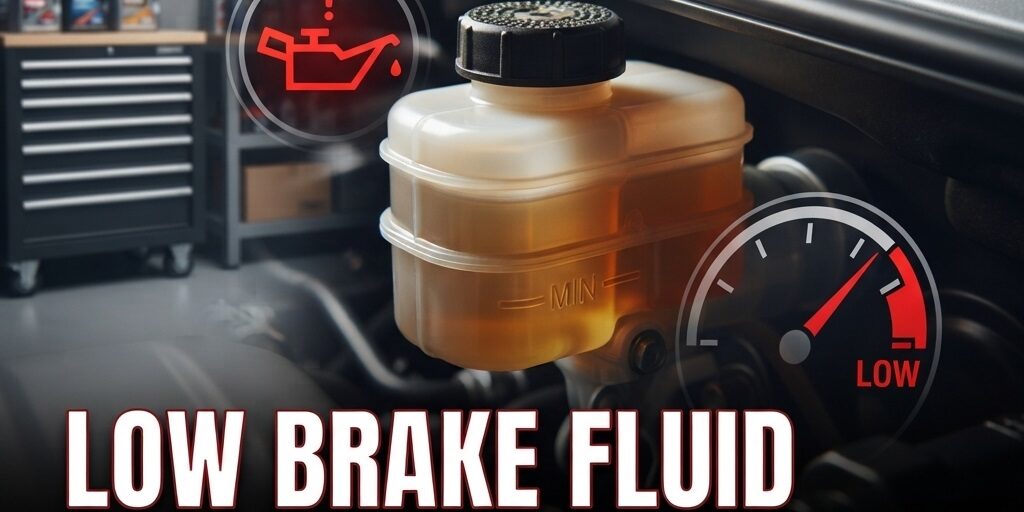
Locate the semi-translucent plastic brake fluid reservoir under your hood near the back of the engine bay on the driver’s side. Check the fluid level against the minimum and maximum markings stamped on the exterior wall without opening the cap, and ensure the fluid color appears clear amber rather than dark brown or black.
Meet the Author
Muhammad Ikram | Founder of Makki Oil Store
With over 25 years of practical industry experience, Muhammad Ikram is one of Lahore’s most experienced voices in automotive lubrication and vehicle care. He founded Makki Oil Store in 1999 with a clear mission: to protect vehicle engines by providing genuine, high-quality lubricants paired with expert maintenance advice.
Over the last two and a half decades, Muhammad has developed a deep, practical knowledge of engine mechanics, fluid chemistry, and local driving demands. Whether dealing with high-mileage daily drivers, modern imported vehicles, or heavy-duty power equipment, his hands-on approach ensures that every customer receives the precise care needed to keep their engine running smoothly for years to come.