

Every vehicle owner in Pakistan eventually faces the same decision: should I spend more on synthetic oil, or is traditional mineral oil sufficient? This choice is more than a simple matter of cost; it is about how you protect your engine’s long-term health against the unique stresses of our climate. With temperatures frequently soaring during the summer and dense city traffic causing engines to idle for hours, understanding the difference between these two types of lubricant is the first step toward smart vehicle maintenance.
Understanding Mineral Engine Oil
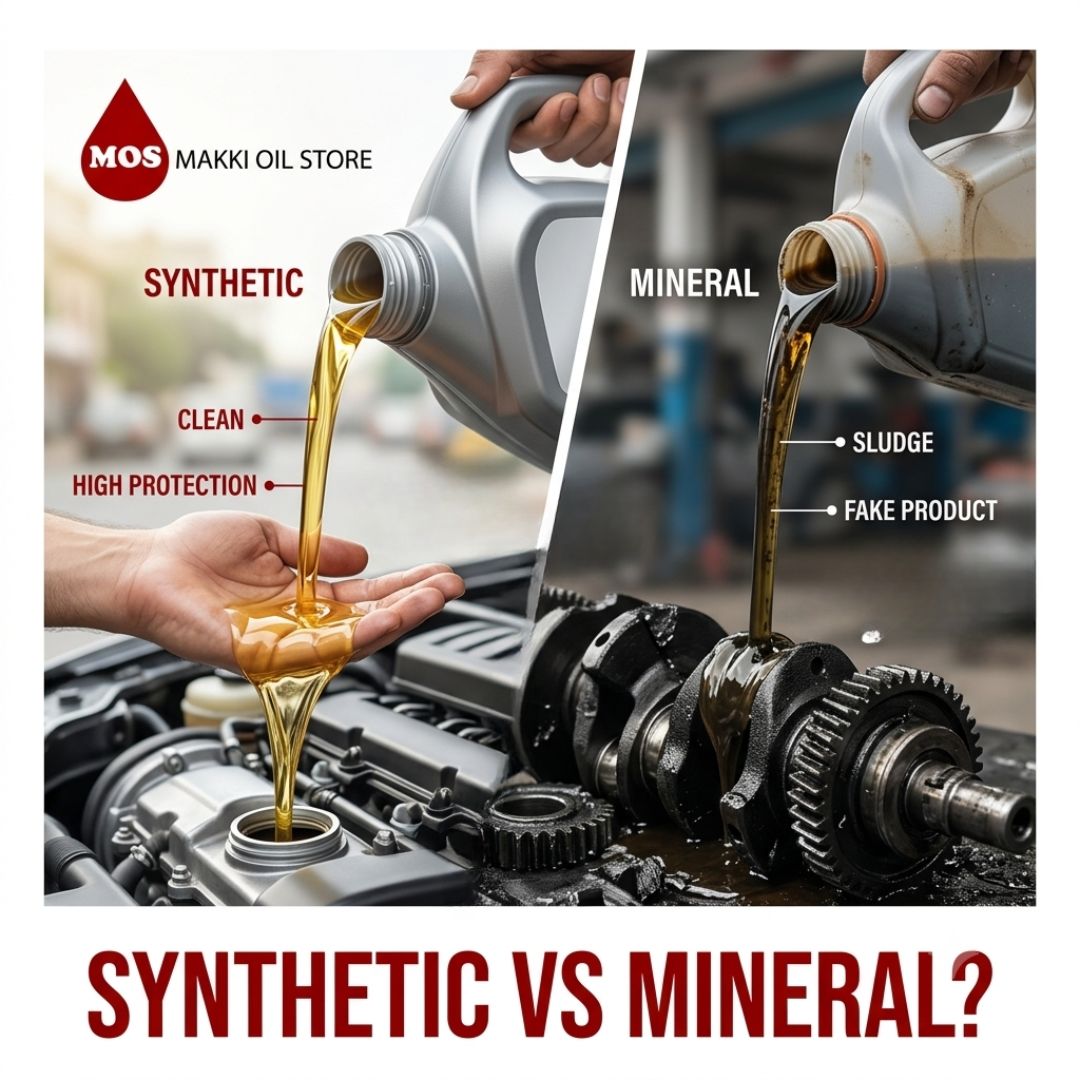
Mineral oil, often referred to as conventional oil, is the traditional lubricant refined directly from crude oil. It has been the industry standard for decades. Because it is derived from natural sources, it contains various impurities that cannot be completely removed through basic refining processes.
These oils are typically suitable for older vehicles with simpler, less sensitive engine designs or for cars that are driven lightly under non-demanding conditions. Because they are not engineered to withstand extreme thermal stress, mineral oils tend to break down faster. They are more prone to oxidation, meaning they can form sludge and deposits if the engine gets too hot or if the oil is left in the system for too long. If you drive a vintage car or a basic vehicle that doesn’t require high-performance lubrication, mineral oil might serve its purpose, but it will always require more frequent changes to prevent internal damage.
The Case for Synthetic Engine Oil
Synthetic oil is a marvel of modern chemical engineering. Unlike mineral oil, it is manufactured in laboratories where the molecular structure is perfectly tailored to provide consistent protection. Because synthetic oils are uniform at the molecular level, they do not contain the impurities found in conventional lubricants.
The primary advantage of synthetic oil is its ability to handle extreme conditions. It remains fluid and protective during cold starts, reaching critical engine components almost instantly, yet it maintains its film strength when the engine is running under heavy load or in scorching temperatures. This stability means synthetic oils resist breaking down, resisting the formation of sludge and allowing for longer, safer service intervals. Making an informed choice when considering a synthetic vs conventional engine oil comparison guide is essential for drivers who want to prioritize engine longevity and fuel efficiency.
Key Differences for Pakistani Driving Conditions
In Pakistan, the environment dictates the requirements for your engine. The intense heat of our summers and the gritty, dusty conditions of our city streets put significant strain on engine lubricants. Mineral oil often struggles in these conditions because it can thin out too much when temperatures peak, reducing its ability to keep metal surfaces apart. Synthetic oil, conversely, maintains its thickness and protective properties across a wide temperature spectrum.
Furthermore, most modern vehicles entering the Pakistani market, including turbocharged crossovers and fuel-efficient hatchbacks, are built with extremely tight internal clearances. These modern engines are designed to operate with the precise, high-flow characteristics that only synthetic oils can provide. Using mineral oil in such a vehicle can lead to sluggish performance, increased internal drag, and potential mechanical failure over time.
Selecting the Right Product for Your Needs
The decision ultimately comes down to your vehicle’s manufacturer specifications and your personal driving habits. If your owner’s manual specifies a full synthetic lubricant, there is no benefit. A trusted provider like the Makki Oil Store ensures that your engine receives the advanced chemical protection it was designed for.
For those with older vehicles, the transition to synthetic oil is often a worthwhile upgrade. While it may cost more upfront, the extended protection and the reduction in harmful engine deposits mean you can often go longer between oil changes, balancing out the initial investment while providing superior care for your engine’s internal components.
Frequently Asked Questions
Will switching to synthetic oil cause leaks in an older engine?
This is a common myth. Synthetic oil itself does not cause leaks; however, because it is a better cleaner than mineral oil, it can remove sludge and deposits that were previously “plugging” a minor leak in a worn seal. If your engine has degraded seals, a leak might become apparent after the switch. If your engine is in good mechanical health, synthetic oil is perfectly safe and highly beneficial, as it will help keep the internal components clean and well-protected.
Does synthetic oil really last longer than mineral oil?
Yes, synthetic oil is chemically engineered to be much more resistant to oxidation and thermal breakdown. While mineral oil can lose its effectiveness within 3,000 to 5,000 kilometers, high-quality synthetic oil can often maintain its protective properties for 7,000 to 10,000 kilometers, depending on driving conditions. However, because Pakistan’s environment involves heavy dust and intense heat, it is still wise to follow a conservative change interval to ensure the best possible protection for your specific engine.
Can I mix synthetic oil with mineral oil in an emergency?
In a genuine emergency where your oil level is dangerously low, adding a different type of oil is better than driving with no oil at all. If you are on the road and cannot find the correct synthetic grade, using a bit of mineral oil to top off your engine will keep it running. However, you should treat this as a temporary solution. Once you reach a safe location, you should have the oil drained and replaced with the correct, full synthetic oil to ensure the lubricant chemistry remains stable and effective.
Why is synthetic oil so much more expensive than mineral oil?
The higher cost of synthetic oil reflects the advanced manufacturing process and the complex additive packages required to create it. Mineral oil is simply refined from natural crude, whereas synthetic oil is built molecule by molecule in a lab. This process allows for the creation of oils that have specific benefits, such as superior heat resistance, better cold-flow properties, and long-term stability. You are essentially paying for a more sophisticated product that is designed to work harder and last longer than traditional oil.
How do I know which type of oil my vehicle requires?
The definitive guide for your vehicle is always the owner’s manual provided by the car manufacturer. Engineers have tested your specific engine design extensively to determine which viscosity and oil type will provide the best balance of fuel economy, cooling, and wear protection. Never ignore the manufacturer’s recommendations for the sake of price or tradition. If the manual calls for a full synthetic, using anything else is a compromise that could potentially reduce your engine’s power, efficiency, and overall lifespan.