Ensuring that your vehicle stops smoothly and predictably under all driving conditions is the single most critical responsibility of any car owner. While most drivers pay close attention to engine oil levels and tire pressure, the hydraulic system that transfers physical pedal pressure into massive stopping force is frequently ignored until performance begins to fade. Choosing the correct brake fluid for car maintenance is essential because modern braking systems operate under intense friction, generating high thermal loads that can cause inferior or incorrect fluids to boil and fail. Understanding the chemical differences between various DOT classifications ensures that your braking system remains responsive, safe, and fully protected against wear.
Demystifying Department of Transportation (DOT) Ratings
The automotive industry relies on a standardized classification system established by the Department of Transportation to categorize hydraulic fluids based on their boiling points and chemical composition. Selecting the right grade starts with knowing how these formulations perform under extreme heat.
- DOT 3: A glycol-based fluid featuring a lower minimum boiling point, making it suitable for older vehicles, standard commuter cars, and simpler hydraulic configurations.
- DOT 4: Formulated with borate esters to raise both dry and wet boiling points, engineered specifically for modern passenger cars, heavy traffic conditions, and ABS-equipped systems.
- DOT 5.1: A high-performance glycol-based fluid offering exceptional thermal thresholds, designed for heavy-duty driving, towing, and high-performance track applications.
Mixing these classifications haphazardly can degrade the fluid’s thermal threshold and compromise compo2nent integrity. Vehicle owners searching for specialized guidance on fluid selection can review insights detailing why Makki Oil stands out to understand how technical expertise prevents costly mistakes when upgrading or flushing vehicle hydraulics.
The Danger of Moisture Absorption and Fluid Degradation
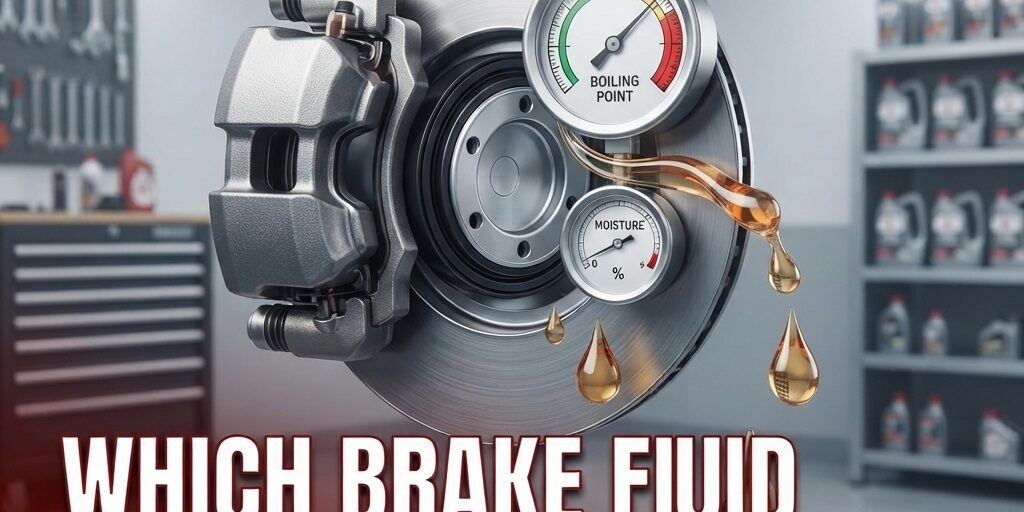
One of the most misunderstood aspects of automotive hydraulic maintenance is the hygroscopic nature of standard brake fluids. Glycol-based formulations naturally attract and absorb moisture from the surrounding air through microscopic pores in rubber brake lines and master cylinder reservoir caps. As water accumulates inside the fluid over time, its boiling point drops precipitously.
When you press hard on the brake pedal during an emergency stop or while descending a steep incline, the intense heat generated at the brake pads can cause this trapped moisture to boil instantly. Boiling water creates vapor pockets inside the hydraulic lines, which are highly compressible. Instead of pushing the brake calipers firmly against the rotors, your pedal simply compresses the gas pockets, resulting in a terrifying, spongy pedal feel and a sudden loss of stopping power.
| Fluid Type | Minimum Dry Boiling Point | Minimum Wet Boiling Point | Primary Application |
| DOT 3 | 205°C (401°F) | 140°C (284°F) | Older vehicles and light commuting |
| DOT 4 | 230°C (446°F) | 155°C (311°F) | Modern cars with ABS and disc brakes |
| DOT 5.1 | 260°C (500°F) | 180°C (356°F) | High-performance and heavy-duty use |
Maintaining a strict schedule of fluid inspections helps catch contamination before it compromises your safety. Motorists looking to deepen their understanding of preventive maintenance schedules can guide to regular brake oil checks to see how local driving conditions accelerate fluid wear.
Matching Fluid Specifications to Vehicle Requirements
Always consult your vehicle owner manual or the specifications stamped directly onto the master cylinder reservoir cap before purchasing replacement fluid. If your car specifies DOT 4, upgrading or downgrading improperly can cause issues. For example, putting a lower-specification fluid into a heavy vehicle operating in congested urban traffic will lead to rapid thermal breakdown.
At the Makki Oil Store, our specialists help drivers navigate these exact technical specifications to ensure that every vehicle receives the precise grade of fluid required for optimal hydraulic pressure transfer and long-term component preservation.
Frequently Asked Questions
Can I mix DOT 3 and DOT 4 brake fluid in my car’s reservoir?
While mixing DOT 3 and DOT 4 glycol-based brake fluids is technically non-fatal in an emergency because both share compatible chemical bases, it is strongly discouraged by automotive technicians. Doing so dilutes the higher boiling point and performance additives of the DOT 4 fluid, reducing its overall thermal threshold. If your car requires DOT 4, topping it up with DOT 3 lowers the system’s resistance to vapor lock, so it is always best to perform a complete fluid flush.
What is the difference between DOT 4 and DOT 5 brake fluid?
The most crucial difference is their chemical foundation: DOT 4 is a glycol-ether-based fluid that absorbs moisture over time, while DOT 5 is silicone-based and repels water entirely. Because DOT 5 does not mix with moisture, any water entering the system pools in one spot and can cause localized corrosion or freeze in cold weather. Furthermore, silicone DOT 5 cannot be used in vehicles equipped with anti-lock braking systems unless specifically engineered for it, making DOT 4 the standard choice for modern cars.
How often should I flush and replace my car’s brake fluid?
Most automotive manufacturers recommend flushing and replacing your car’s brake fluid entirely every twenty-four months or every forty thousand kilometers, whichever comes first. Because brake fluid continuously absorbs moisture from the air, its chemical effectiveness degrades steadily regardless of how many kilometers you drive. Regular flushing removes accumulated water, metallic debris, and oxidized sludge from the master cylinder, lines, and calipers.
What are the warning signs that my brake fluid needs immediate replacement?
Early warning signs of degraded brake fluid include a spongy or soft brake pedal that feels unusual when pressed, a pedal that slowly sinks toward the floorboards while idling at a stoplight, or a noticeable delay in braking response. Additionally, if your vehicle pulls to one side during braking or if the amber brake warning light illuminates on your dashboard, you should have the hydraulic system inspected and serviced immediately.
Does aggressive driving or heavy traffic affect brake fluid lifespan?
Driving in heavy stop-and-go urban traffic or descending steep hills requires frequent braking, which continuously generates intense frictional heat at the rotors and pads. This sustained thermal stress accelerates the breakdown of the fluid’s anti-oxidation and anti-corrosion additives. Consequently, vehicles subjected to harsh urban driving environments often require more frequent fluid inspections and changes than vehicles driven primarily on open motorways.
Meet the Author
Muhammad Ikram | Founder of Makki Oil Store
With over 25 years of practical industry experience, Muhammad Ikram is one of Lahore’s most experienced voices in automotive lubrication and vehicle care. He founded Makki Oil Store in 1999 with a clear mission: to protect vehicle engines by providing genuine, high-quality lubricants paired with expert maintenance advice.
Over the last two and a half decades, Muhammad has developed a deep, practical knowledge of engine mechanics, fluid chemistry, and local driving demands. Whether dealing with high-mileage daily drivers, modern imported vehicles, or heavy-duty power equipment, his hands-on approach ensures that every customer receives the precise care needed to keep their engine running smoothly for years to come.