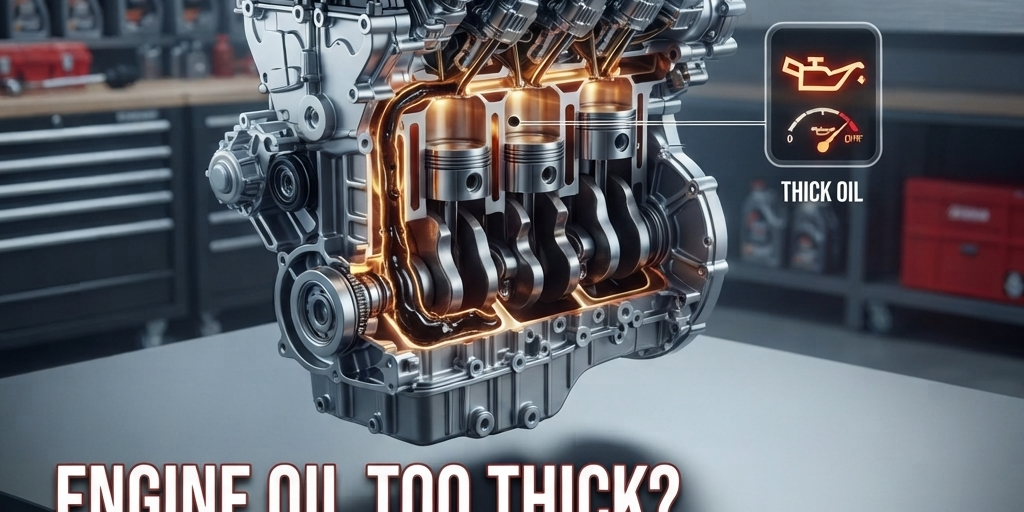
When drivers think about automotive maintenance, the primary fear is usually that a lubricant will break down, thin out, and leave internal components unprotected. However, the opposite condition can be equally hazardous to your motor. Running on thick engine oil that exceeds the vehicle manufacturer’s design tolerances introduces a unique set of hydraulic and mechanical complications. While a heavier fluid might seem protective at first glance, especially in older cars, an overly viscous lubricant can choke internal flow pathways, strain the oil pump, and starve critical components of vital protection during startup.
The Mechanics of Fluid Resistance and Flow Restrictions
Every internal combustion engine is engineered with microscopic tolerances between moving parts, such as journal bearings, piston rings, and camshaft journals. These tight spaces rely on a precise hydrodynamic wedge of fluid that flows rapidly and smoothly under pressure. When the chosen lubricant has a high viscosity index that is unsuited for the engine design, it behaves like heavy molasses rather than a free-flowing fluid, particularly during cold weather or initial startup phases.
Instead of moving quickly through narrow oil galleries, an overly heavy fluid creates immense internal flow resistance. The oil pump must work exponentially harder to push the dense liquid through the system, which can cause internal pressure spikes, bypass valve activation, and delayed lubrication delivery to the upper valve train. Understanding how different grades interact with distinct engine architectures requires looking closely at manufacturer guidelines, which you can evaluate further through a detailed breakdown of how to choose the right viscosity to prevent unnecessary internal strain and mechanical wear.
Cold Weather Starvation and Startup Friction
One of the most immediate consequences of running a fluid that is too dense occurs during cold morning startups. When temperatures drop, lubricants naturally thicken, but if the base oil grade is inherently too high for the climate, such as using a heavy mineral weight in freezing conditions, the fluid loses its ability to pump rapidly. During the crucial first few seconds after turning the ignition key, the engine relies entirely on residual film strength while the pump forces new fluid upward.
If the lubricant is excessively heavy, it cannot flow fast enough through the oil pickup tube and filter. This delay results in extended oil starvation, during which metal components grind against each other without adequate hydraulic cushioning. Over time, this recurring startup friction accelerates wear on timing chain tensioners, hydraulic valve lifters, and bearing surfaces, often manifesting as a loud tapping or knocking sound that persists until the engine block warms up and heats the fluid.
The Hidden Toll on Fuel Economy and Power Output
Beyond internal mechanical wear, an overly viscous lubricant directly impacts vehicle performance and operational efficiency. Because the oil pump, crankshaft, and camshafts must constantly shear and push against a heavy, resistant fluid, parasitic drag increases significantly. This internal resistance robs the engine of usable horsepower, making the vehicle feel sluggish during acceleration.
Furthermore, this added mechanical load forces the engine to burn more fuel to maintain cruising speeds, leading to a noticeable drop in overall fuel economy. Drivers often mistakenly believe that using a thicker fluid provides better overall protection, failing to realize that the resulting pumping losses and high fluid friction generate unnecessary internal heat, which can ultimately degrade the additive package faster than normal operation would.
Thermal Management and Sludge Accumulation Risks
While heavy oils resist thinning out under extreme heat, they can paradoxically cause thermal management issues if they cannot circulate efficiently. Adequate cooling inside an engine relies not only on the coolant flowing through the jacket but also on engine oil carrying heat away from deep internal pockets, such as the underside of the pistons. If the fluid is too sluggish to circulate at high velocities, heat transfer becomes inefficient, causing localized hot spots within the crankcase.
Additionally, sluggish circulation can impair the suspension of microscopic soot, carbon particles, and combustion byproducts. In severe cases, stagnant or slow-moving heavy lubricants combine with contaminants to form sludge deposits in low-flow areas of the engine. This sludge restricts oil galleries even further, creating a compounding cycle of restricted flow, pressure drops, and potential mechanical failure that requires extensive engine flushing or rebuilding to correct.
Professional Guidance for Regional Driving Realities
Navigating lubricant choices requires balancing ambient climate conditions with the specific metallurgical tolerances of your vehicle’s engine block. While older carb-fed engines with worn clearances might tolerate heavier weights temporarily, modern precision-built engines require exact fluid dynamics to operate efficiently.
At the Makki Oil Store, we frequently assist motorists who experience sluggish performance or startup noise due to improper fluid selection. Choosing the correct formulation tailored to your car’s mileage and local driving demands ensures that your engine stays protected without suffering the flow restrictions and pumping losses associated with overly viscous lubricants.
Frequently Asked Questions
Why does engine oil become too thick during cold weather?
Engine oil naturally thickens as temperatures drop because the base hydrocarbons and synthetic molecules lose thermal energy and flow less freely. In extreme cold, the molecules move sluggishly, increasing the fluid’s internal resistance to flow. If an oil grade is chosen without accounting for winter temperatures, this cold-weather thickening becomes extreme, preventing the oil pump from circulating the fluid quickly enough during startup and leaving vital engine components unprotected for precious seconds.
Can using a thicker oil damage my engine oil pump?
Using a lubricant that is significantly thicker than recommended can place an extreme mechanical strain on your engine oil pump. The oil pump is designed to move a specific volume of fluid under controlled pressure; when forced to push a dense, highly viscous liquid through narrow galleries, the internal gear mechanisms experience severe resistance. This high workload can cause pressure relief valves to stick open, create excessive stress on the pump drive shaft, and eventually lead to premature pump failure or reduced oil pressure throughout the system.
How does thick engine oil affect my car’s fuel efficiency?
An overly viscous lubricant creates parasitic drag on all internal moving parts, forcing the engine to expend more energy just to turn the crankshaft and operate the valve train. Because the engine must work harder to overcome this internal fluid resistance, it burns more fuel to achieve the same acceleration and cruising speed. This continuous mechanical drag results in a measurable drop in miles per gallon or kilometers per liter, translating to higher daily fuel costs for the driver.
Is a thicker oil always better for high-mileage engines?
It is a common misconception that high-mileage engines always require a thick, heavy oil to compensate for internal wear and prevent leaks. While high-mileage formulations often feature specialized seal conditioners and slightly higher viscosity indexes to support worn clearances, blindly pouring an excessively thick oil into the crankcase can do more harm than good. If the fluid is too heavy for the oil pump and galleries, it will fail to reach tight-tolerance bearings during startup, accelerating wear rather than preventing it.
What are the clear warning signs that my engine oil is too heavy?
When engine oil is too heavy or viscous for your vehicle, several distinct symptoms typically appear during operation. You may notice that the engine cranks more slowly or struggles to start on cold mornings, accompanied by persistent ticking noises from the valve train that take a long time to disappear. Additionally, you will likely experience a sluggish throttle response, reduced fuel economy, and potentially a delayed oil pressure warning light on your dashboard as the pump struggles to achieve immediate prime.
Meet the Author
Muhammad Ikram | Founder of Makki Oil Store
With over 25 years of practical industry experience, Muhammad Ikram is one of Lahore’s most experienced voices in automotive lubrication and vehicle care. He founded Makki Oil Store in 1999 with a clear mission: to protect vehicle engines by providing genuine, high-quality lubricants paired with expert maintenance advice.
Over the last two and a half decades, Muhammad has developed a deep, practical knowledge of engine mechanics, fluid chemistry, and local driving demands. Whether dealing with high-mileage daily drivers, modern imported vehicles, or heavy-duty power equipment, his hands-on approach ensures that every customer receives the precise care needed to keep their engine running smoothly for years to come.