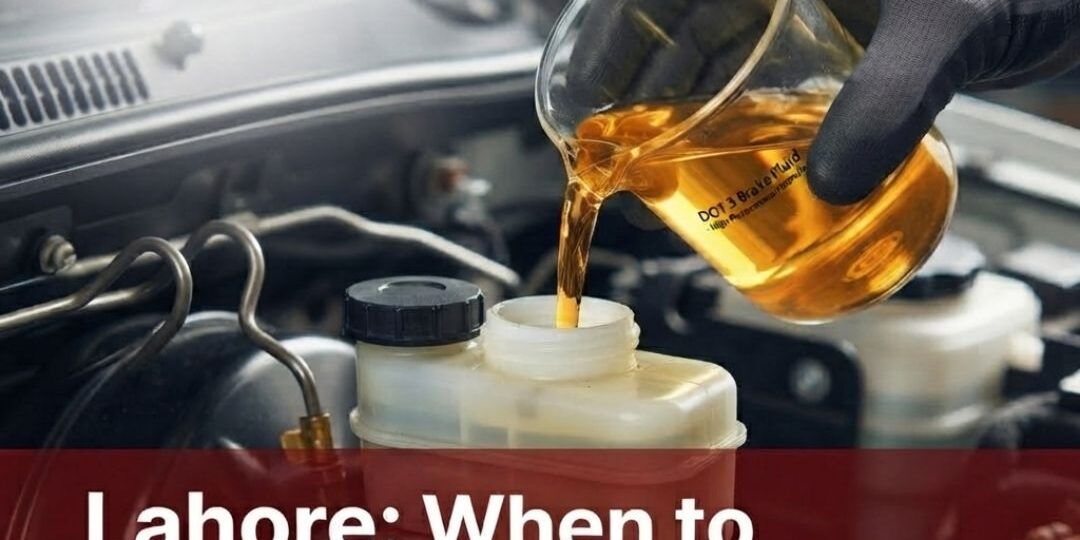
Driving through the vibrant, often chaotic streets of Lahore requires complete confidence in your vehicle’s stopping power. While many drivers prioritize routine engine maintenance, the braking system and specifically the brake fluid are frequently neglected until a performance issue becomes apparent. Your brake fluid is the vital hydraulic medium that translates the pressure from your foot on the pedal into the mechanical force needed to stop your wheels. Ensuring this system is in peak condition is a fundamental aspect of road safety.
Understanding the Role of Brake Fluid
Brake fluid is designed to withstand immense pressure and high temperatures, but it is also hygroscopic, meaning it naturally absorbs moisture from the air over time. In a humid city like Lahore, this process happens faster than in arid regions. As the water content in your fluid increases, its boiling point drops significantly. During heavy braking, such as navigating a traffic jam on Canal Road, your brakes generate intense heat. If the fluid contains too much moisture, it can turn into steam. Because steam is compressible, you may find your brake pedal feeling “spongy” or sinking toward the floorboards, which is a clear sign that you need to visit a professional.
To maintain your vehicle’s reliability and gain a deeper understanding of why these routine checks are critical, it is helpful to explore how regular brake oil checks keep your car safe. Being proactive prevents the dangerous “brake fade” that occurs when the system can no longer handle the thermal stress of daily driving.
Selecting a Professional Service Provider
When searching for a reliable car brake oil shop in Lahore, look for establishments that prioritize precision and product quality. A professional technician will do more than just add fluid; they will perform a full system flush. This is necessary because contaminants, rust particles, and old, degraded fluid must be completely removed from the lines to prevent internal corrosion of the master cylinder and ABS units. If a shop simply tops off your fluid without addressing the underlying contamination, they are not solving the long-term safety concerns.
At the Makki Oil Store, we advocate for a service interval of approximately 40,000 kilometers or every two years. Even if your car feels like it is stopping normally, the internal degradation of the fluid is a silent process. Regular inspections ensure that you remain in control, regardless of the traffic conditions or the intensity of your daily commute.
Frequently Asked Questions
How do I know if my brake fluid is actually “old”?
The most reliable way to check the condition of your brake fluid is to look at its color in the reservoir. Fresh fluid is typically clear or light yellow. If you notice it has turned dark brown, black, or appears cloudy, it has likely become contaminated with moisture and metallic particles from the internal brake lines. At this stage, the fluid’s protective additives are depleted, and it is time to have it replaced to ensure your safety and protect the system’s longevity.
Why is Lahore’s climate specifically hard on brake systems?
Lahore’s combination of high humidity and extreme summer temperatures creates a perfect storm for brake fluid degradation. The humidity speeds up moisture absorption, which lowers the boiling point of the fluid, while the summer heat puts extra strain on the braking system during heavy traffic. This environment means that brake fluid in Lahore often reaches its “use-by” point faster than it would in cooler or drier climates, making regular inspections essential.
Can driving on old brake fluid damage my ABS module?
Yes, absolutely. The Anti-lock Braking System (ABS) module contains very small, delicate valves that are sensitive to debris and corrosion. If old, moisture-contaminated fluid is left in the system, it can cause rust to form inside the metal brake lines and wheel cylinders. This rust eventually circulates into the ABS unit, where it can clog the sensitive valves, leading to expensive repairs that could have been easily prevented with a simple, timely fluid flush.
How does a “spongy” pedal feel occur?
A spongy or soft brake pedal occurs when the fluid’s boiling point has been lowered by water contamination. When the brakes get hot, that water turns into steam. Unlike liquid, steam can be compressed. When you press the brake pedal, you are essentially compressing that steam instead of pushing the brake pads against the rotors. This results in the pedal feeling soft and requiring significantly more pressure and distance to bring the vehicle to a complete stop.
Does the type of brake fluid really matter?
Using the wrong type of brake fluid can be disastrous for your vehicle. Most modern cars require specific grades like DOT 3, DOT 4, or DOT 5.1. These are not interchangeable. Using the wrong fluid can cause the internal rubber seals in your braking system to swell, become brittle, or even melt, which can lead to rapid seal failure and a sudden, total loss of braking pressure. Always check your owner’s manual or the cap of your brake fluid reservoir to ensure you are using the exact specification recommended by the manufacturer.