

Modern automobiles rely heavily on computerized engine management systems to regulate everything from fuel injection timing to idle speed stability. When you take your car in for routine maintenance to remove sticky carbon varnish from the air intake tract, mechanics often perform a specific electronic calibration procedure before handing the keys back. This calibration process, commonly known as throttle body learning, ensures that the engine computer understands the exact baseline position of the intake valve. Without executing this computer re-learning sequence, motorists frequently experience erratic idling, surging RPMs, and unstable engine behavior after routine cleaning.
The Role of Electronic Throttle Control in Modern Engines
Older vehicles utilized a mechanical steel cable connecting the accelerator pedal directly to a butterfly valve inside the intake throat. When you pressed the gas pedal, the physical cable rotated the valve open. Today, drive-by-wire electronic throttle systems replace that mechanical connection with digital sensors and small electric actuator motors. The electronic control unit monitors pedal position and commands the throttle actuator to open or close the valve dynamically.
Over months of driving, microscopic layers of carbon soot and unburned oil vapor accumulate around the inner bore and the edge of the butterfly plate. As this restriction builds up, the computer continuously adjusts its internal memory registers, keeping the valve slightly more open than factory default to maintain a steady idle speed. Ensuring your engine breathes clean air from the start helps minimize rapid carbon accumulation; drivers looking to source quality replacement parts can explore reliable options by checking out a specialized car air filter shop on Pia Road, Lahore, Makki Oil Store to protect their intake system from premature dust contamination.
Why Cleaning Disrupts Computer Calibration
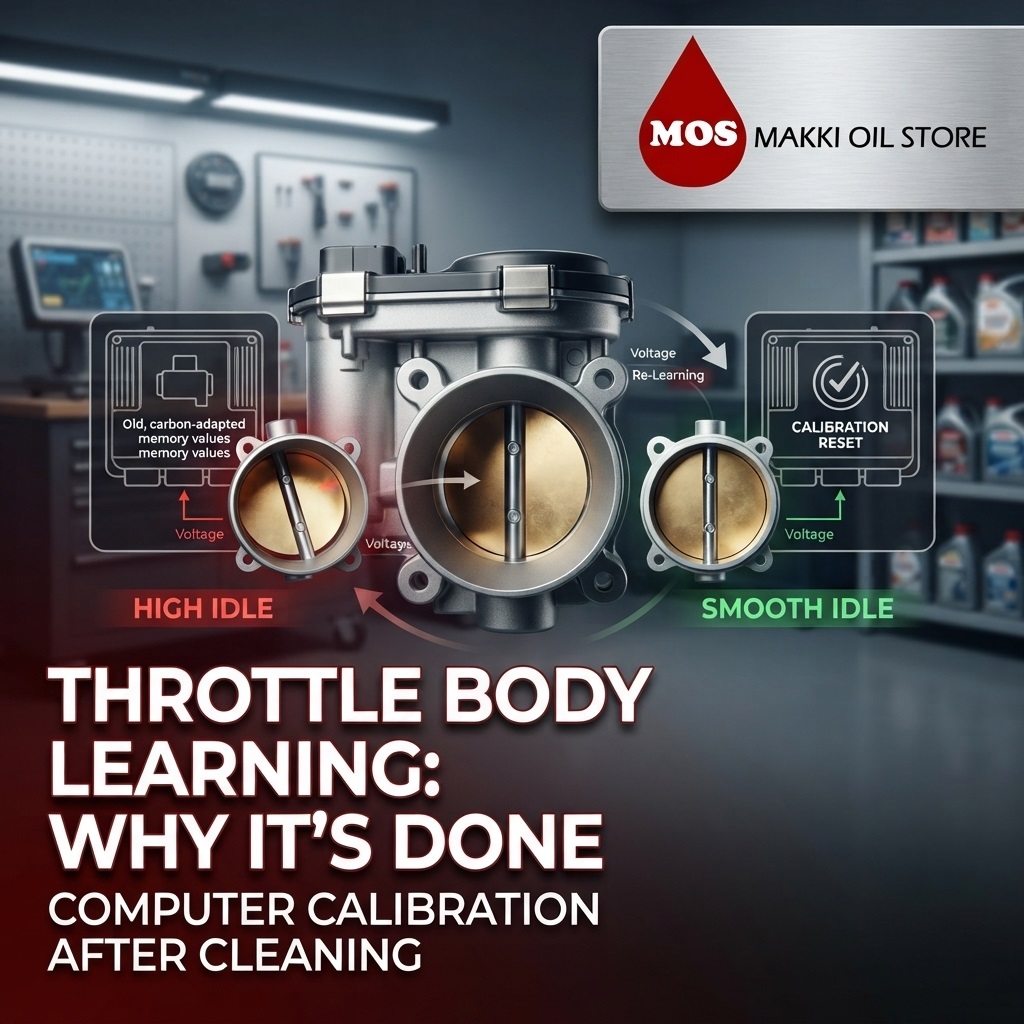
When a technician sprays solvent and wipes away the accumulated carbon crust during an intake service, the physical geometry of the air passage changes instantly. The tiny gap that the computer previously compensated for is now completely clear, allowing a much larger volume of air to rush past the butterfly valve than the computer expects.
Because the engine control unit still holds its old memory values assuming the restriction is still present it continues to command an incorrect idle position. This mismatch causes the engine idle speed to race dangerously high, often bouncing up and down between one thousand and two thousand RPMs. To prevent airborne debris from compromising new intake components or wearing down internal seals, motorists can also research local inventory options by visiting where I can find top-rated air filter shops in Lahore for dependable filtration maintenance.
| Calibration Stage | Engine Computer State | Valve Position | Observed Vehicle Symptom |
| Before Cleaning | Adapted to carbon restriction | Compensating open wider | Stable idle, but sluggish response |
| Immediately After Cleaning | Retains old adaptation memory | Still held artificially open | High, racing, or fluctuating idle RPM |
| Post-Learning Reset | Erased and recalibrated baseline | Fully closed idle position | Smooth, factory-standard idle speed |
How the Computer Re-Learning Procedure Works
Resetting the electronic throttle parameters can be accomplished through manual ignition sequences or by connecting an advanced OBD2 diagnostic scanner directly to the vehicle computer port. The diagnostic tool forces the engine management system to erase its stored baseline memory and execute an automated zero-position sweep. During this sweep, the actuator motor moves the butterfly valve through its full range of motion, measuring exact voltage feedback at both closed and wide-open positions.
Once these new parameters are saved into the computer memory, the engine control unit regains precise control over idle air delivery. Ignoring this essential recalibration step can leave your vehicle frustrating to drive in heavy stop-and-go traffic, where smooth idle transition is critical.
At the Makki Oil Store, our expert technicians combine thorough intake cleaning with professional computer diagnostics and recalibration procedures, ensuring your vehicle delivers seamless acceleration and stable idle performance on every trip.
Frequently Asked Questions
What is throttle body learning?
Throttle body learning is a computer calibration procedure that resets the engine control unit memory so it recognizes the exact closed and open positions of the intake butterfly valve after cleaning or replacement.
Why does my engine idle high after cleaning the throttle body?
When carbon deposits are cleaned away, the physical airflow passage becomes larger. If the computer still retains its old memory adjustments from when the passage was restricted, it allows too much air in, causing a high or racing idle.
Can I drive my car without doing a throttle body relearn?
You can drive the car short distances, but it will likely suffer from erratic idling, rough RPM fluctuations, and potential stalling when coming to a stop until the computer eventually re-adapts over many miles of driving.
How long does the electronic re-learning procedure take?
Using a professional OBD2 diagnostic scanner, the calibration procedure usually takes only a few minutes. Manual key-on and key-off reset sequences can take anywhere from five to ten minutes depending on the vehicle manufacturer.
Do all cars require a computer reset after cleaning the intake?
Older vehicles with mechanical cables or simpler idle air control valves often self-adjust quickly, but most modern electronic throttle control vehicles require a formal computer re-learning procedure to restore a smooth idle immediately.