Every vehicle manufacturer designs an engine with exact specifications, tolerances, and mechanical clearances in mind. When you turn your key, the lubricant flowing through the internal galleries does much more than simply prevent metal-on-metal friction; it acts as a hydraulic fluid that dictates how efficiently your motor functions. Choosing an incorrect viscosity grade can quietly compromise your engine performance, lowering fuel economy, increasing wear, and dampening the responsiveness you expect when you press the accelerator pedal.
The Hidden Cost of Incorrect Viscosity
When you put an oil that is too thick or too thin into your engine, the immediate consequence is altered hydraulic pressure. Modern engines rely on precise oil pressure to operate components like variable valve timing systems and hydraulic valve lifters. If the oil is excessively thick, it creates internal drag, forcing the oil pump to work harder while robbing the crankshaft of usable power. Conversely, if the oil is too thin, it cannot maintain a stable protective cushion under high temperatures, leading to metal contact, increased noise, and potential pressure drops that trigger warning lights.
Understanding how to match fluid properties to your mechanical setup is vital for preventing these hidden penalties. To avoid costly mistakes based on guesswork, read our guide to choosing the right engine oil viscosity and cross-reference your owner’s manual before every oil change. Doing this ensures your car operates at its peak thermodynamic and mechanical efficiency, keeping power delivery smooth across all RPM ranges.
Real-World Consequences in Local Driving Conditions
In demanding driving environments like those found across Pakistan, using the wrong oil grade becomes even more risky. Extreme summer temperatures combined with heavy urban congestion cause internal oil temperatures to spike. If an incorrect, overly thin oil is used in these conditions, it can thin out too much, failing to seal piston rings effectively. This results in blow-by, where combustion gases leak past the rings into the crankcase, reducing your engine power output and accelerating oil consumption.
At the Makki Oil Store, we frequently inspect vehicles suffering from sluggish throttle response and poor fuel efficiency simply because they were filled with a generic or mismatched oil grade. Protecting your investment requires respecting the engineering limits of your vehicle. By selecting the exact viscosity grade mandated by the factory, you ensure that your engine breathes easily, transfers heat efficiently, and delivers the reliable performance it was built to provide.
Frequently Asked Questions
Can the wrong oil grade cause my car to consume more fuel?
Yes, using an incorrect oil grade is a frequent culprit behind a sudden drop in fuel economy. If the oil is too thick, your engine’s internal components must expend extra energy just to push through the heavy, resistive fluid layer, creating internal parasitic drag. On the other hand, if the oil is too thin, poor sealing around the piston rings can cause a loss of combustion compression, requiring you to press the accelerator pedal further down to achieve the same acceleration. Both scenarios force the engine to burn more fuel than normal to accomplish standard daily driving tasks.
Will a mismatched oil grade trigger a check engine light?
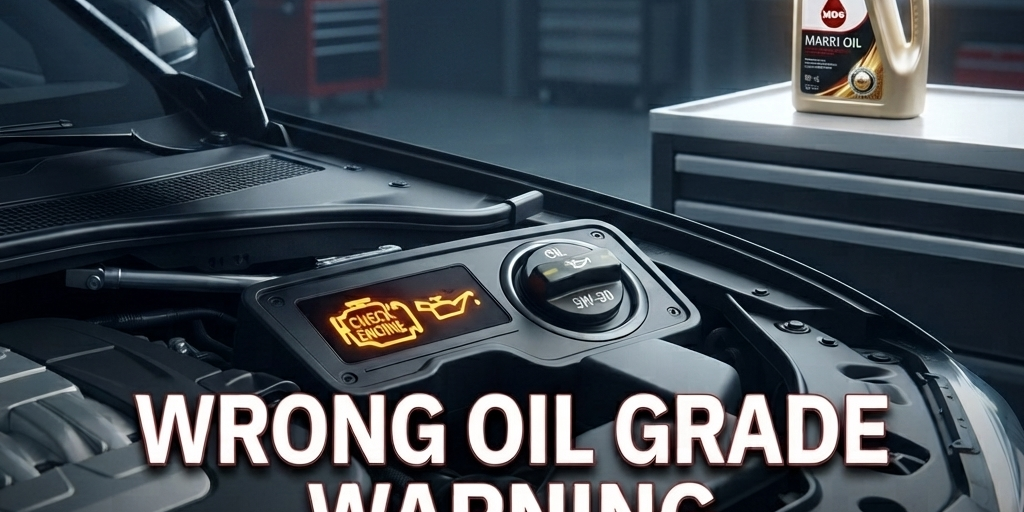
A mismatched oil grade can trigger a Check Engine light, particularly in modern vehicles equipped with advanced variable valve timing and electronic oil pressure sensors. If the oil viscosity is incorrect, the hydraulic pressure controlling these timing systems may fall outside the normal operating parameters expected by the engine control unit. When the computer detects that the valve timing or pressure response does not match its programming, it will log a diagnostic trouble code and illuminate the warning light on your dashboard to alert you to an internal system fault.
Is it harmful to use thicker oil in an attempt to protect an older engine?
Many drivers believe that pouring a thick oil into a high-mileage engine provides extra safety, but doing so can actually be counterproductive. While older engines do experience minor wear and increased clearances, modern oil pumps and internal channels are designed with specific limits. Forcing an overly thick oil into an engine can restrict flow to tight spots, causing delayed lubrication during cold starts and localized overheating. It is always safer to use the manufacturer’s recommended grade or a high-mileage formulation specifically engineered to handle worn tolerances without sacrificing flow rate.
How quickly will I notice a change in performance after an oil change?
If you switch from an incorrect oil grade to the proper factory-specified viscosity, you may notice changes almost immediately. Drivers often report that the engine sounds quieter at idle, feels smoother when accelerating, and responds more eagerly to throttle inputs. This happens because the internal components are finally operating with the exact fluid resistance and hydraulic pressure they were engineered to handle. Conversely, if you have just put the wrong grade into your car, you might notice a sluggish feel or increased engine noise within the first few hundred kilometers of driving.
Does climate dictate changing my oil grade away from the manual?
Under normal circumstances, you should always follow the year-round viscosity grades recommended in your vehicle’s owner’s manual, as modern multi-grade synthetic oils are engineered to handle massive temperature ranges. Deviating from the manual based on seasonal weather changes is rarely necessary unless you live in an extreme climate zone explicitly covered in the alternative grade charts provided by the manufacturer. Sticking to the factory standard guarantees that your engine maintains proper protection during freezing winter mornings and scorching summer afternoon commutes alike.