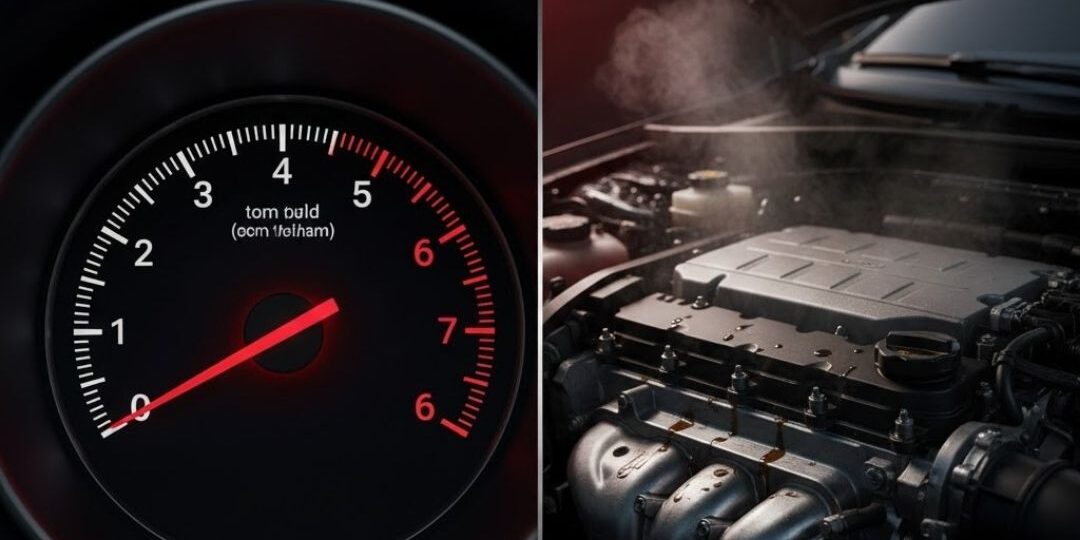
You change your engine oil on time, use a brand you trust, and take your car for regular maintenance yet the temperature needle still climbs higher than it should. For many drivers in Lahore, this is one of the most confusing and stressful issues to deal with. You exit Johar Town, turn onto Canal Road, or get stuck on Defence Road traffic, and suddenly the engine feels hotter than normal. You wonder whether the oil change was done properly, if the engine is weak, or if something else is going wrong under the hood.
This situation is far more common than you think. Engine heating after an oil change doesn’t always mean the oil is bad; in many cases, the root cause lies somewhere else entirely. And if the problem isn’t addressed early, it can lead to long-term engine wear, reduced mileage, and even breakdowns during peak traffic hours in Lahore.
Let’s break down why this happens and how you can diagnose the exact reason step by step.
1. Wrong Oil Grade Was Used During the Oil Change
Even if the oil is original, using the wrong viscosity can cause rapid temperature rise. Lahore’s hot climate demands specific grades, especially for popular cars like Honda City, Civic, Corolla, Wagon R, and Cultus. If your car needs 5W-30 and a thicker 20W-50 was used instead, the engine will struggle to circulate oil smoothly, especially during acceleration.
On the opposite side, using oil that is too thin for an older engine can also lead to heating because it fails to provide proper lubrication at high temperature.
This mismatch is one of the most common issues identified at Makki Oil, especially for cars serviced at workshops without proper technical expertise.
2. Engine Oil Filter Was Not Replaced or Installed Correctly
A partially clogged or incorrectly fitted oil filter restricts the flow of oil. Your engine may technically have fresh oil, but if it isn’t flowing fast enough, friction increases—and so does heat.
We regularly see cases where the oil was changed but the filter was left unchanged “to save some money,” which ends up causing far more expensive problems later.
3. Coolant System Issues Can Cause Heating Even if Oil is Perfect
Many drivers assume engine oil is the only factor controlling temperature. In reality, your cooling system plays an equally important role. If the coolant mixture is incorrect, the radiator fan isn’t running, or coolant levels are low, the engine will heat up regardless of a recent oil change.
Lahore’s dusty environment also clogs radiators faster—another heating trigger that drivers don’t notice until the temperature needle crosses its comfort zone.
4. Fake or Poor-Quality Oil Was Used (Very Common Issue)
Even if the bottle looks original, counterfeit oils are everywhere in Pakistan. Fake oil breaks down quickly, burns faster, and fails under heat. As a result, engine heating continues even when you think you’ve just changed the oil.
If you ever used an unfamiliar workshop or received the oil at an “unexpectedly cheap price,” this becomes a real risk.
For drivers who want to understand how easily fake oils damage performance, Makki Oil has a helpful article explaining how using the wrong oil damages engine health, written in a highly practical and educational way. It’s one of the best reads if you want clarity on how poor-quality lubricants affect your car’s temperature and engine safety.
5. Brake Oil or Transmission Oil Issues Can Also Trigger Heat
Many drivers are surprised to learn this—but yes, using the wrong brake oil or transmission oil can indirectly cause overheating. When these fluids lose performance, the engine compensates by working harder. That added load translates into excess heat.
A detailed explanation is already covered in Makki Oil’s resource on why using the wrong brake oil can damage your vehicle, and it becomes especially relevant when your car struggles during summer traffic.
Key Reasons Your Engine Heats Up After an Oil Change
| Reason | Why It Causes Heat | What You’ll Feel While Driving |
| Wrong Oil Grade | Incorrect viscosity increases friction | Engine strain, heavy acceleration |
| Clogged Oil Filter | Oil flow gets restricted | Rough sound, heating quickly |
| Cooling System Faults | Coolant can’t regulate temperature | Needle rises in traffic |
| Fake Oil Used | Oil breaks down under temperature | Burning smell, low mileage |
| Low Transmission/Brake Fluid Health | Engine compensates for extra load | Heat during long drives |
6. Your Engine May Need a Deeper Internal Cleaning
If your engine has sludge buildup, fresh oil won’t make an immediate difference. Sludge blocks vital channels inside the engine, making it difficult for fresh oil to circulate fully. As a result, the engine heats up, even though the oil has technically been changed.
This is very common in cars that run short city routes, sit in traffic for hours, or have previously used poor-quality lubricants.
7. Air Filters Can Also Cause Heating and Weak Engine Performance
A neglected air filter forces your engine to operate under stress. Less airflow means more strain, and more strain inevitably means more heat. Many customers discover they changed the oil but completely skipped the air filter, which plays a major role in keeping the engine breathing comfortably.
Symptoms That Tell You the Engine Is Still Overworking
| Symptom | What It Means | Common Causes |
| Temperature Needle Rising | System can’t cool engine | Coolant issues, wrong oil |
| Weak Acceleration | Engine not lubricated efficiently | Wrong grade, fake oil |
| Burning Smell | Oil breaking down under heat | Counterfeit or old oil |
| Low Mileage | Engine working harder than necessary | Impure oil, clogged filter |
| Rough Sound | Increased metal friction | Viscosity mismatch |
Why Visiting a Trusted Workshop Like Makki Oil Solves the Issue Quickly
Engine heating requires trained diagnostics not guesswork. At Makki Oil, the team checks:
- The oil grader
- The oil filter
- Coolant levels
- Radiator health
- Transmission and brake fluid condition
- Air filter condition
- Possible counterfeit product signs
This multi-point inspection ensures the issue is detected and fixed immediately instead of costing you further damage.
Whether you’re coming from Defence Road, Johar Town, or Bahria Town, you can rely on the team’s expertise. Genuine oils, verified distributors, and highly trained technicians ensure your car gets exactly what it needs every time. You can explore more about the services and locations on the official Makki Oil website.
FAQs
Q1: Why is my engine heating even after an oil change?
Because the issue usually lies in the oil grade, filter, coolant system, or fake oil.
Q2: Can wrong oil grade cause heating?
Yes, incorrect viscosity forces the engine to work harder, increasing heat.
Q3: Does fake engine oil make the engine hot?
Absolutely. Fake oils break down quickly under temperature.
Q4: Can a bad oil filter cause overheating?
Yes, restricted oil flow increases friction and heat.
Q5: Should I drive when the temperature needle rises?
No. Stop the car, let it cool, and get it checked immediately.