Driving on Pakistani roads requires constant alertness and absolute vehicle control. Whether you are daily commuting through the intense stop-and-go gridlock of Lahore’s Mall Road, managing unexpected lane merges on the motorway, or descending steep, twisting mountain routes in the north, your safety relies entirely on your car’s stopping power.
Among all potential vehicle issues, few experiences are more terrifying than pressing your foot down on the brake pedal only to feel it sink softly toward the floorboard without slowing you down. A soft or “spongy” brake pedal is a critical warning sign that your stopping system is compromised. Understanding how hydraulic brake oil breakdown creates this dangerous issue is essential for keeping your vehicle responsive and protecting your passengers on every journey.
The Hydraulics Behind Stopping Power
To understand why a brake system loses its firm feel, it helps to examine the basic mechanics of hydraulic pressure. Modern automobile brakes operate as a closed liquid system. When you step on the foot pedal, that mechanical force pushes a piston inside the metal master cylinder assembly located under your hood.
This action forces hydraulic fluid through rigid steel lines down to the brake calipers at each wheel. Because liquids are incompressible, the force from your foot is transmitted instantly. This immense pressure forces the calipers to clamp friction pads tightly against the spinning metallic brake rotors, generating the necessary friction to bring your vehicle to a safe, immediate stop.
How Chemical Breakdown Softens Your Pedal Feel
If the hydraulic lines contain nothing but pure, uncompromised liquid, your brake pedal will always feel firm and responsive. However, when the chemical composition of your fluid shifts, that vital mechanical link is broken.
The Problem with Absorbing Atmospheric Moisture
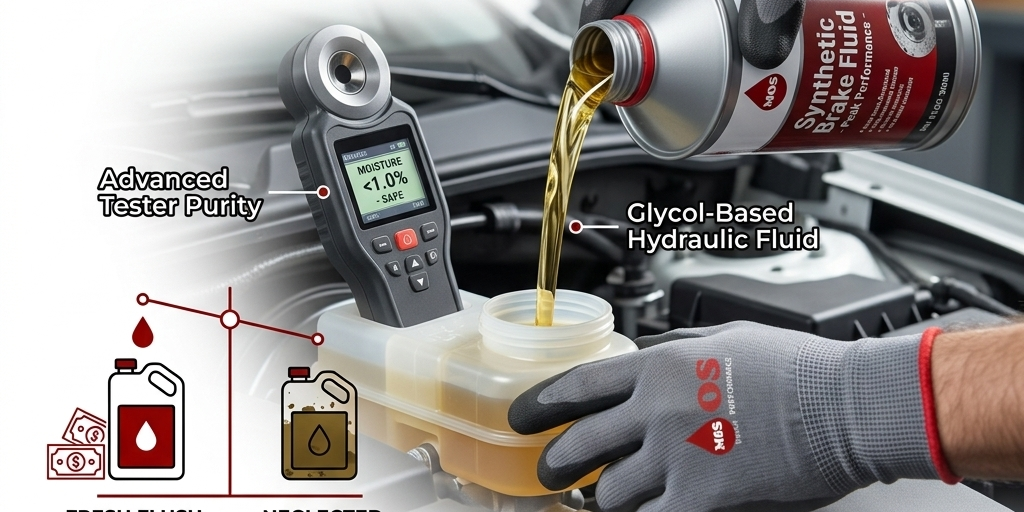
The vast majority of modern automotive braking fluids are glycol-based mixtures. These formulas are hygroscopic, meaning they act like a sponge, actively pulling in moisture and water vapor from the surrounding air over time. Moisture enters the closed system through microscopic pores in flexible rubber brake hoses and around the master cylinder reservoir cap seals.
Boiling Points and the Science of Vapor Lock
Braking generates extreme heat. Under heavy city driving conditions, the friction between pads and rotors can easily push caliper temperatures past 200°C. Fresh, clean fluid is engineered with a high dry boiling point to stay stable under these intense thermal loads.
However, as moisture mixes with the fluid over months of driving, it drastically lowers its boiling point. When your calipers get hot during a sudden stop, that trapped water boils instantly, turning into pockets of steam inside your brake lines.
Unlike liquids, gases are highly compressible. The next time you press the pedal, your foot’s pressure is wasted simply flattening those steam bubbles instead of pushing the caliper pistons. This structural failure causes a soft, spongy pedal feel and a sudden, dangerous loss of braking force.
Common Culprits Behind Spongy Brake Pedals
While moisture contamination is the leading cause of a soft pedal, several other maintenance issues can trigger the same dangerous symptom:
- Trapped Air Pockets: If your system has a tiny, microscopic leak or if a component was recently replaced without proper bleeding, air pockets can form inside the lines. Just like steam, this trapped air compresses under pressure, softening your pedal feel.
- Internal Rubber Seal Failures: The master cylinder relies on high-density rubber seals to push fluid down the lines. Over time, old and dirty fluid creates an abrasive sludge that scores the cylinder walls, tearing the seals and letting fluid slip backward instead of building stopping pressure.
- External Fluid Leaks: Corroded metal lines or worn caliper seals can let fluid escape out of the system. A dropping fluid level reduces total hydraulic pressure, eventually causing the pedal to sink all the way to the floorboard.
How Professional Service Restores Your Safety
Resolving a soft pedal issue requires more than just topping off the plastic reservoir under your hood. True safety can only be restored through a comprehensive system flush and bleed.
During a professional service, a technician opens the individual bleeder valves at each wheel, pushing out all old, dark, moisture-laden fluid along with any trapped air bubbles or metallic debris. Fresh, clean fluid is systematically drawn through the lines until the entire system is filled with clear, uncompromised liquid.
To ensure your vehicle receives the exact service and care it needs to stay safe on local roads, it is highly useful to learn about the distinct technical services provided by professional brake oil shops in Lahore before booking a workshop visit.
Partnering with an organized, highly reputable auto care facility like the Makki Oil Store ensures your vehicle is serviced by experienced professionals using factory-sealed, certified products. This dedication to proper maintenance eliminates the risk of hidden system failure, keeping your brake pedal firm, your stopping distances short, and your daily driving entirely worry-free.
Frequently Asked Questions
Is it safe to drive my car to a mechanic if the brake pedal feels slightly soft?
No, driving a vehicle with a soft or spongy brake pedal is highly dangerous and should be avoided. A soft pedal indicates that your hydraulic system is actively losing its ability to build necessary stopping pressure. While the brakes might slow you down under normal conditions, the system can fail completely during a sudden emergency stop. You should have the vehicle safely towed to a certified service center for immediate professional inspection.
What is the real difference between DOT 3 and DOT 4 ratings on fluid bottles?
The primary difference between DOT 3 and DOT 4 standards lies in their minimum boiling point specifications. DOT 4 fluid is formulated with advanced chemical additives that allow it to withstand higher temperatures before boiling, making it better suited for modern vehicles equipped with anti-lock braking systems (ABS). Always consult your vehicle’s owner manual to ensure you use the exact fluid standard specified by your manufacturer.
Why does my brake fluid look dark brown or black instead of clear amber?
Fresh hydraulic fluid has a translucent, light amber color. If the fluid in your master cylinder reservoir looks dark brown or black, it means it is heavily contaminated with moisture, burnt by intense heat, and loaded with microscopic rubber and rust debris from worn internal seals. This dark color is a clear indicator that the fluid’s protective properties have failed and requires an immediate system flush.
Can worn out brake pads cause my brake pedal to feel soft and spongy?
Worn brake pads generally do not cause a soft or spongy pedal feel; instead, they usually produce a harsh, metallic squealing or grinding noise when you slow down. Severely thin pads do force the caliper pistons to extend further, which draws more fluid down from the master cylinder reservoir. If that fluid draw causes the reservoir level to drop too low, air can get sucked into the lines, leading to a soft pedal.
How do professional technicians check for hidden internal master cylinder leaks?
Technicians diagnose a suspected internal leak by performing a pressure hold test. With the engine off, they apply firm, steady pressure to the brake pedal. If the pedal slowly and continuously sinks to the floorboards under constant foot pressure, but there are no visible puddles of fluid leaking onto the ground or wheels, it proves the internal rubber seals have failed, allowing fluid to bypass the piston inside the cylinder.