

When summer temperatures across Pakistan climb past forty-five degrees Celsius, internal combustion engines face a brutal thermal challenge. While drivers often focus on engine oil and tire pressure as the mercury rises, the cooling system remains the primary defensive shield against catastrophic engine failure. Relying on plain tap water instead of a properly formulated radiator coolant is a dangerous gamble that frequently leads to warped cylinder heads, blown head gaskets, and stranded vehicles. Understanding how thermal fluid management protects your car or motorcycle during peak summer heat is essential for reliable daily driving.
The Science of Thermal Regulation Under Extreme Heat
An internal combustion engine generates massive amounts of thermal energy through continuous fuel combustion and internal friction. Only a fraction of that energy converts into forward motion; the rest escapes as heat that must be dissipated rapidly to prevent metal components from fusing together. Pure water has a relatively low boiling point and corrosive properties, making it unsuitable as a standalone cooling fluid.
Modern heat-transfer fluids utilize a precise mixture of ethylene glycol or propylene glycol combined with distilled water and specialized anti-corrosion additives. This chemical formulation raises the boiling point significantly and lowers the freezing point, ensuring the fluid absorbs heat from the engine block and releases it through the radiator fins without boiling over. Motorists preparing for extended trips across regional highways can review critical thermal strategies by exploring how to stop engine overheating and get an expert guide for safe travel to prevent unexpected roadside breakdowns under intense summer sun.
Why Tap Water Destroys Cooling Systems
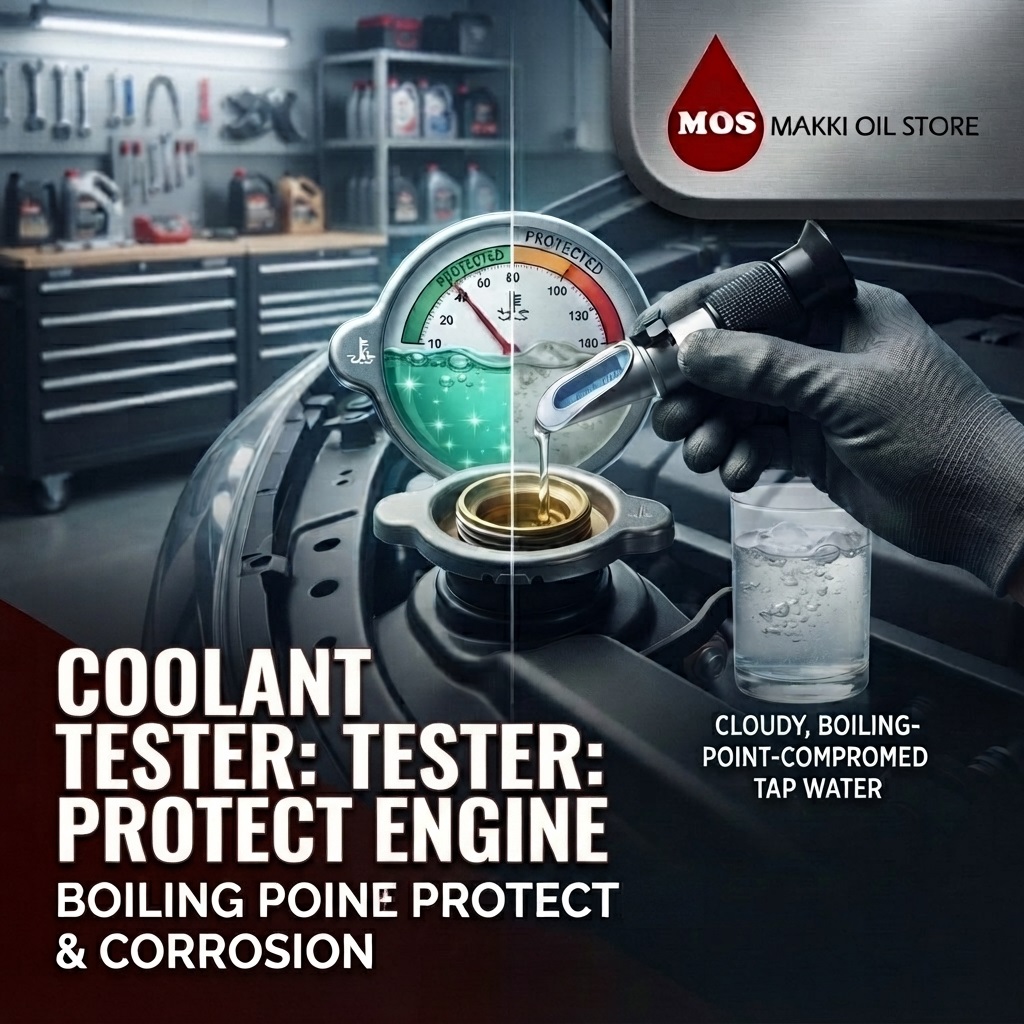
A common misconception among local drivers is that topping up the radiator with ordinary tap water is harmless. In reality, tap water contains dissolved minerals, calcium, and salts. When exposed to high engine temperatures, these minerals precipitate out of solution and form hard scale deposits inside the narrow channels of the radiator core and engine block.
- Scale Accumulation: Mineral deposits act as an insulating blanket, trapping heat inside the engine and reducing overall cooling efficiency.
- Electrochemical Corrosion: Plain water causes rapid rust formation on cast iron and aluminum components, eating away at water pump impellers and radiator tubes.
- Cavitation Damage: Low boiling points cause vapor bubbles to form and collapse violently against metal surfaces, eroding water pump blades from the inside out.
Drivers experiencing sudden temperature spikes while navigating busy metropolitan arteries can seek immediate assistance by checking out our engine overheating quick-fix guide for prompt cooling system diagnostics and professional fluid flushes.
| Coolant Type | Composition & Technology | Boiling Point Protection | Recommended Service Life |
| Conventional Inorganic (IAT) | Traditional silicates and phosphates | Moderate boiling point elevation | 2 years or 30,000 kilometers |
| Organic Acid Technology (OAT) | Extended-life organic carboxylates | High thermal resistance | 5 years or 100,000 kilometers |
| Hybrid Organic Acid (HOAT) | Combination of silicates and organic acids | Superior high-temperature stability | 5 years or 150,000 kilometers |
Maintaining Proper Coolant Concentration and Ratios
Achieving optimal heat transfer requires maintaining the correct volumetric ratio between glycol and distilled water. A 50/50 mix provides the ideal balance, offering maximum boiling point elevation during scorching summer months while protecting against internal corrosion.
At the Makki Oil Store, our expert technicians test coolant freeze-and-boil protection levels, inspect hoses for dry rot, and perform complete system flushes to ensure your vehicle’s cooling system handles extreme summer temperatures with absolute reliability.
Frequently Asked Questions
Why is radiator coolant better than plain water for summer driving?
Radiator coolant contains glycol compounds that raise the boiling point of the fluid well above 100 degrees Celsius, preventing it from boiling away under high summer loads. Additionally, it contains chemical inhibitors that prevent rust, scale buildup, and electrochemical corrosion inside the engine block and radiator core.
How often should I flush and replace my car’s coolant?
Traditional coolants should be replaced every two years or 30,000 kilometers, whereas modern organic acid technology (OAT) coolants can last up to five years or 100,000 kilometers. Always check your vehicle owner’s manual for specific manufacturer recommendations.
Can I mix different colors of coolant in my radiator?
Mixing different coolant formulations, such as inorganic green coolants with organic red or pink coolants, can cause chemical reactions that form a gel-like sludge. This sludge clogs the radiator tubes and blocks fluid flow, leading to severe engine overheating. Always flush the system completely before switching coolant types.
What are the early warning signs of a failing cooling system?
Early warning signs include a steadily rising temperature gauge needle on the dashboard, sweet-smelling vapor or visible coolant leaks beneath the vehicle, rusty coolant visible inside the overflow reservoir, and the cabin heater failing to blow hot air.
What should I do if my engine begins to overheat in traffic?
If your temperature gauge climbs into the red zone, immediately turn off the air conditioning, turn the cabin heater on to maximum heat to help draw thermal energy away from the engine, and pull safely to the side of the road. Never open the radiator cap while the engine is hot, as pressurized boiling fluid can cause severe burns.