
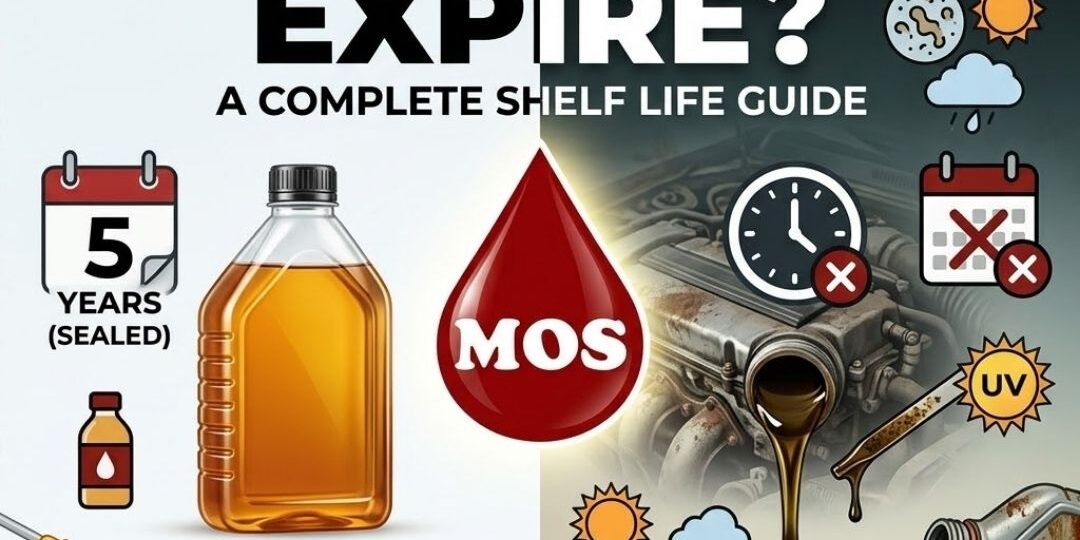
In the world of automotive maintenance, we often focus on the kilometers driven, but time itself is a silent factor in lubricant health. Whether you have a sealed bottle sitting in your garage or a car that hasn’t left the driveway in months, the question remains: does engine oil expire? At Makki Oil Store, we believe that understanding the “shelf life” of your lubricant is just as vital as tracking your mileage. While oil doesn’t spoil like food, it is a delicate chemical blend that degrades over time, potentially losing its ability to protect your engine.
The Anatomy of Engine Oil Preservation
Engine oil is an advanced mixture of base oils and specialized chemical additives designed for lubrication and heat regulation. These additives are responsible for critical tasks like oxidation control and preventing internal corrosion.
The lifespan of these chemicals depends heavily on the oil type:
- Synthetic Oil: Engineered in labs for maximum stability, high-quality synthetics generally have a much longer shelf life (typically up to 5 years) because they resist chemical breakdown more effectively.
- Conventional Oil: Derived from crude oil, these organic lubricants are more prone to natural degradation and usually have a shorter reliable lifespan (around 2 to 3 years).
Factors That Accelerate Oil Degradation
Even a premium product can lose its edge if stored incorrectly. At Makki Oil Store, we emphasize three environmental “enemies” of oil longevity:
- Temperature Fluctuations: Extreme heat or freezing cold can compromise the oil’s molecular structure. In a climate like Lahore, storing oil in a tin shed that reaches 45°C+ can cause the additives to separate from the base oil.
- Moisture and Humidity: If a container is not tightly sealed, it can pull moisture from the air. This water reacts with the additives to create a “milky” sludge, which is a death sentence for engine bearings.
- UV Light Exposure: Prolonged exposure to sunlight can break down certain chemical bonds in the oil, diminishing its effectiveness before it ever enters your engine.
Signs Your Engine Oil Has Degraded
Before pouring stored oil into your vehicle, you must perform a visual and sensory check. Degraded oil often exhibits clear warning signs:
- Viscosity Changes: The oil may appear unusually thick (like honey) or watery compared to its original state.
- Texture and Color: If the oil looks dark, cloudy, or has a coarse, gritty texture, it has likely been contaminated or oxidized.
- Unpleasant Odor: A foul or “sour” smell is a strong indicator of chemical breakdown.
Using oil that has reached its limit whether through time or mileage leads to diminished lubrication and increased friction. To avoid the risk of engine overheating and permanent damage, visiting the Best Car Engine Oil Shop In Lahore ensures you are purchasing fresh, climate-stable stock.
Protecting Your Engine from “Expired” Fluid
If your car has been sitting idle for over six months, the oil inside the sump has likely accumulated moisture and acids. In such cases, the safest move is a complete oil change. To understand the severe mechanical risks of running a car on old, stagnant fluid, we recommend reading our guide on What Happens To your Car When You Don’t Change your Engine Oil.
For stored bottles, always keep them in a cool, dry place with the seal intact. If you are ever in doubt about a bottle’s age or quality, the cost of a fresh liter is a small price to pay to protect an engine worth lakhs.
Frequently Asked Questions (FAQs)
Does a sealed bottle of oil ever really “expire”?
While most manufacturers don’t print a hard expiration date, the chemical additives begin to lose their potency after 3 to 5 years. At Makki Oil Store, we recommend using sealed oil within 2 years for peak performance.
Can I use oil that has been sitting in my car for a year if I haven’t driven it?
No. Oil in an engine is exposed to combustion by-products and moisture. Even if the car isn’t running, these contaminants settle and create acids that can corrode your engine from the inside.
Why does synthetic oil last longer on the shelf?
Synthetic oils have a more uniform molecular structure and fewer impurities than mineral oils. This makes them significantly more resistant to oxidation (reacting with oxygen) over long periods.
What is the risk of using “old” oil in a modern car?
Modern engines have microscopic oil passages. If old oil has started to form even tiny amounts of “sewage” or sediment, it can block these passages, leading to instant engine failure.
How should I store oil in Lahore’s heat?
Keep your oil containers inside a brick-and-mortar building, ideally on a shelf off the ground, away from windows and direct sunlight. Avoid storing oil in outdoor metal sheds.
Does the color of the oil tell me if it’s expired?
New oil should be clear and amber-colored. If it is milky (water contamination) or has dark streaks (oxidation), it should not be used in your engine.
Is it safe to buy oil from open drums?
We strongly advise against this. Oil in open drums is exposed to the air and dust of Lahore every time it’s opened. Always buy factory-sealed bottles from a trusted authority like Makki Oil Store.
Can I mix old oil with new oil?
It is not recommended. The degraded additives in the old oil can actually “contaminate” the new oil, reducing the overall protection level of the entire batch.
Does the oil filter expire too?
While the filter itself doesn’t “expire,” the paper element inside can become brittle over many years. If you are changing old oil, always change the filter at the same time.
Why does my oil smell like gasoline?
If the oil in your engine smells like fuel, it’s a sign of “fuel dilution” from a car sitting idle. This significantly thins the oil and requires an immediate change to prevent engine seizing.