
When you own a luxury vehicle whether it’s a late-model Civic, a Sportage, or a German sedan you aren’t just paying for the badge; you are paying for precision engineering. These engines are built with incredibly tight tolerances. As the mercury drops in Lahore this January, the way you maintain that engine needs to be just as precise.
Many drivers in Pakistan still rely on traditional mineral oils, often influenced by “ustads” who suggest thicker lubricants for every car. However, for a modern, high-performance engine, sticking to old-fashioned oil in the winter is like trying to run a marathon while breathing through a straw.
The Cold Start Challenge in Single-Digit Temperatures
Lahore’s winter nights often see temperatures hitting 7°C or 8°C. While this isn’t “freezing” by global standards, it is cold enough to make conventional mineral oil thicken significantly. When you turn your key in the morning, a thick oil takes several seconds sometimes up to a minute to reach the top of the engine and lubricate the valvetrain.
Fully synthetic oil is chemically engineered to stay fluid even in extreme cold. It reaches critical components almost instantly. This “cold start” period is where 75% of all engine wear occurs. By using a high-quality synthetic, you are effectively eliminating the seconds of metal-on-metal friction that slowly kill luxury engines.
Why Luxury Engines Require Synthetic Stability
Modern luxury cars often feature turbochargers. These components spin at tens of thousands of RPMs and generate intense heat. In winter, the contrast between a cold start and the high operating temperatures of a turbo is extreme.
Synthetic oils are designed to handle this thermal stress without breaking down. They don’t leave behind the carbon deposits or “sludge” that mineral oils do. Because synthetic molecules are uniform in size, they provide a more consistent protective film. This is why most premium manufacturers explicitly require synthetic oil to maintain your warranty and performance levels.
Identifying Quality in an Unreliable Market
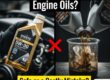
The biggest hurdle for luxury car owners in Pakistan is the prevalence of sub-standard products. Buying an expensive bottle doesn’t always guarantee quality. It is a sad reality that many “premium” bottles in local shops contain recycled or low-grade oil.
For a luxury car, the stakes are higher. A single oil change with a counterfeit product can lead to clogged oil galleries and expensive turbo failures. Every owner must be vigilant and learn how to tell if their engine oil is original or fake before it enters the engine. Looking for holographic seals, checking batch codes, and buying from authorized retailers are the only ways to stay safe.
Long-Term Savings vs. Immediate Costs
Yes, a 4-liter bottle of fully synthetic oil costs more than conventional mineral oil. However, the “cost per kilometer” is often lower. Synthetic oils typically have longer drain intervals, meaning you spend less time at the workshop.
More importantly, synthetic oil improves fuel efficiency. Because it reduces internal friction so effectively, your engine doesn’t have to work as hard, which is a welcome benefit given current fuel prices in Pakistan. When you source your lubricants from a reputable provider like the Makki oil Store, you aren’t just buying oil; you are buying insurance for your engine’s future.
Conclusion: Don’t Compromise on Precision
Your luxury car was designed by engineers who specified synthetic oil for a reason. Especially in the winter months of Punjab, where cold starts and heavy traffic are daily realities, providing your engine with premium protection is the best way to ensure it delivers the performance you paid for.
FAQs
1. Can I switch to synthetic oil if I’ve been using mineral oil?
Yes. Modern synthetic oils are fully compatible with engines that previously used mineral oil. You don’t need a special flush; just drain the old oil and refill with synthetic.
2. How often should I change synthetic oil in Lahore?
While synthetic can last 10,000 km or more in some countries, Lahore’s dust and traffic usually mean a 7,000 to 8,000 km interval is safer for your engine.
3. Does synthetic oil leak more in older cars?
This is a myth. Synthetic oil doesn’t “cause” leaks; however, because its molecules are smaller and more consistent, it might find an existing leak that thick, sludgy mineral oil had plugged up.
4. Is 0W-20 or 5W-30 better for Lahore winters?
Always follow your owner’s manual. Most modern Japanese and Korean cars in Pakistan now recommend 5W-30 as the ideal year-round balance.
5. Why is synthetic oil better for fuel economy?
Synthetic oil reduces “viscous drag.” It allows the engine’s internal parts to move with less resistance, requiring less energy (fuel) to keep the engine turning.
6. Where can I find genuine synthetic brands in Lahore?
You can find a wide range of verified, authentic synthetic lubricants at the Makki oil Store.