
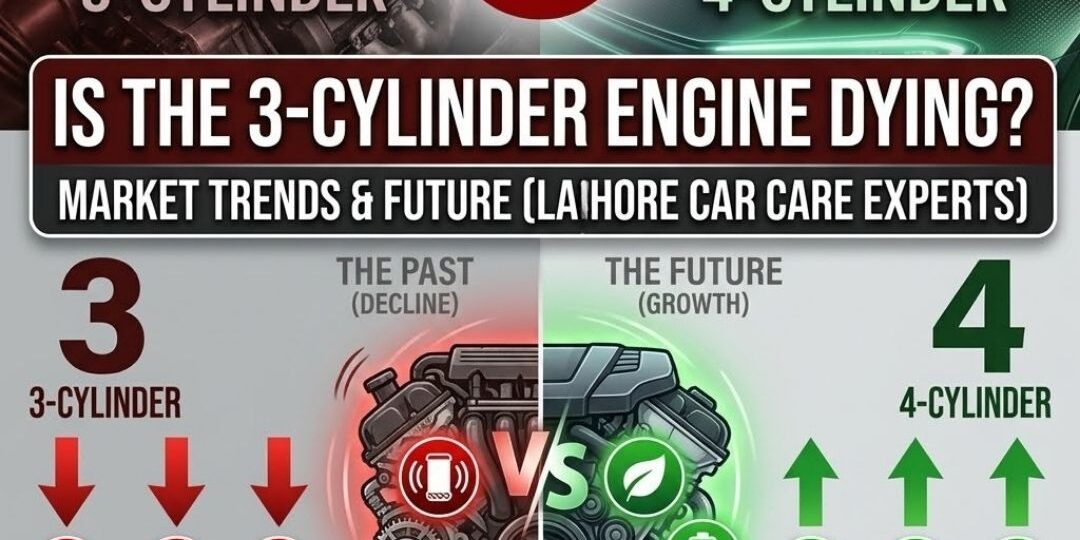
In the rapidly evolving world of automotive engineering, manufacturing patterns are constantly shifting to meet new demands. A notable trend observed recently is a decreasing interest in the production of three-cylinder engines often referred to as “slender” or “downsized” engines. While these compact powerplants were once hailed as the future of fuel economy, several factors have forced businesses to move toward alternative configurations. At Makki Oil Store, we believe that understanding these shifts helps drivers make better decisions regarding vehicle longevity and maintenance.
The Rise and Fall of the Three-Cylinder Design
Three-cylinder engines gained popularity due to their lightweight design and high mileage potential. By reducing the number of moving parts, manufacturers hoped to minimize internal friction and create a more affordable, energy-efficient vehicle. However, as science advances, both technical limitations and shifting customer tastes have altered the automotive environment.
1. Environmental Regulations and Emission Standards
Global government regulations have played a major role in the falling popularity of small three-cylinder engines. In an era of rising environmental consciousness, automakers are under immense pressure to meet stringent standards. Despite their small size, these engines often struggle to meet modern nitrogen oxide (NOx) and particulate matter targets when pushed under heavy loads. This has forced manufacturers to explore different engine configurations that offer more natural balance and cleaner combustion.
2. Performance and Refinement Limitations
While attractive on paper, three-cylinder engines have inherent physical limitations regarding power and “NVH” (Noise, Vibration, and Harshness). Because they have an odd number of pistons, they are naturally unbalanced, often requiring heavy counterweights or balance shafts to stay smooth.
When comparing these to modern four-cylinder options, consumers looking for a durable and refined driving experience frequently uncover their shortcomings. Today’s buyers want engines that offer more torque without compromising fuel efficiency. To ensure these smaller engines remain protected during their operational life, using the Best Car Engine Oil Shop In Lahore is critical, as high-quality lubrication helps dampen the vibrations and heat common in downsized motors.
Technological Advancements: The Shift to Hybrid and EV
The rise of battery-powered cars (EVs) is causing the most significant change in the sector. Businesses are heavily investing in electric technology, shifting resources away from traditional internal combustion engine (ICE) configurations.
Furthermore, the development of hybrid systems which connect electrical energy with traditional engines has made the three-cylinder design less vital. Most modern hybrids prefer the smoothness of a four-cylinder “Atkinson Cycle” engine. As battery technology improves, slender engines are finding it harder to compete with systems that offer better performance without the environmental footprint.
Economic Factors and Manufacturing Costs
The choices made by the motor vehicle industry are heavily influenced by production costs. Interestingly, the specialized engineering needed to make a three-cylinder engine run smoothly (such as advanced turbocharging and balance shafts) often raises production costs to the point where they are nearly as expensive to build as a four-cylinder.
As businesses work to improve manufacturing procedures and cut costs, the economic viability of producing these specialized “thin” engines becomes a concern. Additionally, market trends indicate that many buyers now prefer larger vehicles or those with more robust power delivery, leading automakers to prioritize designs that satisfy those demands.
Protecting the Engines of the Future
Whether you drive a compact three-cylinder or a modern hybrid, the fundamental need for superior lubrication remains. Neglecting maintenance on these high-stress, downsized engines can lead to catastrophic failure. Understanding What Happens To your Car When You Don’t Change your Engine Oil is essential, especially for smaller engines that run at higher temperatures to produce sufficient power.
In short, the industry’s shift away from three-cylinder engines is driven by a mix of efficiency obstacles, financial constraints, and environmental sustainability goals. As the car business moves toward more innovative and environmentally friendly mechanisms, the “slender” engine era may be coming to an end.
Frequently Asked Questions (FAQs)
Why do 3-cylinder engines vibrate more than others?
Because they have an odd number of cylinders, the firing order is naturally unbalanced. This creates a “rocking” motion that requires specialized engine mounts and balance shafts to keep the cabin comfortable.
Are 3-cylinder engines bad for long-distance driving?
They aren’t “bad,” but they work harder than larger engines to maintain highway speeds. This extra stress means you must be extremely diligent with your oil change intervals at Makki Oil Store to prevent heat damage.
Do 3-cylinder engines save more fuel than 4-cylinder engines?
Initially, yes. However, modern 4-cylinder engines with cylinder-deactivation technology can often match or beat the fuel economy of a 3-cylinder without the loss of power.
Why is turbocharging so common in 3-cylinder cars?
To make up for the missing cylinder, manufacturers add a turbocharger to force more air into the engine, giving a small motor the power of a much larger one.
Can I use regular mineral oil in a 3-cylinder turbo engine?
We strongly advise against it. Turbocharged engines require the thermal stability of full synthetic oil. Mineral oil can “cook” inside the turbo, leading to a total engine seizure.
Is the maintenance cost higher for these smaller engines?
Sometimes. Because they run hotter and under more pressure, they are less forgiving of neglected maintenance. High-quality filters and oil from a trusted authority are non-negotiable.
Which car companies are still making 3-cylinder engines?
Some European and Japanese manufacturers still use them for small city hatchbacks, but many are phasing them out in favor of full-electric or hybrid four-cylinder setups.
Does a 3-cylinder engine have a shorter lifespan?
If maintained perfectly, they can last a long time. However, because they are often “stressed” to produce power, they may show signs of wear earlier than a larger, naturally aspirated engine.
How does the air-conditioning affect a 3-cylinder car?
Since the engine has less total power, turning on the AC can cause a more noticeable drop in performance compared to a car with a larger engine.
Is it harder to find parts for 3-cylinder engines in Lahore?
For common models, parts are available. However, for specialized engine components, it is always best to consult with a specialist at Makki Oil Store to ensure you are getting the correct specifications