Maintaining a vehicle in a high-traffic, high-temperature environment like Lahore requires more than just occasional check-ups. Engine oil is the lifeblood of your vehicle, serving as a primary lubricant that reduces friction among moving parts, cools the engine, and ensures optimal performance. However, oil is not a permanent fluid. It has a finite lifespan, and once it reaches its operational limit, its ability to protect your engine vanishes. Understanding the science behind oil degradation is essential for every driver who wants to avoid catastrophic mechanical failure.
The Critical Functions of Engine Oil in Extreme Climates
In regions like Lahore, where summer temperatures frequently soar and dust levels are high, engine oil faces immense stress [cite: 2026-03-01]. Its first and most vital role is lubrication and heat regulation. As your engine operates, hundreds of metal components move at thousands of revolutions per minute. Without a consistent film of oil, these parts would generate enough friction to weld themselves together. Furthermore, the oil acts as a secondary cooling agent, drawing heat away from the combustion chamber and dissipating it to prevent overheating.
Beyond cooling, the oil serves as a cleaning agent. It is engineered to carry dirt, carbon deposits, and microscopic metallic shavings away from critical engine components. By holding these contaminants in suspension, the oil prevents them from settling on engine surfaces and causing abrasive wear and tear.
Why Engine Oil Reaches a Breaking Point
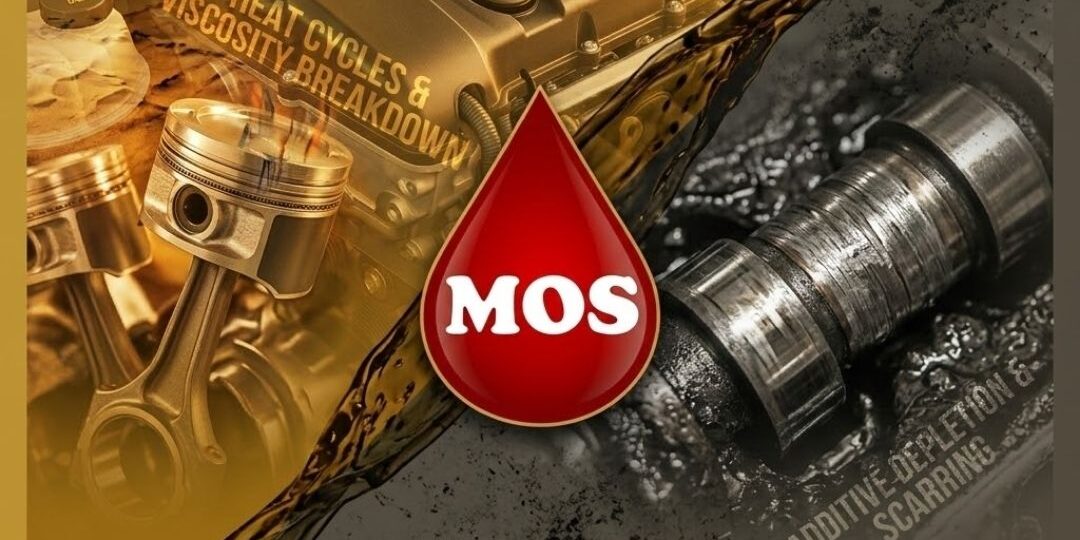
Every lubricant has a saturation point. One of the primary reasons for changing the fluid is the inevitable breakdown of viscosity. Viscosity refers to the oil’s thickness and its resistance to flow. For proper lubrication, the oil must be thin enough to circulate quickly during a cold start but thick enough to stay on metal surfaces under high heat. As the oil ages and is exposed to the intense heat cycles of Pakistani roads, it undergoes a chemical breakdown, losing its structural integrity and becoming thin and watery.
Simultaneously, the chemical additives within the oil begin to deplete. Modern oils are infused with detergents to clean the engine, anti-wear agents to minimize friction, and antioxidants to prevent the oil itself from oxidizing. Once these additives are exhausted, the oil can no longer neutralize acids or prevent the formation of sludge. This depletion leaves your engine’s internal components exposed to corrosion and accelerated wear.
The Consequences of Ignoring Oil Change Intervals
Neglecting to replace oil that has reached its limit leads to a rapid increase in internal friction. Components such as the pistons, camshaft, and crankshaft—which rely on a microscopic cushion of oil—begin to experience heightened wear. This metal-on-metal contact creates permanent scarring on engine surfaces, significantly reducing the overall lifespan of the motor.
In a city like Lahore, where stop-and-go traffic is the norm, an engine running on old oil is at a high risk of overheating. Overheated engines are prone to sudden breakdowns and irreversible damage to vital gaskets and seals. Furthermore, an engine struggling against internal friction operates less efficiently, leading to a noticeable decrease in fuel economy and a rise in harmful exhaust emissions. To avoid these costly repairs, most drivers find that visiting the Best Car Engine Oil Shop In Lahore for high-quality, authentic lubricants is the most effective preventative measure.
Benefits of Timely Maintenance for Engine Longevity
Regularly changing the engine oil is the most cost-effective way to extend the life of your vehicle. Clean oil ensures that all internal parts move with minimal resistance, which contributes to a smoother driving experience and a more reliable vehicle. This routine task significantly reduces the likelihood of major engine failures that require expensive overhauls.
Moreover, fresh oil directly impacts your wallet at the fuel pump. Reduced friction and optimal heat regulation allow the engine to operate more efficiently, translating into better mileage. Given the rising costs of fuel in Pakistan, maintaining peak efficiency is both economically advantageous and environmentally responsible. If you are unsure of the current state of your lubricant, it is helpful to understand What Happens To your Car When You Don’t Change your Engine Oil so you can recognize the early warning signs of degradation before they lead to a breakdown.
Frequently Asked Questions (FAQs)
1. How often should I change my oil in Lahore’s dusty environment?
While manufacturers provide a general mileage limit, the heavy dust and heat in Lahore often require shorter intervals. For conventional oil, 3,000 km to 5,000 km is recommended, while high-quality synthetic oils can often last 7,000 km to 8,000 km under local conditions.
2. Why does my oil look black even if I haven’t reached the mileage limit?
Oil turning dark is actually a sign it is working. It means the oil is successfully cleaning carbon deposits and soot from your engine. However, if the oil feels “gritty” on the dipstick, it is saturated with debris and needs an immediate change.
3. Does oil expire if the car isn’t driven much?
Yes. Oil degrades over time due to oxidation and moisture buildup, even if the car is stationary. It is generally recommended to change your oil every six months, regardless of the mileage covered.
4. Can I just top up the oil instead of changing it?
No. Adding fresh oil to old, dirty oil is like adding clean water to a muddy bucket. The contaminants and depleted additives in the old oil will quickly degrade the new oil, leaving your engine unprotected.
5. What is the difference between synthetic and mineral oil for Pakistan’s climate?
Synthetic oil is chemically engineered to be more stable. It does not thin out as easily in extreme heat, making it the superior choice for the intense summers found in Punjab and Sindh.
6. Will a fresh oil change improve my car’s fuel average?
Yes. Fresh oil reduces the internal workload of the engine. When the engine moves more freely, it consumes less fuel to maintain the same speed.
7. Is it necessary to change the oil filter every time?
Absolutely. The filter traps the contaminants that the oil picks up. If you don’t change the filter, it can become clogged, forcing dirty oil to bypass the filter and recirculate through your engine.
8. Can old oil cause my engine to make noise?
Yes. “Ticking” or “knocking” sounds often indicate that the oil has become too thin to provide a cushion between moving parts. This is a critical warning sign that an oil change is overdue.
9. How do I know which oil viscosity is right for my car?
Always refer to your owner’s manual. However, in Pakistan’s climate, a slightly higher viscosity (like 10W-40 or 20W-50) is often used for older engines to provide better protection against heat.
10. Why is the oil pressure light on even after an oil change?
This could indicate a mechanical issue with the oil pump or a faulty sensor. If this light appears, stop the engine immediately to prevent seizing, as it suggests the oil is not circulating correctly.