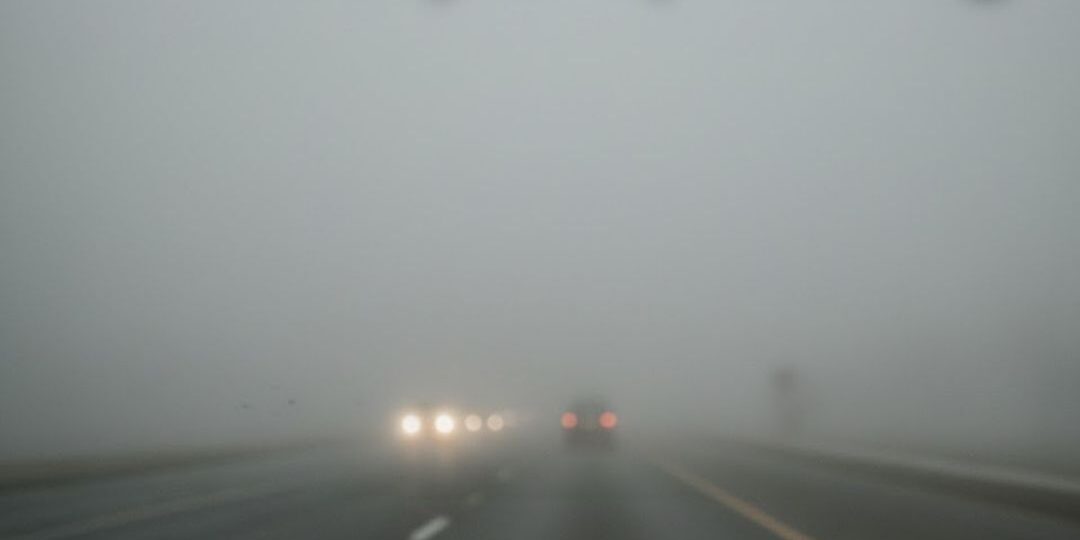
Fog in Lahore often appears without warning. One moment the road feels manageable, and the next, visibility drops so sharply that even nearby vehicles fade into a grey blur. This happens frequently during early winter mornings and late-night drives, especially on roads like Canal Road, Ring Road, and Multan Road.
When visibility disappears suddenly, accidents don’t happen because drivers lack skill. They happen because fog disrupts depth perception, judgment, and reaction time. Knowing what to do in those first few moments can make the difference between a safe stop and a dangerous situation.
This guide explains how to respond calmly and correctly when fog reduces visibility without warning, using practical steps that work in real Lahore driving conditions.
Why Sudden Fog Is More Dangerous Than Gradual Fog
Gradual fog allows drivers to adjust slowly. Sudden fog does not. When visibility drops abruptly, the brain struggles to judge distance and speed accurately. Vehicles ahead may be much closer than they appear, while road edges and lane markings can disappear almost instantly.
In Lahore’s traffic-heavy environment, this creates confusion not only for you, but for every driver around you.
The First Thing to Do: Stay Calm and Slow Down Smoothly
The instinctive reaction to sudden fog is panic braking. This is one of the most dangerous responses, especially on busy roads where vehicles may be following closely.
Instead, ease off the accelerator and let the car slow down gradually. Smooth deceleration gives drivers behind you time to react and keeps your vehicle predictable. Predictability is the single most important safety factor in fog.
Reduce Speed More Than You Think Is Necessary
Fog distorts perception. Even at low speeds, the road may feel deceptively clear for a second before visibility drops again. Slowing down further than feels comfortable is often the safest choice.
Lower speed gives your eyes time to adjust and reduces the impact of sudden obstacles, stopped vehicles, or unexpected lane changes ahead.
Use the Correct Lights Immediately
As soon as visibility drops, switch to low-beam headlights. High beams reflect off fog particles and make visibility worse by creating glare. If your vehicle has fog lights, use them correctly to illuminate the road surface directly ahead and make your car more visible to others.
Consistency matters. Sudden changes in lighting confuse other drivers, especially in dense fog.
Avoid Following Other Cars Too Closely
Many drivers rely on the tail lights of the vehicle ahead as a guide. This creates a false sense of security. If that driver brakes suddenly or changes lanes, you may not have enough time to respond.
Instead, increase following distance and use road edges, lane reflectors, and markings as reference points whenever possible.
Limit Lane Changes and Avoid Overtaking
Fog removes depth perception. Vehicles in adjacent lanes may be closer than they appear—or not visible at all. Sudden lane changes increase the risk of side collisions.
Staying in your lane and maintaining a steady path is far safer than trying to “escape” the fog by overtaking.
When Visibility Drops to Near Zero, Consider Stopping Safely
There are moments when continuing to drive becomes riskier than stopping. If you cannot clearly see lane boundaries, nearby vehicles, or the road ahead, the safest option is to pull over carefully.
Move as far off the road as possible, turn on hazard lights, keep low-beam headlights on, and remain inside the vehicle if exiting is unsafe. Never stop in the middle of the road or on blind curves.
For situations where fog becomes extreme, understanding how to drive when visibility is almost zero helps drivers make safer decisions instead of reacting on instinct.
Keep the Windshield Clear From Inside and Outside
External fog is only part of the problem. Internal condensation can reduce visibility even further. Make sure the defogger is functioning properly and airflow is directed toward the windshield.
A partially fogged windshield combined with dense external fog creates a misleading sense of visibility that can be more dangerous than fog alone.
Why Fog Feels Harder to Handle Than Darkness
At night, lights define the road. In fog, light scatters. This removes contrast and depth, making it harder to judge speed and distance. Drivers often underestimate how much fog affects reaction time and decision-making.
Accepting that judgment is temporarily impaired helps drivers compensate by slowing down and simplifying movements.
Vehicle Readiness Matters More in Fog Season
Fog exposes weaknesses in vehicles. Poor headlights, worn wipers, dirty windshields, and neglected maintenance all become more dangerous when visibility is limited.
Maintaining your car properly before winter fog sets in reduces stress during sudden visibility loss. Drivers looking for guidance and routine checks can explore general winter driving and maintenance support at the Makki Oil store, where seasonal vehicle concerns are addressed with practical, local experience.
Key Takeaway for Lahore Drivers
When visibility disappears suddenly, safety depends on calm, predictable driving. Slow down smoothly, use the right lights, increase distance, and avoid sudden movements. If conditions become unsafe, stopping carefully is often the smartest decision.
Fog limits vision, but it doesn’t remove control. Panic does.
FAQs
Should I stop immediately if fog suddenly appears?
No. Slow down gradually first and stop only when visibility becomes dangerously low and a safe place is available.
Are hazard lights useful while driving in fog?
They should be used only when stopped or moving very slowly, not during normal driving.
Do high beams improve visibility in fog?
No. High beams reflect light back and reduce visibility.
Why do accidents happen at low speeds in fog?
Because fog distorts depth perception and drivers react suddenly instead of predictably.
Is it better to wait for fog to clear in Lahore?
Often, yes. Fog usually lifts within hours, and waiting can be the safest option.