
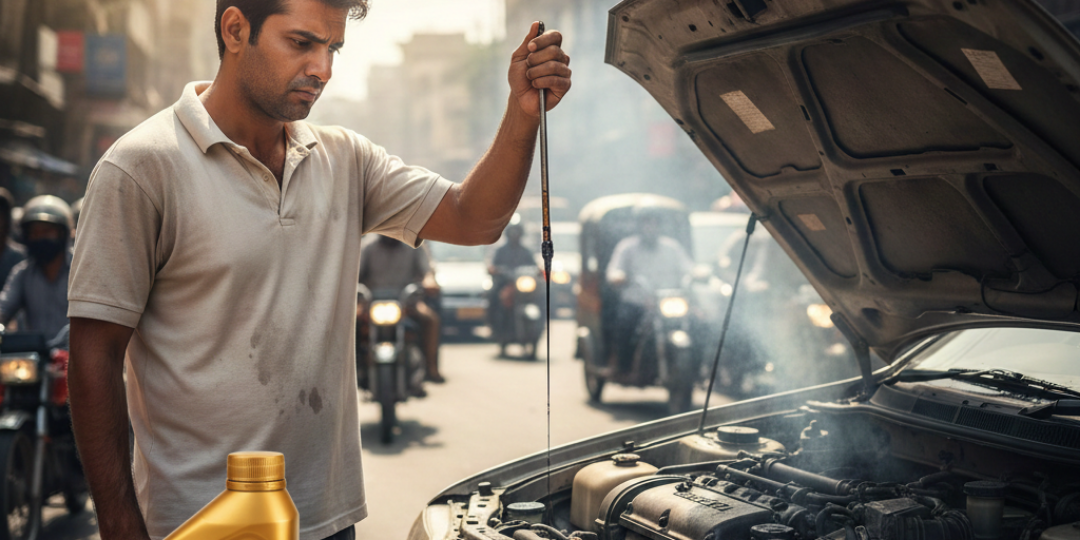
Many drivers in Lahore delay oil changes because the car still feels “fine.” The engine starts. The vehicle moves. No warning lights appear. This false sense of safety is how long-term engine damage begins. Engine oil does not fail suddenly. It degrades slowly. It thickens, oxidizes, and fills with microscopic metal particles. The damage happens quietly, inside places you cannot see, until the cost becomes unavoidable.
After years of inspecting engines and advising drivers at Makki Oil Store, one reality is consistent. Skipping oil changes never saves money. It only postpones a much bigger bill. This article explains what actually happens inside your car when engine oil is not changed on time, using real mechanical outcomes observed in Lahore’s driving conditions.
Why Engine Oil Has a Limited Working Life
Engine oil is not a permanent fluid. From the moment it enters the engine, it begins to degrade. Heat breaks down the oil’s molecular structure. Combustion gases leak past piston rings and contaminate it. Dust from Lahore’s roads enters through air intake systems and mixes into the oil film. Over time, additives that protect against wear and sludge are consumed. As oil ages, it loses the ability to flow correctly, cool internal parts, and hold contaminants in suspension. At that point, it is no longer protecting the engine. It is actively harming it. This is why “the car still drives” is not a reliable indicator of oil health.
What Happens Inside the Engine When Oil Is Overdue
When oil stays in service beyond its usable life, internal damage follows a predictable pattern. Friction increases between moving parts. Heat retention rises because degraded oil cannot carry heat away efficiently. Metal particles circulate through bearings and piston rings, accelerating wear. Sludge begins to form in narrow oil passages, restricting lubrication to critical components. This damage does not happen in one trip. It builds layer by layer. By the time symptoms appear, internal wear is already advanced.
Table 1: Internal Engine Changes As Oil Degrades
| Oil Condition | Mechanical Change Inside Engine | Long-Term Impact |
| Fresh oil | Smooth lubrication and cooling | Normal engine life |
| Aged oil | Rising friction and heat | Gradual efficiency loss |
| Contaminated oil | Abrasive particles circulate | Accelerated wear |
| Sludge-forming oil | Oil flow restriction | Component failure risk |
These are not theoretical outcomes. They are patterns observed repeatedly during inspections and oil analysis.
How Lahore’s Driving Conditions Make Delayed Oil Changes More Dangerous
Lahore’s environment shortens oil life faster than many drivers expect. High ambient temperatures cause faster oxidation. Long idle times in traffic increase thermal stress. Dust levels introduce fine contaminants into the intake system. Short trips prevent full evaporation of moisture and fuel vapors from the oil. An oil change interval that might be tolerable in cooler, low-traffic regions becomes harmful under Lahore’s conditions. Engines here work harder just to survive daily traffic. This is why many vehicles in Lahore show sludge formation and bearing wear earlier than expected when oil changes are delayed.
The Slow Financial Damage Most Drivers Don’t Notice
The cost of skipping oil changes is rarely paid immediately. It shows up gradually. Fuel efficiency drops because internal friction increases. Oil consumption rises as seals harden and piston rings lose sealing efficiency. Engine noise increases, signaling metal contact where oil film has failed. Performance declines subtly, often blamed on fuel quality or engine age. By the time drivers notice serious symptoms, repair costs have multiplied far beyond the cost of regular oil changes.
What Happens to High-Mileage Engines When Oil Is Ignored
Older engines depend on oil quality more than newer ones. Clearances are wider. Seals are less elastic. Deposits form more easily. When oil changes are delayed in high-mileage engines, sludge forms faster. Oil passages are narrow. Bearings wear unevenly. Piston rings stick due to carbon buildup. At this stage, even switching back to regular oil changes cannot fully reverse the damage. The wear becomes permanent. This is why maintenance discipline matters more as a car ages, not less.
Oil Neglect Impact by Engine Age
| Engine Age | Oil Change Discipline | Typical Outcome |
| Low mileage | Regular changes | Stable performance |
| Low mileage | Delayed changes | Early wear signs |
| High mileage | Regular changes | Extended usable life |
| High mileage | Delayed changes | Accelerated engine decline |
This pattern explains why two identical cars can age very differently.
Why Used Car Buyers Face Hidden Risks
Many used cars in Lahore appear mechanically sound but carry hidden oil neglect damage. Sludge inside the engine does not always show up during short test drives. Early bearing wear does not always produce noise. This is why checking oil conditions before buying is critical. Buyers who skip this step often inherit years of neglected maintenance. For practical guidance on evaluating oil condition before purchase, refer to Check Engine Oil Before Buying. It helps identify warning signs that normal inspections miss.
Why Oil Changes Are About Prevention, Not Just Maintenance
Oil changes are not about keeping the engine clean. They are about controlling wear rates. Every engine wears with use. Oil quality determines how fast that wear happens. Fresh oil slows wear. Degraded oil accelerates it. This is the difference between an engine that runs reliably for years and one that develops expensive internal problems prematurely. At Makki Oil Store, we often explain this to drivers who assume oil changes are routine chores. In reality, they are one of the few controls a driver has over engine lifespan.
How Delayed Oil Changes Affect Resale Value
Vehicles with neglected oil history age poorly. Compression drops. Engine noise increases. Oil burning becomes visible. Buyers and dealers notice these signs quickly. Even when a car looks clean externally, internal wear reduces resale value. Buyers discount heavily for engines that show oil neglect symptoms. Regular oil changes protect not only engine health but also long-term vehicle value.
When Damage Becomes Irreversible
There is a point beyond which oil changes can no longer undo damage. Once bearing surfaces are worn, fresh oil cannot rebuild metal. Once piston rings lose elasticity, lubrication cannot restore sealing. Once sludge blocks oil passages, cleaning requires mechanical intervention. At that stage, maintenance shifts from prevention to repair. Repair costs exceed years of routine oil service combined.
Frequently Asked Questions
How Long Can You Really Drive Without Changing Engine Oil?
You can drive for some time, but internal wear begins long before visible symptoms appear.
Does Old Oil Always Look Dirty?
Not always. Some degraded oils appear dark but still lubricate poorly due to additive depletion.
Can Skipping One Oil Change Damage the Engine?
One delay rarely destroys an engine, but repeated delays compound damage quickly.
Does Driving Less Mean You Can Delay Oil Changes?
Short trips actually degrade oil faster due to moisture and fuel dilution.
How Do You Know If Engine Damage Has Already Started?
Early signs include rising oil consumption, reduced fuel efficiency, and subtle engine noise changes.