
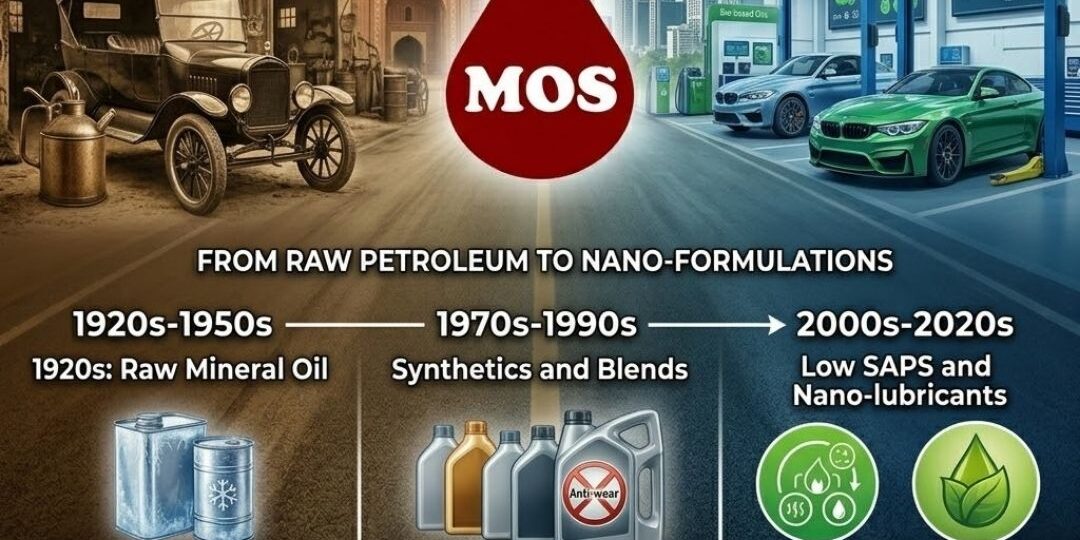
The evolution of engine lubrication is a century-long saga of chemical engineering and mechanical necessity. Since the early 20th century, lubricants have transformed from basic raw minerals into highly sophisticated liquid components that manage heat, friction, and even digital data. As a pioneer in the Pakistani lubricant market, Makki Oil Store has witnessed how these global milestones directly impact the performance and survival of vehicles on the demanding roads of Lahore.
The Early Eras: From Raw Petroleum to Multigrades (1920s – 1950s)
In the 1920s, the automotive world moved away from unstable animal fats and basic mineral oils toward stable petroleum-based lubricants. This shift was the first major step in extending engine life, as petroleum offered better thermal resistance. However, these early oils were “monogrades,” meaning they were either too thick for winter starts or too thin for summer heat.
By the mid-20th century, the industry achieved a massive breakthrough with the advent of multigrade oils. By using viscosity index improvers, chemists created oil that could flow like a thin fluid in the cold but protect like a thick fluid at high operating temperatures. During this era, the introduction of detergent additives also revolutionized engine cleanliness, preventing the “sludge” that previously choked internal components.
The Synthetic Revolution and High-Performance Blends (1970s – 1990s)
The 1970s marked a departure from traditional refining with the introduction of synthetic oils. Unlike mineral oils, synthetics are built molecule-by-molecule in a lab. This process allowed the Makki Oil Store to provide customers with fluids that offered superior stability and performance in extreme conditions.
Throughout the 1980s and 90s, the refinement of synthetic blends allowed for a cost-effective middle ground, combining the protection of synthetics with the affordability of conventional oils. This period also saw the rise of advanced anti-wear agents and antioxidants, meticulously engineered to handle the higher RPMs and tighter tolerances of modern fuel-injected engines.
The Green Era: Sustainability and Low SAPS (2000s – 2020s)
The 21st century shifted the focus toward environmental responsibility and emission reduction. The rise of Low SAPS (Sulfated Ash, Phosphorus, and Sulfur) oils became a critical innovation. These lubricants are specifically designed to protect modern exhaust after-treatment systems, such as catalytic converters and diesel particulate filters. By reducing these chemical elements, Low SAPS oils ensure that vehicles meet stringent global emission standards while maintaining peak efficiency.
Today, we are seeing the emergence of bio-based oils derived from renewable plant sources and nano-lubricants that use microscopic particles to fill surface imperfections on engine metal. These “smart” lubrication systems are designed for maximum fuel economy and minimal ecological footprints. To ensure your modern vehicle benefits from these high-tech formulations, visiting the Best Car Engine Oil Shop In Lahore is the most reliable way to source authentic, next-generation products.
Advancements in Monitoring and Oil Durability
Modern innovation isn’t just in the fluid itself, but in how we track it. Oil Life Monitors (OLMs) have replaced the old-fashioned “3,000-mile rule.” These systems use sensors to track engine temperature, RPM, and driving habits to determine exactly when the oil has reached its limit. This technology prevents premature oil changes, reducing waste and saving vehicle owners significant maintenance costs.
However, even with smart sensors, the fundamental physics remains: oil eventually degrades. Understanding What Happens To your Car When You Don’t Change your Engine Oil is still essential for every driver, as even the most advanced 2020s technology cannot save an engine running on neglected, oxidized fluid.
Frequently Asked Questions (FAQs)
What was the biggest innovation in the 1950s?
The introduction of detergent additives was a game-changer. Before this, engines would frequently “gum up” with carbon deposits. Detergents kept the engine’s internals clean, vastly extending service intervals.
Why is Low SAPS oil important for modern cars?
Modern cars use sensitive catalytic converters to clean exhaust gases. High levels of Sulfur and Phosphorus in older oil types can “poison” these components, leading to expensive repairs and failed emissions tests.
How do “Nano-lubricants” work?
Nano-lubricants contain microscopic particles that act like tiny ball bearings between metal surfaces. They fill in microscopic scratches on the cylinders and pistons, reducing friction to levels impossible with traditional oil.
Are bio-based oils as good as synthetic oils?
Recent innovations have made bio-based oils incredibly high-performing. While they are more eco-friendly, they now offer thermal stability and wear protection comparable to top-tier full synthetics.
How did the 1970s oil crisis affect engine oil?
The crisis pushed manufacturers to develop thinner, more efficient oils to help cars get better gas mileage. This accelerated the move toward synthetic technology and friction modifiers.
What is the purpose of friction modifiers?
Friction modifiers are chemicals that “slick” the metal surfaces inside the engine. This innovation allows the engine to turn more easily, which directly improves fuel economy and reduces heat.
Can I use 1920s-style mineral oil in a 2020s car?
Absolutely not. Modern engines have much tighter tolerances and higher operating temperatures. An old-fashioned mineral oil would thin out and oxidize almost immediately, causing the engine to seize.
Does “smart” oil actually exist?
While oil isn’t “sentient,” modern additive packages are “active.” They respond to heat and pressure, thickening or activating protective chemicals only when and where the engine needs them most.
How has oil packaging changed for the environment?
Many manufacturers are moving away from plastic bottles to “bag-in-box” systems or recycled plastics, and Makki Oil Store supports these efforts to reduce the ecological footprint of the automotive industry.
Why do I still need to change oil if I have an Oil Life Monitor?
An OLM only tracks the potential state of the oil based on driving data. It cannot account for physical contaminants like dust or fuel dilution. Regular physical inspections remain vital for engine health.