
Every driver wants a car that feels light on the pocket and smooth on the road. Whether you drive an economical hatchback like Alto or Cultus, or a mid-sized sedan like Corolla or City, your vehicle’s fuel efficiency decides how affordable your daily travel really is. But most drivers in Lahore make one mistake that slowly destroys their mileage: ignoring the importance of choosing the right engine oil.
Fuel-efficient vehicles don’t stay fuel-efficient on their own. Their performance depends on how well the engine is maintained, and engine oil is the heart of that maintenance. When the correct oil flows smoothly through the engine, friction reduces, temperature stays balanced, and the vehicle consumes less fuel per kilometer. That means more savings, fewer pump visits, and a budget-friendly ride.
In this detailed guide, you’ll learn why engine oil directly affects fuel economy, how different oil types suit different cars, and how to choose the right oil for better mileage. You’ll also discover how proper oil care can prevent expensive breakdowns and keep your car reliable in Lahore’s heat, dust, and traffic.
For Lahore drivers, this is more than just mechanical advice. It’s a way to keep your vehicle affordable in a time when fuel prices rise frequently and car maintenance costs continue to climb.
How Engine Oil Directly Impacts Fuel Efficiency
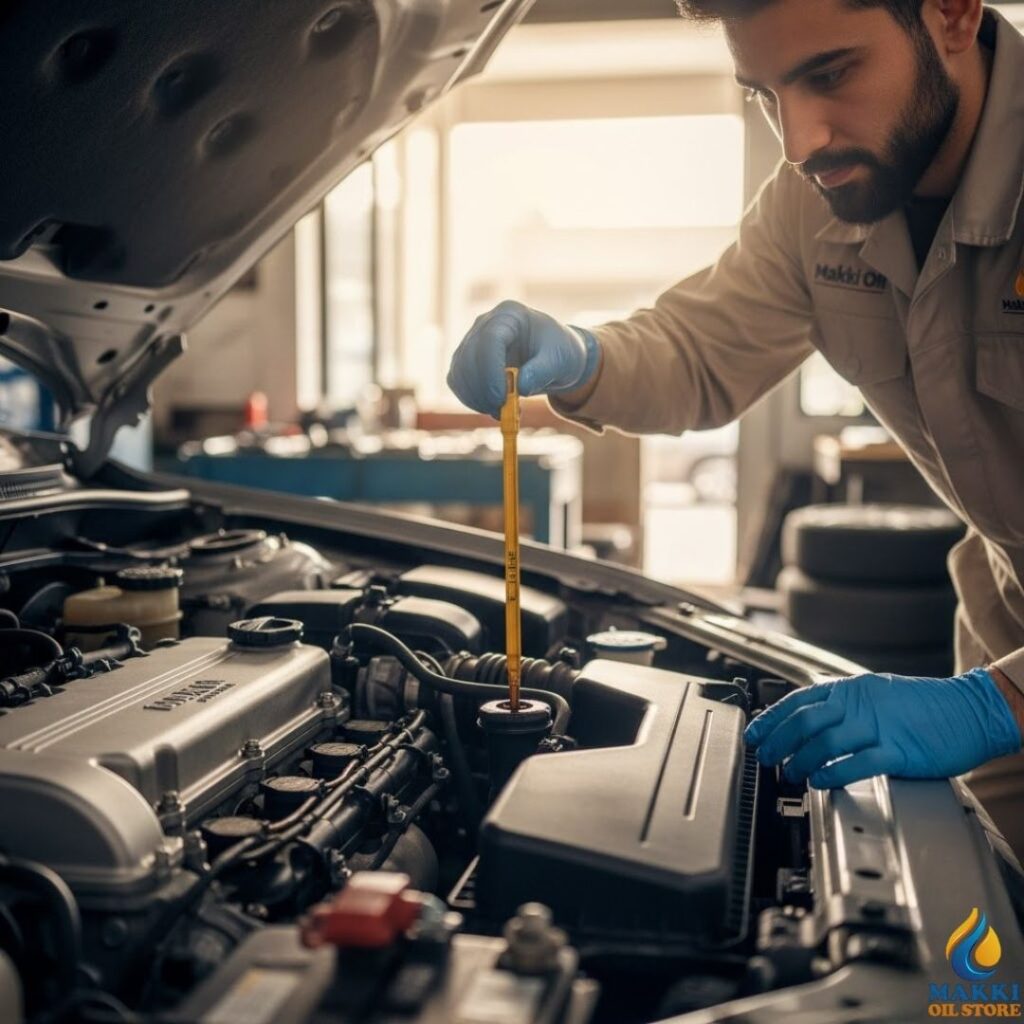
Fuel consumption isn’t just about how you drive. It begins inside the engine. When engine oil is old, too thick, or the wrong grade, it forces your engine to work harder. Harder work means more fuel burned and poorer mileage.
Clean and correct oil creates a thin, protective layer between moving metal parts. This reduces friction, allows smoother rotation, and keeps the engine cool. With reduced resistance inside the engine, your car uses less petrol to generate power, which is why timely oil changes and proper grades directly improve fuel efficiency.
Choosing the right oil is especially important in a city like Lahore, where dusty air, frequent stops, and high temperatures increase engine strain. Using the wrong oil can slowly turn even a fuel-efficient car into a fuel-hungry machine.
Types of Engine Oil and Their Role in Fuel Efficiency
To understand which oil is best for your vehicle, you first need to understand how each type behaves inside the engine. Some oils flow quickly and reduce friction; some are better for older engines; others are designed for modern, small-capacity engines that need smoother lubrication.
Here is a simple comparison to help you choose the right oil category based on engine performance and fuel economy:
| Oil Type | Best For | Fuel Efficiency Impact |
| Synthetic Oil | Modern cars, hybrids, fuel-efficient engines | Highest mileage improvement due to low friction |
| Semi-Synthetic Oil | Mid-range cars and daily drivers | Balanced performance and moderate mileage improvement |
| Mineral Oil | Older models, basic engines | Least efficient but suitable for worn-out engines |
Synthetic oil offers the best mileage boost because it flows more smoothly during cold starts and high temperatures. It also resists breakdown for longer periods, making it a smart choice for Lahore’s weather.
Why Viscosity Matters for a Budget-Friendly Ride
Viscosity is the most misunderstood part of engine oil. You’ll see numbers like 0W-20, 5W-30, or 10W-40 printed on oil bottles. These numbers indicate how thick or thin the oil remains during temperature changes. Using the correct viscosity is one of the simplest ways to improve your car’s fuel efficiency.
For example, cars like Alto, Vitz, Passo, Mira, Cultus, and City perform best with low-viscosity oils like 0W-20 or 5W-30 because these oils move quickly inside the engine and reduce resistance. When resistance drops, engines breathe better and deliver better mileage.
On the other hand, thicker oils like 10W-40 are better for older engines that need extra protection. If you use such thick oil in a modern small engine, fuel efficiency drops instantly.
The Hidden Connection Between Engine Oil and Fuel Costs
Most drivers assume fuel efficiency depends only on engine condition or driving style. But engine oil has a quiet, powerful influence on how much fuel your car burns. Clean and correct oil can give you an extra 2 to 5 kilometers per liter, depending on your vehicle.
That means if you drive 1,000 kilometers a month, choosing the right oil can reduce your fuel bill significantly. It also prevents overheating, carbon buildup, sludge formation, and premature engine wear, all of which can cause high fuel usage over time.
If your car’s pickup feels weak, or mileage has dropped recently, worn-out oil or the wrong oil grade may be the reason. Regular oil maintenance is a simple way to keep your budget under control without compromising performance.
How Lahore’s Climate Influences Your Oil Choice
Lahore’s climate is harsh on engines. Long summers, dusty roads, and traffic jams cause engines to heat up faster than usual. High heat breaks down low-quality oils quickly, reducing their ability to protect the engine. This results in higher fuel consumption and greater wear.
Choosing heat-resistant, synthetic-grade engine oils becomes essential in such conditions. These oils maintain viscosity during heatwaves and maintain lubrication even when your car is stuck in slow-moving traffic.
If you use poor-quality oil, you’ll notice signs like engine knocking, lower mileage, and sluggish acceleration. The right oil helps your engine stay healthy and efficient regardless of the season.
Real-World Example: Diesel Cars and Fuel Efficiency
Many modern diesel vehicles in Lahore are now equipped with AdBlue or Drive Blue systems to lower emissions and improve fuel efficiency. If your diesel car features an SCR system, using the wrong oil or fluids can compromise the efficiency of emissions treatment and reduce mileage. For a deeper understanding of how AdBlue works and why it’s essential for diesel vehicles in Lahore, check out this detailed guide on What is AdBlue and Why Every Diesel Car Owner Needs It.
When Should You Change Your Engine Oil for Best Fuel Efficiency?
The ideal time to replace engine oil depends on driving style, vehicle age, and oil type. Modern synthetic oils last longer, but frequent short trips and dusty roads shorten oil life.
Here is a simple table that explains the recommended oil change intervals for different vehicles:
| Vehicle Type | Recommended Oil Change Interval |
| Small Fuel-Efficient Cars | 4,000–6,000 km |
| Mid-Range Sedans | 5,000–7,000 km |
| Diesel Vehicles | 5,000–8,000 km |
If you drive daily in Lahore or frequently travel along Defence Road, your transmission oil may need to be changed more often due to heavy traffic and dusty road conditions. To find a trusted service center nearby, you can visit Makki Oil’s GMB listing for directions, contact details, and customer reviews. This helps ensure your vehicle receives timely maintenance from a reliable provider.
Why Choosing a Trusted Oil Shop Matters
Engine oil is one of the easiest things to manipulate in the market. Fake oils, repacked bottles, and tampered products are common issues. These low-quality oils destroy engines and reduce mileage, even if they are labeled as premium.
Trusted stores like Makki Oil ensure you get original, sealed, engine-specific oils that match your car’s requirements. Expert technicians can guide you on the correct viscosity, oil type, and maintenance schedule. This helps maintain your vehicle’s fuel efficiency and protects you from unnecessary repair expenses.
Final Thoughts
A budget-friendly ride is not about buying the cheapest car. It’s about keeping your vehicle efficient, clean, and well-maintained. The right engine oil is one of the simplest ways to improve mileage, reduce heat, and protect the engine’s internal parts.
Whether you drive short distances in DHA, commute daily from Bahria Town, or travel frequently on Defence Road, maintaining the correct engine oil gives long-lasting fuel savings. Your car will run smoother, accelerate better, and require fewer repairs. In the end, small steps like choosing the right oil make a big difference in your yearly expenses.
FAQs
1. Can the wrong engine oil reduce fuel efficiency?
Yes, using the wrong viscosity increases friction inside the engine, which lowers mileage.
2. How do I know which oil is right for my car?
Check your vehicle’s manual, or ask a trusted professional at Makki Oil to guide you.
3. Does synthetic oil improve fuel efficiency?
Synthetic oils reduce friction and heat, which improves mileage, especially in modern cars.
4. How often should I change oil for better mileage?
Most cars need an oil change every 5,000 km, but small fuel-efficient cars may need it sooner.
5. Does engine oil quality affect pickup?
Yes, poor-quality or old oil reduces lubrication, resulting in slower acceleration and higher fuel use.
Author Bio
Makki Oil Editorial Team creates expert automotive guides for Lahore drivers, focusing on engine care, fuel efficiency, and maintenance tips. Their goal is to help car owners make smart, budget-friendly decisions backed by real workshop experience.