Choosing the right motor oil is more than a routine maintenance task; it is a critical decision that dictates the lifespan of your engine. In Pakistan, where vehicles face the dual challenge of stop-and-go city traffic and extreme ambient temperatures reaching 45°C, the choice between synthetic and conventional oils can determine whether your engine thrives or suffers from premature wear.
The Engineering Behind Synthetic Oil
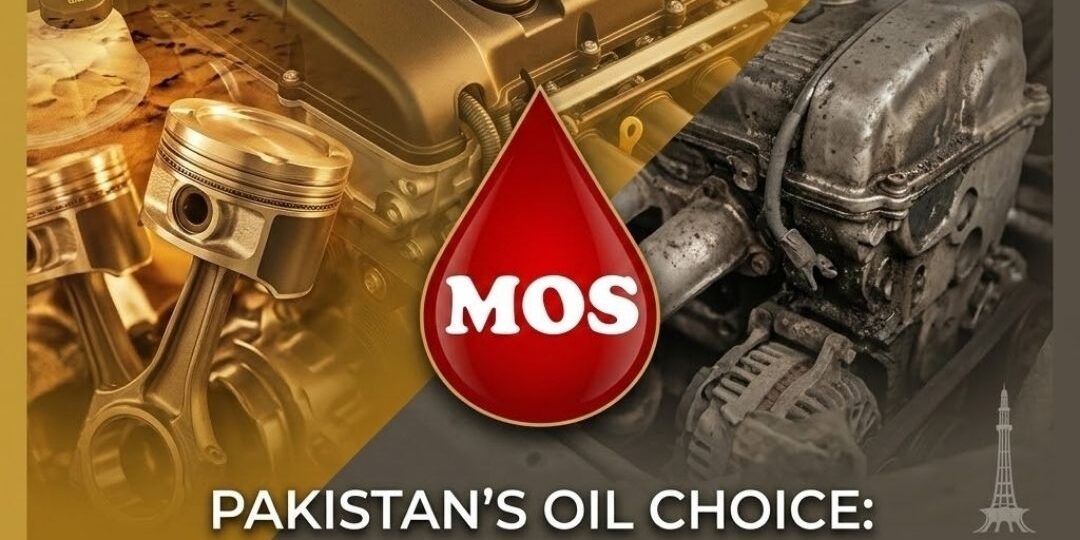
Synthetic engine oil is the result of advanced chemical engineering where molecules are artificially synthesized for uniformity. Unlike mineral-based oils, these lubricants are stripped of the impurities found in crude oil, allowing for a more stable fluid film.
For drivers in high-heat regions like Lahore or Multan, this molecular stability is essential. Synthetic oils resist “thermal breakdown” a process where heat causes oil to thin out and lose its ability to protect moving parts. By maintaining a consistent viscosity, fully synthetic motor oils ensure that your engine receives maximum lubrication even during the most demanding summer months.
Evaluating Conventional Oil for Local Use
Conventional engine oil is refined directly from crude oil. While it provides basic lubrication, its molecular structure is irregular, containing varying sizes of molecules that can lead to uneven friction under high stress.
While conventional oil is often chosen for its cost-effectiveness, it struggles in the harsh environments of Pakistani cities. The heavy dust and intense heat cause conventional oil to oxidize and form sludge much faster than its synthetic counterparts. However, for older vehicle models with very high mileage, the thicker nature of some mineral oils can occasionally help seal aging engine components.
Key Factors for the Pakistani Market
When deciding on the best lubricant for your specific needs, consider these three local factors:
Thermal Resistance:
In cities like Karachi, where humidity and heat are high, synthetic oil provides a superior barrier against engine overheating.
Fuel Economy:
Synthetic oils reduce internal friction, which directly improves your mileage a critical benefit given fluctuating fuel prices.
Engine Health:
Neglecting to use a high-quality lubricant can lead to permanent internal damage. To understand the risks of improper lubrication, read our guide on what happens to your car when you don’t change your engine oil to see how the wrong oil choice impacts your vehicle.
Final Verdict: Quality Over Cost
While conventional oil is widely available and budget-friendly, synthetic oil is the superior choice for modern engines in Pakistan. It offers extended drain intervals and better protection for your car’s most expensive component. For those looking to protect their investment with 100% authentic lubricants, the Makki Oil Store offers a curated selection of global brands specifically suited for the local climate.
Automotive FAQs
1. Is synthetic oil worth the extra price in Pakistan?
Yes. Although synthetic oil costs more upfront, it lasts nearly twice as long as conventional oil and protects your engine from the expensive repairs caused by Lahore’s heat and dust.
2. Can I switch from conventional to synthetic oil?
Absolutely. You can switch to synthetic oil at any time. Modern synthetic formulas are fully compatible with engines that previously used mineral oils.
3. Does synthetic oil improve fuel average?
Because synthetic oil has lower friction than conventional oil, the engine works less to move the same parts, which can lead to a noticeable improvement in kilometers per liter.
4. How often should I change conventional oil in Lahore?
Due to heavy dust and stop-and-go traffic, conventional oil should be changed every 3,000 to 5,000 km to prevent sludge buildup.
5. Which oil is better for a new car in Karachi?
Almost all new car manufacturers in Pakistan recommend 5W-30 or 0W-20 fully synthetic oils to maintain performance and warranty standards.
6. Can synthetic oil cause leaks in older engines?
In very old engines with worn seals, the smaller molecules of synthetic oil might find existing leaks that thicker conventional oil couldn’t. However, it does not “create” the leaks itself.
7. Is it okay to mix synthetic and conventional oil?
It is safe to mix them in an emergency, but it is not recommended for long-term use as it dilutes the performance benefits of the synthetic oil.
8. Why is viscosity important for Pakistani drivers?
Viscosity is the oil’s resistance to flow. In Pakistan’s heat, you need an oil that stays thick enough to protect parts but thin enough to circulate quickly upon startup.
9. Does the “Made in Pakistan” oil perform differently than imported brands?
Many local brands meet international API standards, but always ensure you are buying from an authorized dealer to avoid counterfeit products.
10. How do I know if the oil I bought is authentic?
Check for a sealed cap, a clear manufacturing date, and a QR code. Authentic retailers will always provide a verified product from a trusted supply chain.