Regular maintenance is the backbone of vehicle longevity, and keeping your engine oil clean is arguably the most vital task. Engine oil acts as a primary lubricant, reducing friction among moving parts, cooling the engine, and ensuring optimal performance. However, over time, oil degrades and becomes less effective. In the harsh driving conditions of Lahore characterized by extreme dust, high temperatures, and constant idling in traffic your oil works significantly harder than the global average.
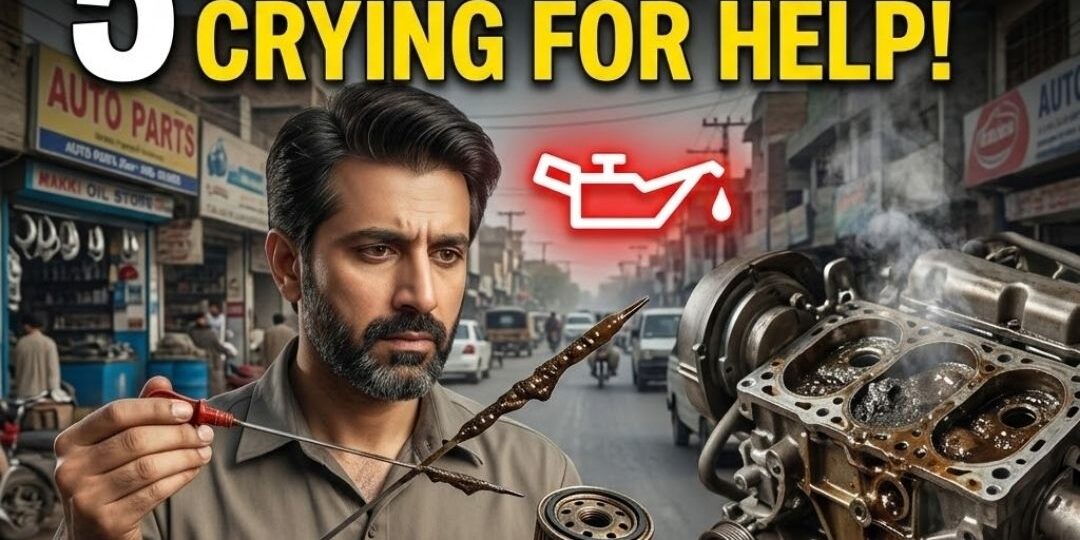
1. Dark and Gritty Oil Texture
Fresh engine oil should have a translucent, amber hue. Its primary job is to clean the internal components by picking up carbon deposits, metallic shavings, and soot. Over time, these contaminants saturate the fluid, turning it into a dark, opaque, and sometimes “gritty” liquid. If you pull your dipstick and cannot see the metal through the oil, or if you feel small particles when rubbing the oil between your fingers, the lubricant has reached its saturation point.
To fix this, a simple top-up is insufficient because the abrasive debris will remain in the system. A complete drain and refill is the only way to protect your engine’s moving parts. To ensure you are putting the highest quality fluid back into your vehicle, sourcing your supplies from the Makki Oil Store guarantees you are using 100% authentic, high-grade lubricants that resist the rapid breakdown caused by city driving.
2. Unusual Engine Noise and Metallic Knocking
Oil creates a microscopic protective film that prevents metal-on-metal contact between fast-moving parts like pistons and camshafts. As oil ages, its viscosity breaks down, meaning it becomes too thin to maintain that protective barrier. When this happens, you will notice a distinct “ticking” or “clapping” sound, especially during a cold start or while idling. This is the sound of your engine components grinding against each other without a cushion.
If you hear these sounds, your engine is signaling immediate friction damage. You should replace your oil immediately with a grade that matches your car’s current mileage and manufacturer requirements. Ignoring these audible warnings can lead to catastrophic failure, such as a “seized” engine block. To understand the severe mechanical consequences of delaying this service, read our guide on what happens to your car when you don’t change your engine oil to safeguard your vehicle’s health.
3. Rapidly Decreasing Oil Levels
A sudden drop in the oil level on your dipstick is a red flag that should never be ignored. This usually happens for two reasons: a physical leak from a gasket or seal, or the engine is “consuming” oil internally. Consumption occurs when the oil has become so degraded and thin that it slips past worn-out piston rings and enters the combustion chamber to be burned off. This leaves your engine running on a dangerously low volume of fluid, causing the remaining oil to overheat and fail.
The best course of action is to first inspect the ground under your parked car for dark spots. If no leak is visible, your engine’s internal seals may be struggling. In this case, switching to a high-quality lubricant with better shear stability can help fill those microscopic gaps in worn seals, provided you also replace the oil filter to ensure maximum flow and pressure are restored.
4. Thick Blue or Gray Exhaust Smoke
While white vapor is common on cold Lahore mornings, thick blue or gray smoke from the tailpipe is a sign of oil-related trouble. This smoke occurs when engine oil leaks into the combustion process and burns along with the fuel. It signifies that your oil is no longer thick enough to stay where it belongs, or that internal components like valve stem seals have reached the end of their life.
When you see this, check your oil level immediately, as it is likely dropping fast. While moving to a “high-mileage” oil formula can sometimes help recondition old seals and reduce smoke, this is often a sign that you need a professional compression test. A fresh oil change is the necessary first step to determine if the problem is simply old, thin oil or a deeper mechanical issue requiring repair.
5. Persistent Dashboard Warning Lights
The oil pressure warning light, usually a red oil can icon is the most critical indicator on your dashboard. Unlike a standard service reminder, this light means your oil pump cannot circulate enough fluid to reach the top of the engine. This often happens because the oil has turned into a thick, gooey “sludge” that the pump cannot move, or because the oil level has fallen below the minimum safe threshold.
If this light illuminates while you are driving, pull over and turn off the engine immediately. Do not attempt to drive the car further, as running an engine without pressure can destroy it in minutes. Check the dipstick; if the oil is thick like molasses, your engine needs a professional flush and a fresh oil change. If the level is fine but the light stays on, the issue is likely a mechanical failure in the oil pump that needs urgent attention.
Frequently Asked Questions | FAQs
How much does an oil change cost in Lahore?
Depending on the oil type, a standard service in Lahore generally ranges from PKR 6,000 to PKR 15,000 in 2026.
What oil viscosity is best for Pakistan?
5W-30 is standard for modern cars, but 10W-40 or 20W-50 is often better for older engines in 45°C+ heat.
How often should I change synthetic oil?
In the dusty, hot conditions of Pakistan, it is best to change synthetic oil every 7,000 km to 8,000 km.
Can I mix oil brands?
It is not recommended, as different additive packages may not be chemically compatible.
Does engine oil have an expiry date?
Yes, most oils have a shelf life of 3 to 5 years if the bottle remains sealed.
Why does my oil turn black so fast?
This is usually a sign that the oil is successfully cleaning carbon deposits from your engine.
Is it necessary to change the oil filter every time?
Absolutely. A dirty filter can clog and circulate unfiltered oil back into your engine.
What is the difference between Mineral and Synthetic?
Synthetic oil is chemically engineered for better heat resistance and longer life than refined mineral oil.
Can I switch an old car to synthetic?
Yes, but keep an eye out for leaks, as synthetic oil can sometimes pass through very old, worn seals.
Does old oil affect fuel average?
Yes, degraded oil increases internal friction, which forces the engine to burn more fuel to maintain speed.