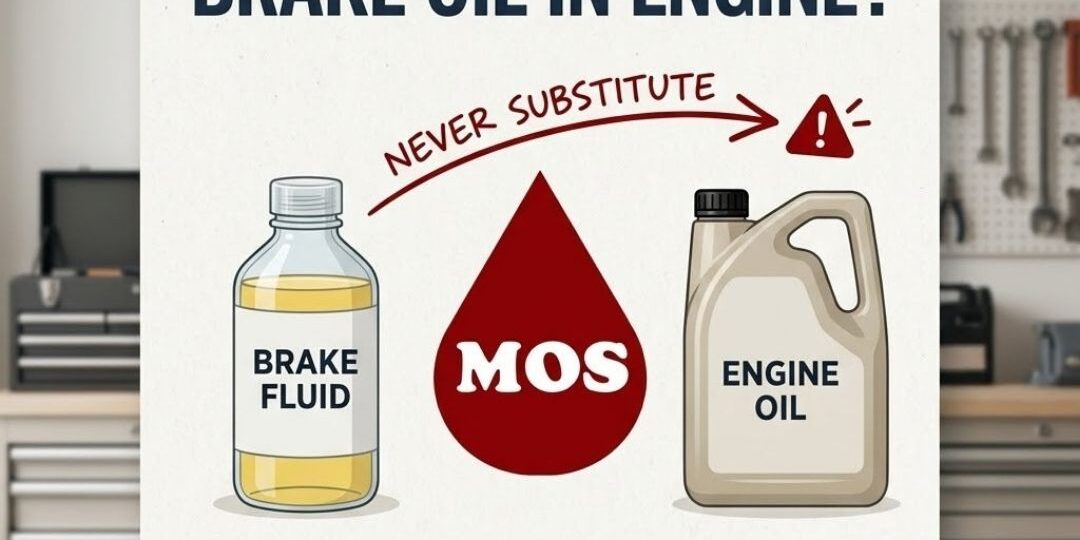
In the world of automotive maintenance, fluids are often color-coded or stored in similar-looking bottles, leading some to wonder if they are interchangeable. However, as a leader in automotive lubricant authority, Makki Oil Store is here to clarify a dangerous misconception: You can never use brake oil (brake fluid) as a substitute for engine oil. While both are essential fluids, they operate in entirely different environments under different physical principles. Attempting to swap them is not just a mechanical error; it is a recipe for immediate and catastrophic engine failure. Understanding the distinct properties of these fluids is the first step in protecting your vehicle’s longevity on the roads of Lahore.
Distinguishing Between Brake Oil and Engine Oil Properties
The primary differentiator between these two fluids is viscosity. Brake oil, technically a hydraulic fluid, is engineered with a very low viscosity to ensure it flows rapidly through narrow brake lines. This allows for the near-instant transmission of pressure from your foot to the brake calipers.
In contrast, engine oil is a lubricant designed with a much higher viscosity to create a thick protective film between fast-moving metal parts like pistons and crankshafts. Finding the Best Car Engine Oil Shop In Lahore is essential because modern engines require specific viscosity grades to prevent metal-on-metal contact. Without the heavy-duty lubricating layer provided by engine oil, your internal components would grind together, generating enough heat to weld the engine shut within minutes.
Furthermore, the chemical compositions are fundamentally different. Brake fluid is usually glycol-based or silicone-based, designed to resist compression. Engine oil is composed of base oils and complex additives—such as detergents and anti-wear agents—specifically formulated to combat the intense combustion heat that brake fluid simply cannot handle.
Exploring the Risks of Using Brake Oil in Engines
Introducing brake fluid into an engine’s lubrication system triggers a series of destructive events. Because brake fluid lacks the additives required for heat dissipation, the engine will quickly overheat. Unlike engine oil, brake fluid is also hygroscopic, meaning it actively absorbs moisture from the air.
When moisture-laden brake fluid circulates through your engine, it introduces water to sensitive steel and aluminum components, leading to rapid internal corrosion and rust. This moisture also breaks down the fluid’s integrity, forming a thick, acidic sludge that blocks oil passages. To truly grasp the severity of using the wrong fluid, it is helpful to understand What Happens To your Car When You Don’t Change your Engine Oil, as the damage from brake fluid is even more accelerated and violent.
Safety Considerations: The Flammability Risk
Beyond mechanical failure, there is a severe safety risk: flammability. Engine oil is formulated with a high “flash point” to ensure it does not ignite inside the hot combustion environment. Brake fluid, however, has a much lower flash point. If brake fluid leaks into the combustion chamber or touches a red-hot exhaust manifold, it can ignite, leading to an engine bay fire.
At Makki Oil Store, we emphasize that manufacturer guidelines exist for a reason. Deviating from these recommendations by attempting a “DIY substitute” compromises not just your car’s reliability, but your personal safety.
Frequently Asked Questions (FAQs)
Can I use engine oil in my brake system instead?
No. Engine oil will cause the rubber seals in your braking system to swell and fail, leading to a complete loss of braking power. Never mix these fluids in either direction.
What should I do if I accidentally put brake fluid in my engine?
Do not start the car. You must have the vehicle towed to a professional to have the engine flushed multiple times to remove every trace of the corrosive brake fluid.
Why is brake fluid called “oil” in Pakistan?
In local terminology, many fluids are colloquially called “oil,” but technically, brake fluid is a hydraulic chemical, not a lubricant. Always check the label for “DOT 3” or “DOT 4” vs. engine oil grades like “5W-30.”
Does brake fluid lubricate the engine at all?
No. Brake fluid is designed for pressure, not friction reduction. It will actually “wash away” any existing lubrication, leaving the metal surfaces exposed to raw friction.
Is synthetic engine oil closer to brake fluid?
Not at all. While both are “engineered,” synthetic engine oil is still a lubricant with high viscosity and heat-resistant additives, whereas brake fluid remains a low-viscosity hydraulic agent.
Can the wrong fluid cause an engine to seize?
Yes. Without the thick film of engine oil, friction causes the metal parts to expand until they bridge the clearance gaps and lock together, effectively destroying the engine.
Why does brake fluid absorb water?
Brake fluid is glycol-based, which is naturally attracted to water molecules. This is a safety feature for brakes to prevent water “pockets” from boiling, but it is a “death sentence” for an engine’s internal parts.
How can I tell the difference between the two by looking at them?
Engine oil typically has an amber or brown tint and a slippery, thick feel. Brake fluid is usually clear or slightly yellow and feels less “greasy” and more like a chemical solvent.
Will brake fluid damage my engine sensors?
Yes. The chemical vapors from burning brake fluid will quickly coat and “poison” your oxygen sensors and catalytic converter, leading to expensive exhaust repairs.
Where can I find the correct fluid for my car in Lahore?
To ensure you are using 100% authentic, manufacturer-approved fluids, always visit a specialist like the Best Car Engine Oil Shop In Lahore to avoid the risks of counterfeit or incorrect products